
London Heliport (Battersea) — overview, history and operations
London Heliport at Battersea is the capital’s principal heliport. This article describes its location on the Thames, facilities, history, operations, transport links and notable features.
The London Heliport is the city's primary civil heliport, located on the south bank of the River Thames at Battersea. It serves mainly private and charter helicopter traffic into central London and is commonly described as the capital's main and busiest heliport. Visitors and researchers can find its riverside position by following references to Battersea and the wider context of London, while broader information on its role among urban heliports is available via topical resources linked below (heliport facilities).
Image gallery
4 Images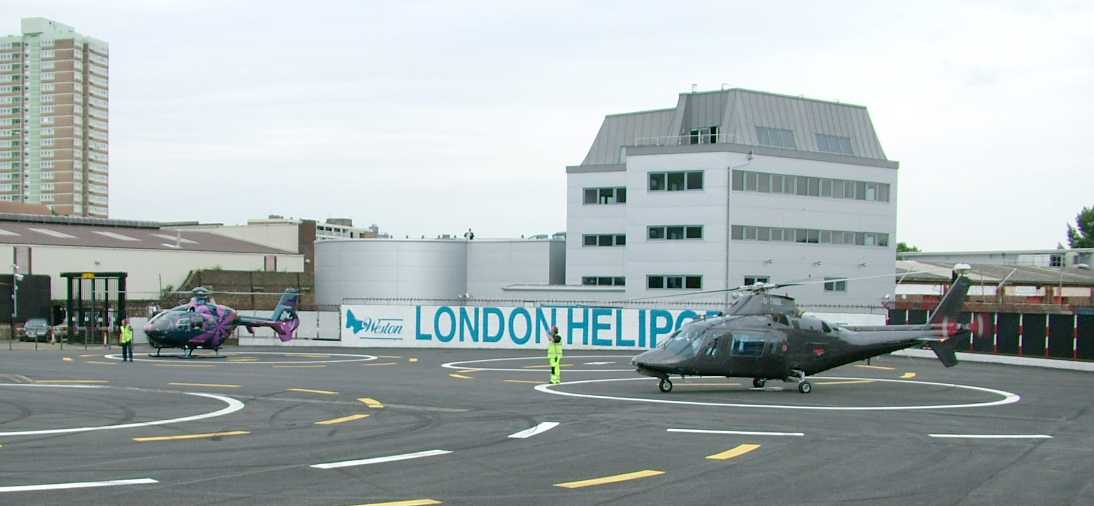

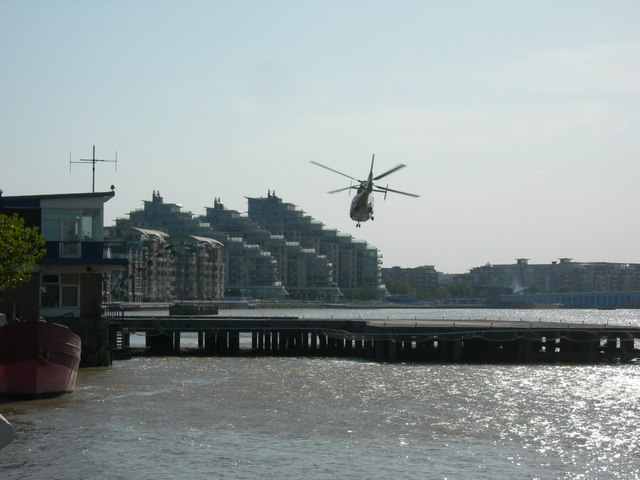

Location and physical features
The heliport sits on a short jetty that projects into the River Thames, between Wandsworth Bridge and Battersea Railway Bridge. It lies approximately 3 nautical miles (about 3.5 miles or 5.6 km) southwest of Westminster Bridge and the Palace of Westminster, making it convenient for rapid transfers to central government and business districts. The landing surface is a concrete pad on the jetty and the adjacent onshore area provides limited parking for a small number of helicopters.
Facilities and operating hours
Facilities at the site are compact by design. The principal touchdown and liftoff area uses a concrete surface on the jetty; onshore space offers parking for typically three to four light-to-medium helicopters, with separate refuelling and short-term parking arrangements described in operator guidance. Ground services such as landing handling, parking management and refuelling are normally available during daytime hours, and flight operations are governed by published time windows to reduce disturbance and coordinate with air traffic control.
History and ownership
The heliport has passed through a series of owners and operators since its establishment. It was previously owned at various times by aerospace and private firms, including a period under the ownership of Harrods. In 2012 the site was purchased by private investors, and later entered into a commercial naming arrangement that associated it with a private aviation brand. These changes reflect the heliport's position as a commercial urban aviation facility serving corporate, charter and occasional specialist flights.
Operations, uses and restrictions
Operations at the heliport are focused on private, corporate and charter helicopter movements rather than scheduled public flights. Typical uses include executive transfers, air taxi services and some aerial survey or filming tasks. To balance operational needs with urban concerns, the heliport operates under time restrictions: flight movements are permitted within specified hours and ground services run within a narrower daytime window. These restrictions are intended to manage noise and safety in a densely populated riverside area.
Access and transport connections
Although the heliport provides rapid air access to central London, most passengers reach it by road or rail. The nearest main line railway station is Clapham Junction, and the closest London Underground stop is Fulham Broadway on the London Underground network. Local river, bus and road links also serve the Battersea riverside, so intermodal transfers are possible for arriving and departing passengers.
Notable facts and practical points
- The heliport is compact and designed for smaller civil helicopters rather than large rotorcraft or heavy cargo operations.
- Its riverside jetty location means approaches are over water, with operational procedures adapted for safety and wake considerations.
- Because of its proximity to central London landmarks such as Westminster Bridge and the Palace of Westminster, the site is frequently used for time-sensitive transfers into the city.
- Readers can consult local planning, aviation and transport sources for current contact, booking and regulatory details at the operators' information pages (parking and services).
This summary covers the heliport's location, facilities, history and everyday role as an urban aviation hub. For operational details, service availability and current ownership or brand arrangements, see the linked resources and the operators' published guidance (Thames river context, heliport overview, London transport guides).
Questions and answers
Q: Where is London Heliport located?
A: London Heliport is located on the south bank of the River Thames, 3 nautical miles (3.5 miles or 5.6 km) southwest of Westminster Bridge and the Palace of Westminster.
Q: What is the nearest railway station to London Heliport?
A: The nearest railway station to London Heliport is Clapham Junction.
Q: What is the nearest tube station to London Heliport?
A: The nearest tube station to London Heliport is Fulham Broadway.
Q: What is the capacity of the onshore parking at London Heliport?
A: The onshore parking at London Heliport has a capacity for three to four aircraft, usually just the smaller helicopters.
Q: What services does London Heliport provide between 08:00 and 21:00?
A: London Heliport provides landing, parking, and refueling services between 08:00 and 21:00.
Q: What is the ownership history of London Heliport?
A: London Heliport was once owned by Westland and then Harrods. In 2012 it was bought by the Reuben Brothers for £35 million.
Q: What is the official name of London Heliport after a branding deal in 2016?
A: The official name of London Heliport after a branding deal in 2016 is the NetJets London Heliport.
Related articles
Author
AlegsaOnline.com London Heliport (Battersea) — overview, history and operations Leandro Alegsa
URL: https://en.alegsaonline.com/art/59030
Sources
- nats-uk.ead-it.com : "London Heliport — EGLW"
- bbc.co.uk : "Reuben Brothers buy London Heliport in Battersea"
- ainonline.com : "NetJets Partners with London Heliport"