
London and North Western Railway (LNWR) — history and legacy
Overview of the London and North Western Railway: formation, routes, operations, and its evolution into later British railway companies and the modern West Coast Main Line.
Overview
The London and North Western Railway (LNWR) was a major British railway company formed in the mid-19th century and operating through the late Victorian and Edwardian eras. Created by the amalgamation of several earlier lines, it became a dominant carrier of both passengers and freight across England and Wales. Its principal London terminus was at Euston and its network served important industrial and commercial centres, linking the capital with the Midlands, Liverpool and Manchester.
Image gallery
7 Images



Origins and expansion
The company emerged in 1846 when three significant companies merged: the Grand Junction Railway, the London & Birmingham Railway and the Manchester & Birmingham Railway. The date of that union is often cited in accounts of early British railway consolidation (1846). Over the following decades the LNWR absorbed smaller lines, extended routes and developed major engineering and repair facilities, notably at Crewe. Although the corporate identity persisted into the early 20th century, its independent existence is usually marked as ending around 1922, just before the national reorganization of the railways.
Size and operations
By the later 19th century the LNWR had grown into one of the largest joint-stock companies in Britain and was often described as one of the principal railway concerns of the age (late 19th century). Its passenger services ranged from suburban commuter trains into London to long-distance expresses. The company also ran extensive goods services that supported industrial traffic, coal distribution and coastal ports. The London terminus for most mainline services was at Euston, from which frequent trains served the West Coast corridor.
Organisation, workshops and rolling stock
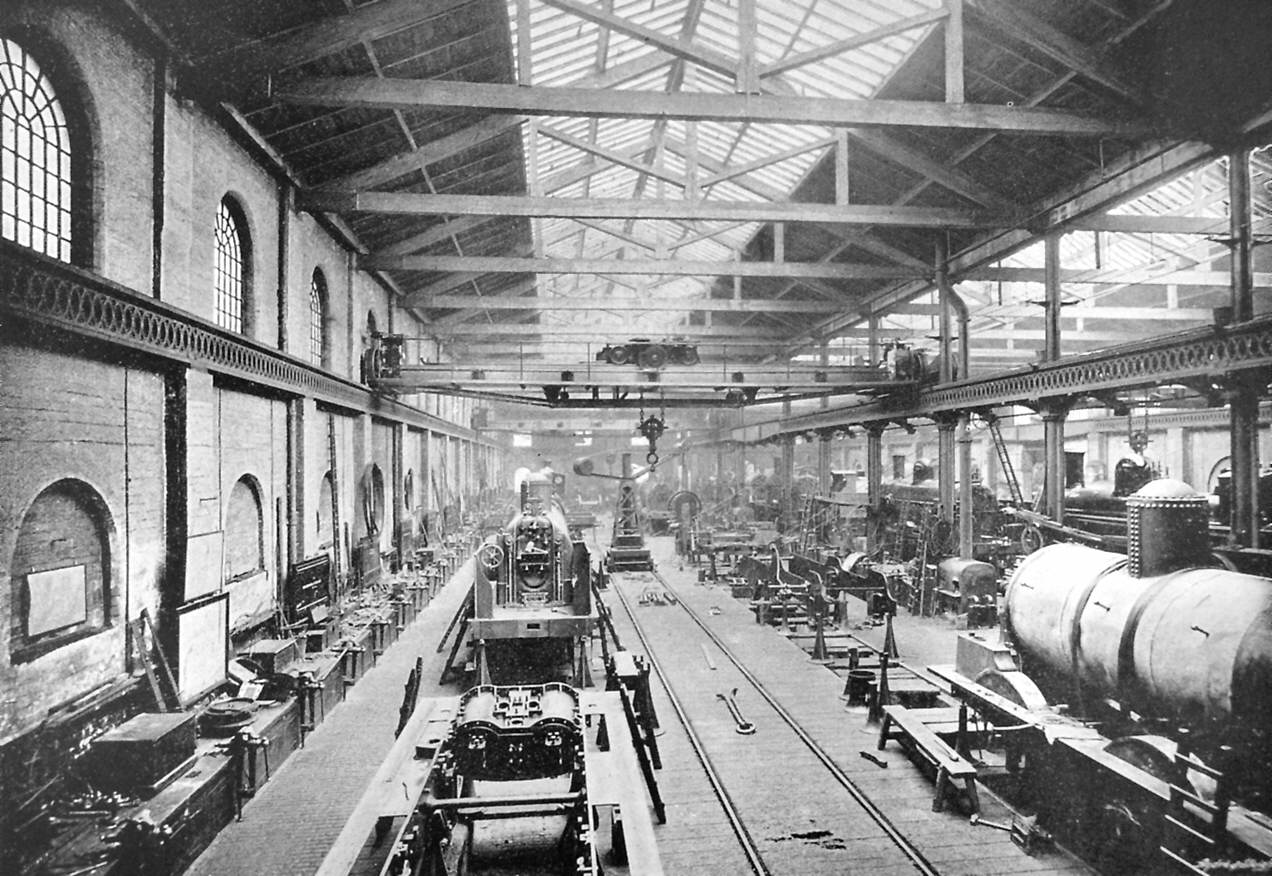
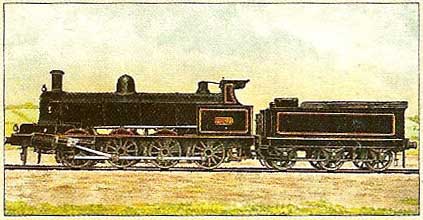
The LNWR maintained large locomotive and carriage works that handled construction, repair and overhaul. Crewe became synonymous with the company’s engineering expertise and was a major employer. Rolling stock and signalling developed across the company’s lifetime, with continual upgrades to meet growing traffic and competition. Organizationally, the LNWR combined a wide range of local, regional and long-distance services under a single corporate structure, a factor that contributed to its scale and financial prominence.
Grouping and successor companies
The LNWR was one of the companies affected by the sweeping Railways Act of 1921, which grouped many British railways into a smaller number of large companies. In 1923 it became part of the London, Midland and Scottish Railway (grouping) — commonly abbreviated as LMS. Following nationalisation of the railways in 1948, the former LNWR routes became a core part of the London Midland Region of British Railways (1948).
Legacy and routes today
The LNWR played a central role in shaping Britain’s inter-city and industrial rail corridors. Much of its mainline infrastructure forms the backbone of present-day services on routes often associated with the West Coast corridor; it is frequently cited as an ancestor of the modern West Coast Main Line (LNWR as ancestor) and of present-day operations along that axis (West Coast Main Line).
Notable facts and distinctions
- Formation by merger of three major early railways in 1846.
- Major engineering and workshop centre at Crewe, responsible for locomotive construction and maintenance.
- Large mixed traffic operations: suburban, long-distance passenger and heavy freight.
- Absorbed into the LMS in the 1923 grouping (1923), later part of nationalised British Railways (1948).
Questions and answers
Q: What was the London and North Western Railway?
A: The London and North Western Railway was a British railway company that existed between 1846 and 1922.
Q: How large was the LNWR in the late 19th century?
A: In the late 19th century, the LNWR was the largest joint stock company in the world.
Q: How was the LNWR formed?
A: The LNWR was formed in 1846 by a merger of the Grand Junction Railway, the London & Birmingham Railway and the Manchester & Birmingham Railway.
Q: Where was the London terminus of the LNWR?
A: The London terminus of the LNWR was at Euston railway station.
Q: What happened to the LNWR in 1923?
A: In 1923, the LNWR became a part of the London, Midland and Scottish Railway (LMS) under the Railways Act 1921.
Q: What happened to the LNWR in 1948?
A: In 1948, the LNWR became the London Midland Region of British Railways.
Q: How is the LNWR connected to the West Coast Main Line?
A: The LNWR may be seen as an ancestor of today's West Coast Main Line.
Related articles
Author
AlegsaOnline.com London and North Western Railway (LNWR) — history and legacy Leandro Alegsa
URL: https://en.alegsaonline.com/art/58977