
Loir (river) — a tributary of the Sarthe in central France
The Loir is a central French river, a left-bank tributary of the Sarthe. It flows through Centre-Val de Loire and Pays de la Loire and gives its name to two departments.
Overview
The Loir is a river in central France that flows as a left tributary of the Sarthe. Its headwaters lie in the interior of the country, and its general course links rural valleys and lowland plains before joining larger waterways. Basic location information and coordinates are commonly cited; see coordinates for mapped position and France for national context. The Loir is identified in hydrology as a left-bank tributary of the Sarthe (taxonomic note).
Image gallery
6 Images



Course and characteristics
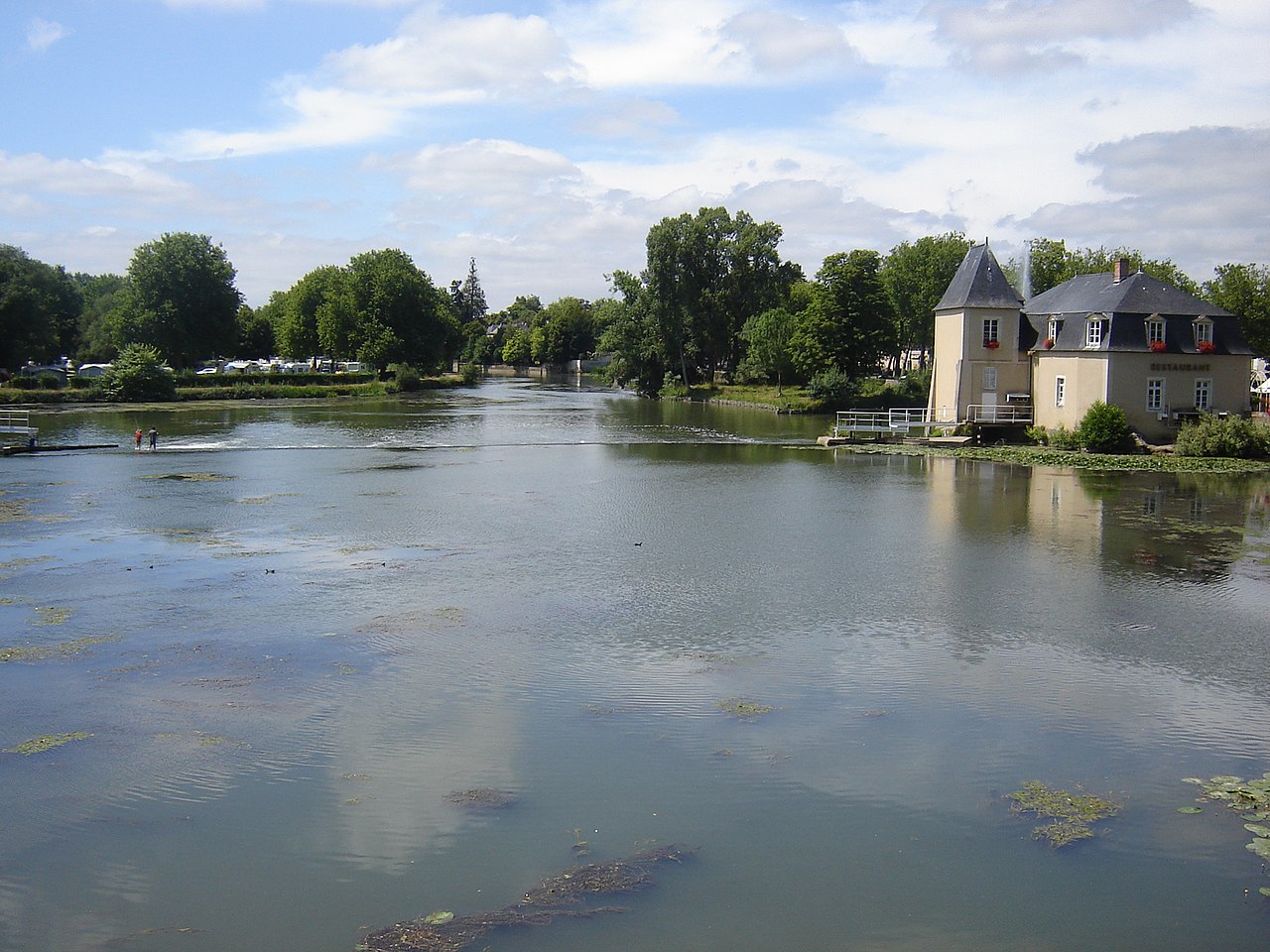
Traversing primarily gently rolling terrain, the Loir meanders through agricultural and woodland landscapes. It is not a major navigable artery like the Loire, but it supports local drainage, seasonal floodplains and a network of smaller streams in its basin. The river flows across two French regions, most notably Centre-Val de Loire and Pays de la Loire, where it contributes to the pattern of waterways that feed the Sarthe (regional map). Its course is characterized by winding reaches, gravelly banks in upper reaches and broader meadows downstream.
Administrative and toponymic importance
The Loir has lent its name to nearby administrative divisions. In particular, the departments of Eure-et-Loir and Loir-et-Cher refer to the river in their names, reflecting historic ties between the watercourse and local settlement. Historical maps and cadastral records show the Loir as a reference for land boundaries and for the siting of villages and mills. Contemporary departmental websites and guides often describe the river as a local geographic feature (departmental information).
Human uses, ecology and cultural role
Historically the Loir supported watermills, small-scale irrigation and local fisheries, and it remains valued for recreation, angling and riverside walking. Its floodplain habitats host plants and animals typical of temperate lowland rivers, and conservation efforts frequently aim to balance agriculture with habitat protection. The river corridor also contributes to regional identity and to tourism focused on quiet countryside, heritage villages and river scenery.
Distinctions and notable facts
- Do not confuse the Loir with the Loire; the names are similar but refer to different rivers.
- The Loir is a tributary of the Sarthe rather than of the Loire basin directly.
- It plays a modest but persistent role in local hydrology, administration and landscape history.
For mapped data, local guides and administrative details consult regional sources and the coordinate reference above (map). Additional information on the river's course, ecology and heritage can be found through regional environmental services and local history resources.
Questions and answers
Q: What are the coordinates of the Loir river in France?
A: The coordinates of the Loir river in France are 47°33′28″N 0°31′35″W / 47.55778°N 0.52639°W / 47.55778; -0.52639.
Q: What is the Loir river and where is it located?
A: The Loir river is a river located in central France, flowing through two regions of France: Centre-Val de Loire and Pays de la Loire.
Q: Is the Loir river a left or right tributary of the Sarthe river?
A: The Loir river is a left tributary of the Sarthe river.
Q: How many departments in France are named after the Loir river?
A: Two departments in France are named after the Loir river, Eure-et-Loir and Loir-et-Cher.
Q: Where does the Loir river flow?
A: The Loir river flows through two regions of France: Centre-Val de Loire and Pays de la Loire.
Q: What is the significance of the Loir river in France?
A: The Loir river is a left tributary of the Sarthe river and has two departments in France named after it, Eure-et-Loir and Loir-et-Cher.
Q: Is the Loir river a major or minor river in France?
A: The text does not provide information on whether the Loir river is a major or minor river in France.
Related articles
Author
AlegsaOnline.com Loir (river) — a tributary of the Sarthe in central France Leandro Alegsa
URL: https://en.alegsaonline.com/art/58903
Sources
- commons.wikimedia.org : Loir
- services.sandre.eaufrance.fr : "le Loir (M1--0160)"
- hydro.eaufrance.fr : "Le Loir à Durtal"
- geoportail.gouv.fr : "Source du Loir"
- geoportail.gouv.fr : "Confluence du Loir"