
Locomobile Company of America
American automaker founded in 1899 that began with steam cars and later produced gasoline automobiles; known for early engineering, transition from steam to internal combustion, and luxury coachbuilt models.
Overview
The Locomobile Company of America was an early U.S. automobile manufacturer established in 1899. It began by producing steam-powered vehicles under rights it acquired from the Stanley brothers and later switched to building gasoline-powered automobiles. Over three decades the company evolved from a maker of pioneering steam runabouts into a producer of refined motor cars aimed at a wealthier clientele, continuing in business until 1929.
Image gallery
10 Images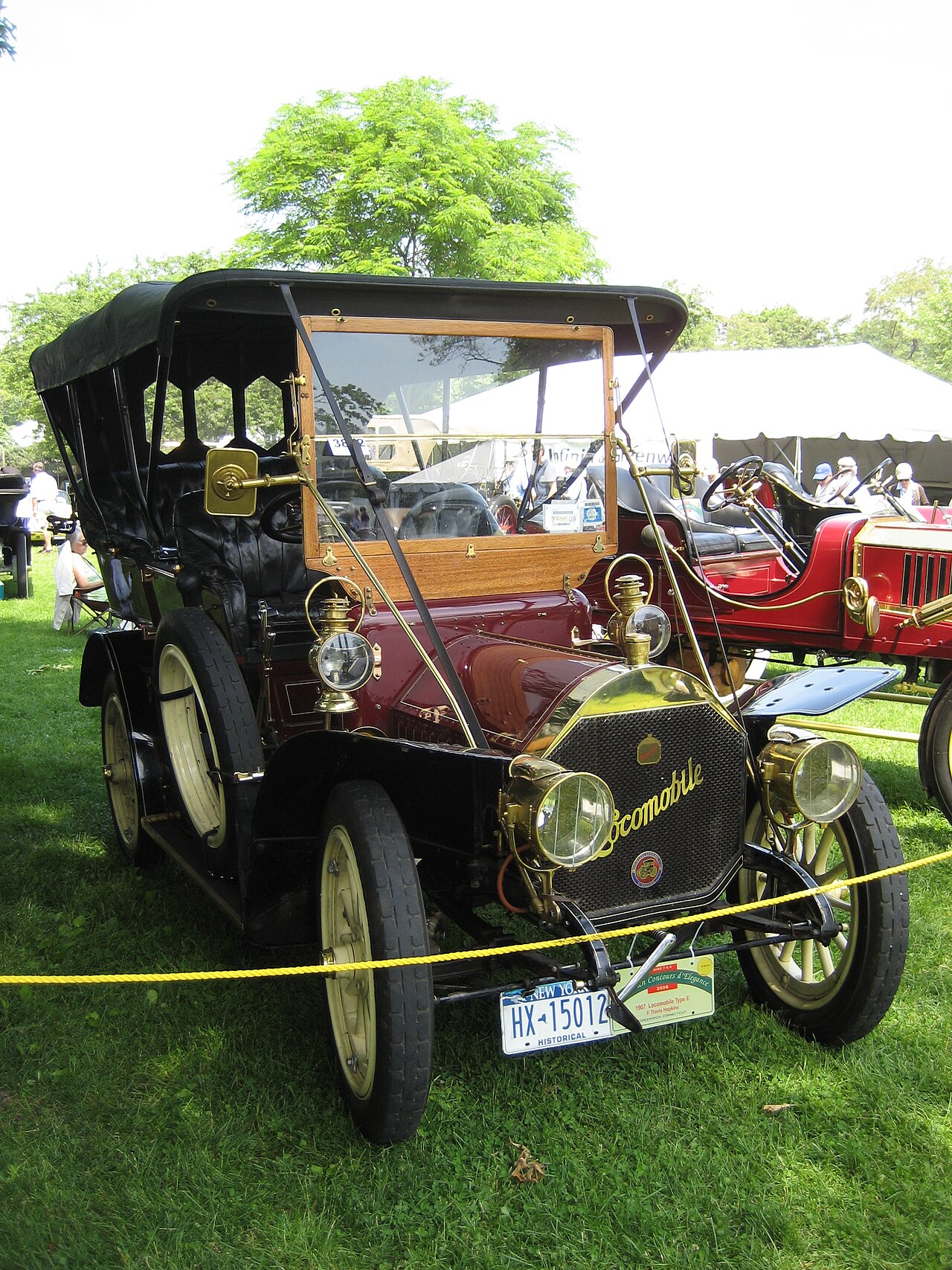


Origins and early products
The business was founded when entrepreneurs purchased the rights to build a successful steam vehicle design developed by the Stanley brothers. Those steam cars used compact boilers and steam engines to drive the wheels and were praised for smooth torque and quiet operation compared with early internal combustion cars. The company marketed its early cars as reliable and simple to operate for their era; contemporary buyers often valued the smooth acceleration and mechanical refinement of steam propulsion. For historical context, see the development of the Stanley steam car and related technology.
Design, engineering and change to gasoline
By the first decade of the 20th century the automobile industry was shifting toward internal combustion engines. In 1904 Locomobile began producing gasoline-powered cars, adopting conventional gasoline engines, transmissions and chassis layouts that were becoming standard. These later vehicles emphasized craftsmanship, quality materials and coachbuilt bodies rather than mass-market pricing. Typical attributes included hand-finished coachwork, attention to ride comfort and engines tuned for smoothness and dependable performance.
Business development and market position
Following the transition from steam, Locomobile positioned itself toward the luxury end of the market. The company supplied custom and catalog coachwork and often competed with other premium brands on the basis of finish and engineering rather than price or high-volume production. Like many independent makers of that era, Locomobile faced intensifying competition and consolidation in the 1920s as the industry matured.
Legacy and collecting
Although production ended in 1929, Locomobile cars remain of interest to historians and collectors. Surviving examples illustrate the shift in early automotive technology from steam to gasoline and the era of coachbuilt luxury vehicles. Museums and private collections preserve Locomobiles as representative artifacts of turn-of-the-century innovation and early 20th-century automotive craftsmanship.
Notable facts
- Founded in 1899; began as a producer of steam cars under license from the Stanley brothers.
- Switched to gasoline-powered models beginning in 1904, focusing later on higher-end, well-finished automobiles.
- Remains a subject of interest for automotive historians, restorers and collectors for its role in the early transition of propulsion technologies.
Questions and answers
Q: Who founded the Locomobile Company of America?
A: John B. Walker founded the Locomobile Company of America in 1899.
Q: Did John B. Walker found the company alone?
A: No, he founded the company with his partner Amzi L. Barber.
Q: What did the Locomobile Company of America manufacture at first?
A: The company initially bought the rights to manufacture the steam car built by the Stanley brothers and called it Locomobile.
Q: When did the Locomobile Company of America begin producing gasoline-powered cars?
A: The company began producing gasoline-powered cars in 1904.
Q: How long did the Locomobile Company of America stay in business?
A: The company stayed in business until 1929.
Q: Did the Locomobile Company of America primarily manufacture steam cars?
A: No, the company eventually shifted to producing gasoline-powered cars.
Q: When did the Locomobile Company of America stop producing cars?
A: The company stopped producing cars in 1929.
Related articles
Author
AlegsaOnline.com Locomobile Company of America Leandro Alegsa
URL: https://en.alegsaonline.com/art/58792
Sources
- commons.wikimedia.org : Locomobile automobiles
- locomobilesociety.com : "The History of The Best Built Car in America"
- dailykos.com : "History 101: The Locomobile"
- bportlibrary.org : "The Locomobile Company of America"
- westegg.com : "The Inflation Calculator"
- conceptcarz.com : "Locomobile History"