
Lise Meitner: Pioneer of Nuclear Fission and 20th‑Century Physics
Austrian‑Swedish physicist Lise Meitner (1878–1968) contributed to the discovery and interpretation of nuclear fission, advanced radioactive research, and left a complex scientific and moral legacy.
Overview
Lise Meitner was an Austrian‑born scientist who became a central figure in early 20th‑century physics. Born in Vienna in 1878 and dying in Cambridge in 1968, she is widely remembered as an innovative physicist whose work helped define the modern understanding of atomic structure and transformations.
Image gallery
10 Images




Career and research
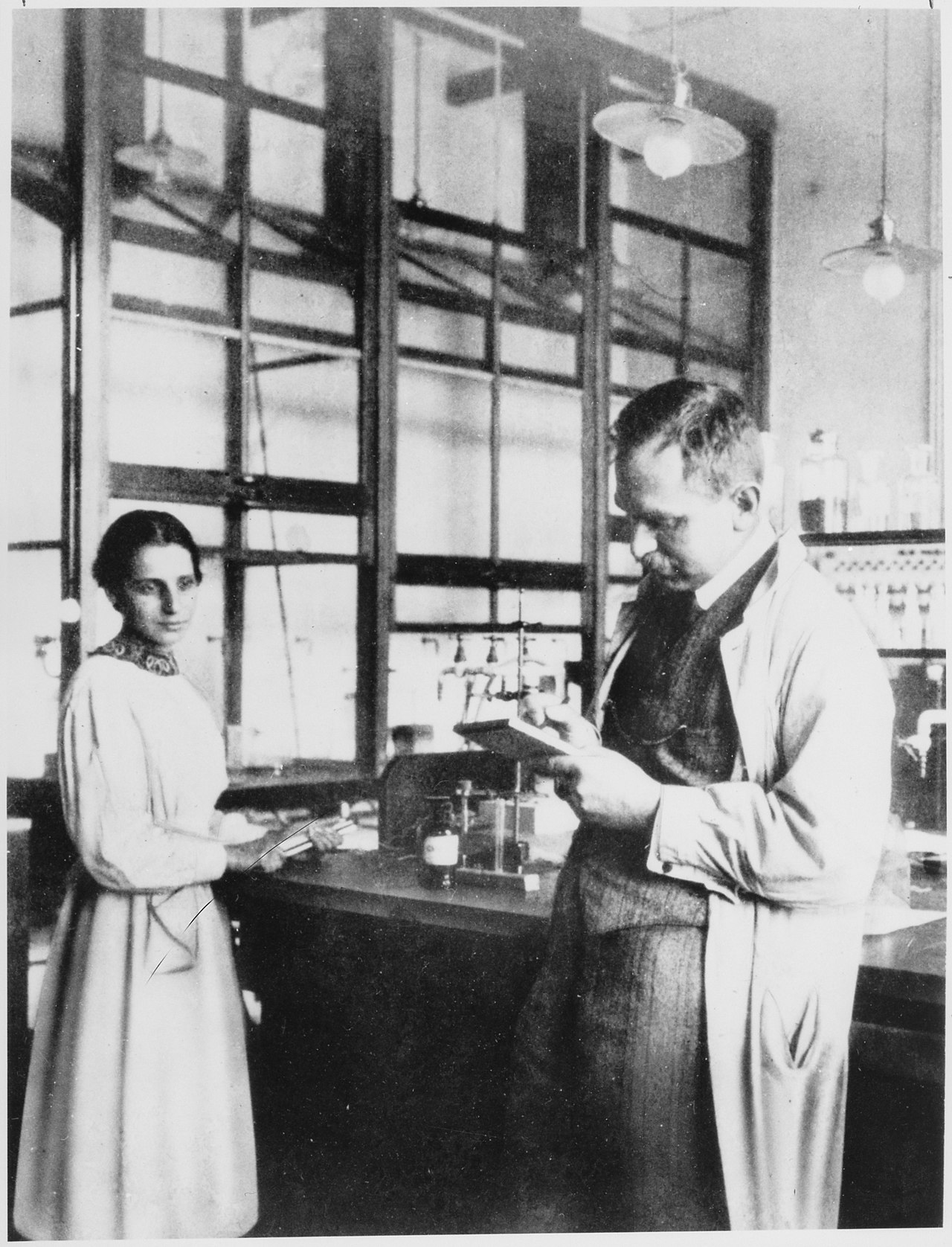
Meitner earned a doctorate in physics and built a long career that combined experimental attention to detail with careful theoretical interpretation. She completed her doctoral studies at the University of Vienna and soon entered a decades‑long collaboration with chemist Otto Hahn. In 1914 she volunteered as an X‑ray technician during World War I, an experience that broadened her practical skills and commitment to applying physics to real problems. In the 1920s she continued work on radiation phenomena and radioactive decay, undertaking experiments that probed the behaviour of heavy elements.
Discovery of fission and exile
In the 1930s Meitner and her collaborators investigated the behaviour of uranium under neutron bombardment. After the political upheavals in Europe she left Germany in 1938; correspondence and shared data with colleagues there led her, together with her nephew Otto Frisch, to provide the theoretical interpretation that identified what they called nuclear fission—the splitting of a heavy nucleus into lighter fragments with the release of large amounts of energy. This interpretation explained puzzling experimental results and opened a new field of nuclear physics. The practical implications of fission, later applied to both reactors and weapons, flowed from this scientific insight.
Recognition, controversy and legacy
Meitner’s role in the chain of discoveries that produced nuclear fission has been a subject of historical debate. A Nobel Prize in Chemistry was awarded to Otto Hahn in 1944 for work related to fission; Meitner was not included, a decision that many historians and scientists have questioned. She received numerous honors during her lifetime and posthumously: most conspicuously, element 109 was named Meitnerium in her honour. Her scientific achievements and humane stance—she consistently rejected the use of nuclear research for aggressive ends—have shaped how later generations remember her.
Personal life and beliefs
Born into a Jewish family, Meitner later converted to Lutheranism, but she was still affected by anti‑Jewish policies and intimidation in Nazi Germany, which precipitated her departure. Although her work made the physics of fission understandable, she did not take part in weaponization projects and publicly expressed reservations about the military use of atomic energy. The destruction wrought at Hiroshima intensified debates she had already engaged in about scientific responsibility.
Notable facts and continuing importance
- She combined experimental skill with theoretical insight, a hallmark of her lasting scientific influence.
- Her wartime service as an X‑ray technician illustrated her practical scientific contributions during crises.
- Her biography is a case study in the interaction of science, politics and ethics in the 20th century.
- For further reading on her life and work see specialized biographies and archives listed by major research libraries (Vienna and other collections).
Questions and answers
Q: Who was Lise Meitner?
A: Lise Meitner was an Austrian-Swedish physicist who had a very large role in discovering nuclear fission. She received her doctorate in physics from the University of Vienna in 1906 and worked with Otto Hahn throughout her entire career.
Q: What did Meitner and Hahn work on together?
A: Meitner and Hahn worked together to complete a lot of work in chemistry, including radiation research throughout the 1920s and uranium research around 1935.
Q: Was Meitner awarded any prizes or awards?
A: Yes, she won many prizes and awards for her scientific contributions.
Q: What is the element named after Meitner?
A: The element Meitnerium is named after Lise Meitner.
Q: Did she have any involvement with the atomic bomb?
A: Yes, she had many discoveries that led to the creation of the atomic bomb but did not agree with its use.
Q: What religion did she convert to?
A: Lise Meiter converted to Lutheranism.
Related articles
Author
AlegsaOnline.com Lise Meitner: Pioneer of Nuclear Fission and 20th‑Century Physics Leandro Alegsa
URL: https://en.alegsaonline.com/art/58403
Sources
- washingtonpost.com : www.washingtonpost.com
- wikidata.org : wikidata.org/wiki/Q56189
- catalogo.bne.es : XX5306921
- catalogue.bnf.fr : cb13494414w
- data.bnf.fr : (data)
- cantic.bnc.cat : a10764951
- d-nb.info : 118580477
- isni.org : 0000 0001 0909 3889
- id.loc.gov : n81015638
- genealogy.math.ndsu.nodak.edu : 110960
- id.ndl.go.jp : 00621118
- aleph.nkp.cz : nlk20010097115
- uli.nli.org.il : 001430153
- data.bibliotheken.nl : 078410541
- libris.kb.se : 211830