
Lingula (brachiopod): anatomy, fossil history, and ecological role
Lingula is a genus of inarticulate brachiopods notable for a very long fossil record, an organophosphatic shell, burrowing lifestyle and its status as a classic 'living fossil'.
Lingula is a genus of marine brachiopods often cited in paleontology and zoology because of its long fossil record and apparent morphological stability. The genus belongs to the inarticulate brachiopod group commonly placed in the class Lingulata. Modern representatives resemble forms known from deep time, which has led to their frequent description as a living fossil. Lingula species are filter feeders that live in soft sediments and are a typical example of the broader phylum of brachiopods.
Image gallery
7 Images

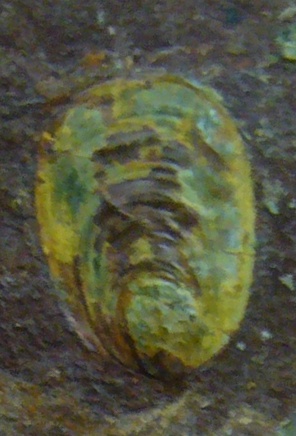


Characteristics and anatomy
Although superficially similar to bivalve molluscs, Lingula and other brachiopods differ in key ways. Their two valves are dorsal and ventral rather than left and right, and they bear a muscular stalk called a pedicle that projects from a hole or notch in one valve. The shell of Lingula is organophosphatic—containing calcium phosphate and organic components—rather than the calcite or aragonite shells typical of many molluscs. Internally they possess a lophophore, a ciliated feeding organ that traps plankton and organic particles from seawater.
Ecology and behavior
Lingula species are infaunal: they live partially buried in muddy or sandy substrates, usually in shallow coastal waters. They use the pedicle both to anchor in sediment and to maintain a U-shaped burrow. Water flow through the burrow and across the lophophore supplies food and oxygen. Like other brachiopods, Lingula is a suspension or filter feeder; for a general reference see filter feeding. Typical habitats include intertidal flats and sheltered bays where fine sediment accumulates.
Fossil record and evolutionary significance
The broader group Lingulata has a fossil record extending back to the Cambrian period. The genus Lingula itself appears in the fossil record by the early Ordovician and species very similar to living forms are known from many later deposits. Because of this continuity, Lingula is often used as an example of long-term morphological stasis and raises questions about rates of evolutionary change. Paleontologists study Lingula and related taxa to understand how ecology, development and environment influence both persistence and change over geological time.
Distinguishing features and comparisons
- Shell orientation: dorsal and ventral valves (brachiopods) versus lateral valves (bivalve molluscs).
- Attachment: Lingula uses a pedicle that passes through the shell, whereas many bivalves use byssal threads (byssus) or attach by other means.
- Feeding: Lingula uses a lophophore for suspension feeding; bivalves use gills that also function in feeding and respiration.
- Shell composition: organophosphatic in Lingula, calcareous in most bivalves and many other brachiopods.
Research, examples and notable species
One widely studied species is Lingula anatina, often collected in Asian coastal waters and used in comparative anatomy and developmental studies. Lingula remains important to scientists because it illustrates how some body plans can persist while environments change. For more general background on the group see the entry for the brachiopod genus Lingula and related resources on brachiopods. Additional overviews of brachiopod biology, paleontology and feeding strategies may be found via resources on Ordovician ecosystems, living fossils, and modern studies of filter feeding communities. For evolutionary context consult materials addressing the Cambrian origins of brachiopods (Cambrian) and summaries of attachment strategies including byssus-using molluscs.
Lingula combines simple external form with anatomical features that are distinct from molluscs. Its persistence in both the fossil record and modern seas makes it a useful taxon for teaching about continuity, adaptation and the interpretation of deep time in the fossil record.
Questions and answers
Q: What is Lingula?
A: Lingula is a genus of brachiopods in the class Lingulata.
Q: When did Lingula exist?
A: Lingula is known to have existed since the early Ordovician period.
Q: What is the significance of Lingula?
A: Lingula is a good example of a living fossil.
Q: What is the diet of Lingula?
A: Like all brachiopods, Lingula is a filter feeder.
Q: How are brachiopods similar to bivalves?
A: Brachiopods and bivalves have two shells but they can be distinguished because brachiopods have different dorsal and ventral shells.
Q: What makes Lingula and other brachiopods distinctive from mollusks?
A: Lingula and other brachiopods have a stalk (or peduncle) and their dorsal and ventral shells are distinct from each other, whereas mollusks have mirrored right and left shells.
Q: How long have Lingulata brachiopods existed?
A: The Lingulata brachiopods have existed from the Cambrian period to the present, a time span of over 500 million years!
Related articles
Author
AlegsaOnline.com Lingula (brachiopod): anatomy, fossil history, and ecological role Leandro Alegsa
URL: https://en.alegsaonline.com/art/58284