
Lindisfarne (Holy Island) — tidal island, monastery ruins and heritage site
Lindisfarne, or Holy Island, is a tidal island off Northumberland famed for its early medieval monastery, the Lindisfarne Gospels, a historic Viking raid, wildlife and pilgrimage traditions.
Overview
Lindisfarne, commonly known as Holy Island, is a small tidal island off the northeast coast of England in the county of Northumberland. The island is best known for the ruins of an early medieval monastery and as the reputed birthplace of the illuminated Lindisfarne Gospels. It is reached from the mainland by a short causeway that is covered by the sea at high tide, so access is controlled by the tides and local timetables. Much of the island is in the care of conservation organisations and it supports a small resident community (the 2001 census recorded 162 usual residents).
Image gallery
10 Images





History and religious significance
In the 7th century Lindisfarne became an important centre of Celtic Christianity when a monastic community was established to evangelise the north of England. The monastery produced important works of art and scholarship, most famously the Lindisfarne Gospels, an illuminated manuscript created in the early 8th century which later received an Old English gloss. In 793 AD the monastery was attacked by Viking raiders; this event is commonly cited as a landmark in the onset of the Viking Age in Britain. The monastic community survived in various forms until the Dissolution of the Monasteries in the 16th century, and its ruins remain a focal point for both pilgrims and visitors.
Geography and access
Lindisfarne sits just off the mainland coast and is linked by a tidal causeway. The causeway is impassable at high tide, and visitors are advised to consult local tide tables before crossing. The island is relatively flat, with sand and mudflats surrounding it at low tide and more exposed grassy areas and dunes inland. A small harbour and village provide basic services for residents and tourists.
Heritage, buildings and cultural life
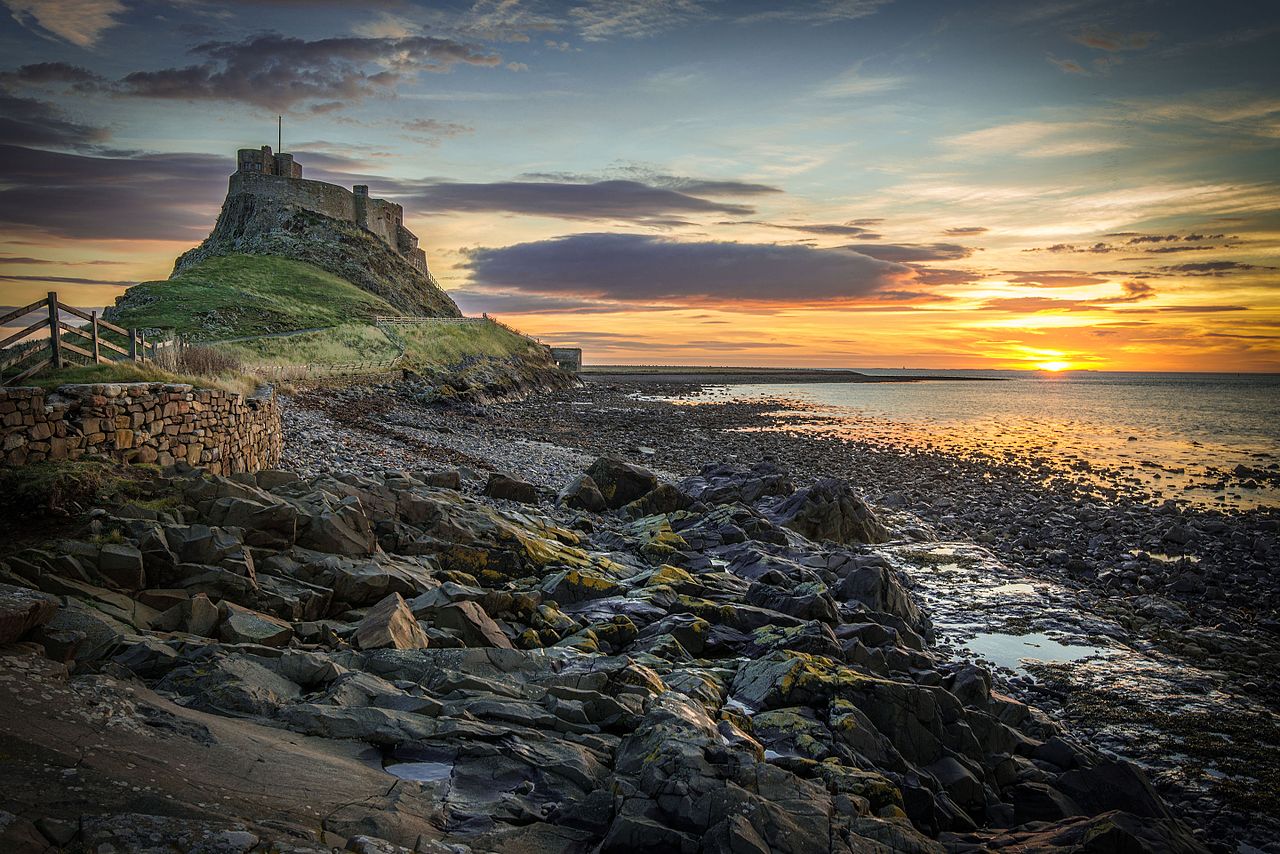
Key sites include the remains of Lindisfarne Priory and the later Lindisfarne Castle, a 16th-century fortification adapted into a house in the early 20th century. The combination of religious history, medieval art and dramatic coastal scenery makes the island a popular destination for pilgrims, historians and general visitors. Local crafts, services for pilgrims and traditional products such as Lindisfarne mead contribute to the island’s cultural economy.
Wildlife and conservation
The island and its surrounding sands are important for seabirds, migratory species and marine life; seals are commonly seen on nearby shores. Conservation groups and national stewardship programmes manage habitats and visitor impact to balance tourism with wildlife protection.
Visiting and notable facts
- The causeway connects Lindisfarne to the Northumberland mainland; check tide times before crossing (causeway information).
- The island lies within Northumberland and is part of that county’s coastal heritage (Northumberland).
- Historical accounts and literature, including poetic description, have long noted the island’s twice-daily isolation by the sea (literary reference).
- General location and visitor resources are available from regional guides and local authorities (location and visitor info).
Lindisfarne remains a vivid example of how landscape, faith and history can combine: a tidal island where early medieval art, the memory of Viking incursions and ongoing conservation efforts continue to attract scholars, pilgrims and tourists alike.
Questions and answers
Q: What is Lindisfarne?
A: Lindisfarne is a tidal island off the north-east coast of England, also known as Holy Island.
Q: How is Lindisfarne connected to the mainland of Northumberland?
A: Lindisfarne is connected to the mainland of Northumberland by a causeway.
Q: Why is Lindisfarne cut off twice a day?
A: Lindisfarne is cut off twice a day due to tides.
Q: Who described the tides around Lindisfarne?
A: Sir Walter Scott described the tides around Lindisfarne.
Q: How do pilgrims reach the shrine on Lindisfarne?
A: Pilgrims are able to reach the shrine on Lindisfarne by walking over the sands twice a day when the tide is out.
Q: What happens to the traces left by pilgrims on Lindisfarne twice a day?
A: Twice every day, the waves efface the traces left by pilgrims' staves and sandalled feet on Lindisfarne.
Q: What was the usual population of Lindisfarne in the 2001 census?
A: The usual population of Lindisfarne in the 2001 census was 162.
Related articles
Author
AlegsaOnline.com Lindisfarne (Holy Island) — tidal island, monastery ruins and heritage site Leandro Alegsa
URL: https://en.alegsaonline.com/art/58221