
Lindisfarne Gospels: an illustrated Insular manuscript from early medieval England
A richly illuminated early 8th-century manuscript produced at Lindisfarne. Combines Insular art, Latin Gospel text and the earliest surviving Old English translation; now held by the British Library.
Overview
The Lindisfarne Gospels are an illuminated manuscript containing the four Christian Gospels produced at the monastery of Lindisfarne on the tidal island off the coast of Northumberland. Created around 700 AD, the codex is regarded as a masterpiece of insular illumination, the distinctive style that developed in early medieval Britain and Ireland. The book is a single-volume presentation of the Gospel texts in Latin, written in an insular script that was characteristic of monastic centres in the period.
Image gallery
7 Images
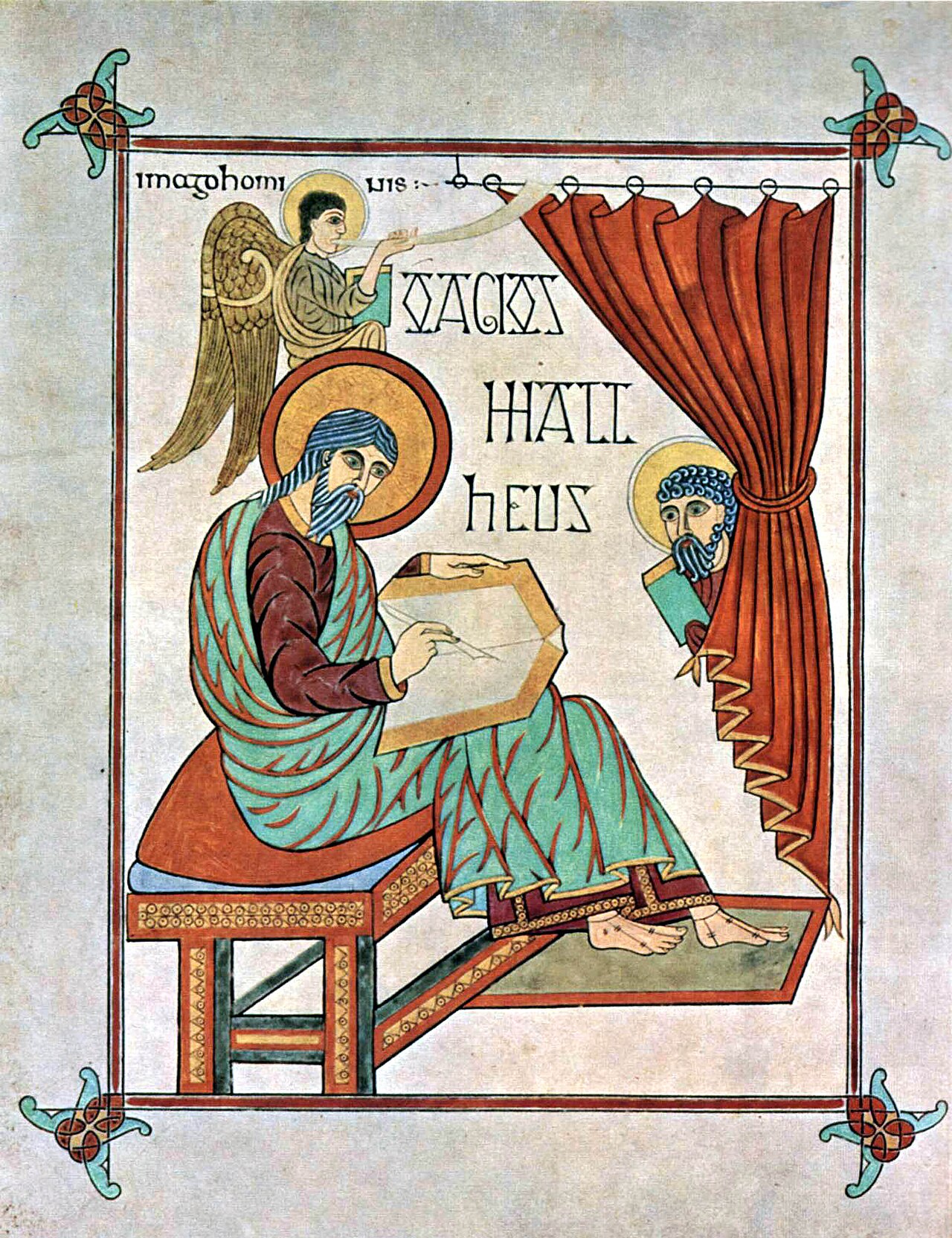
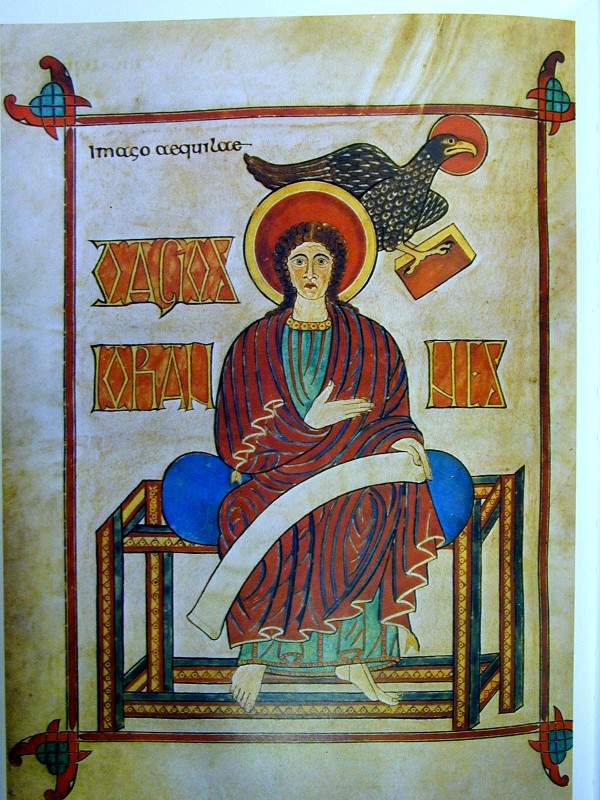
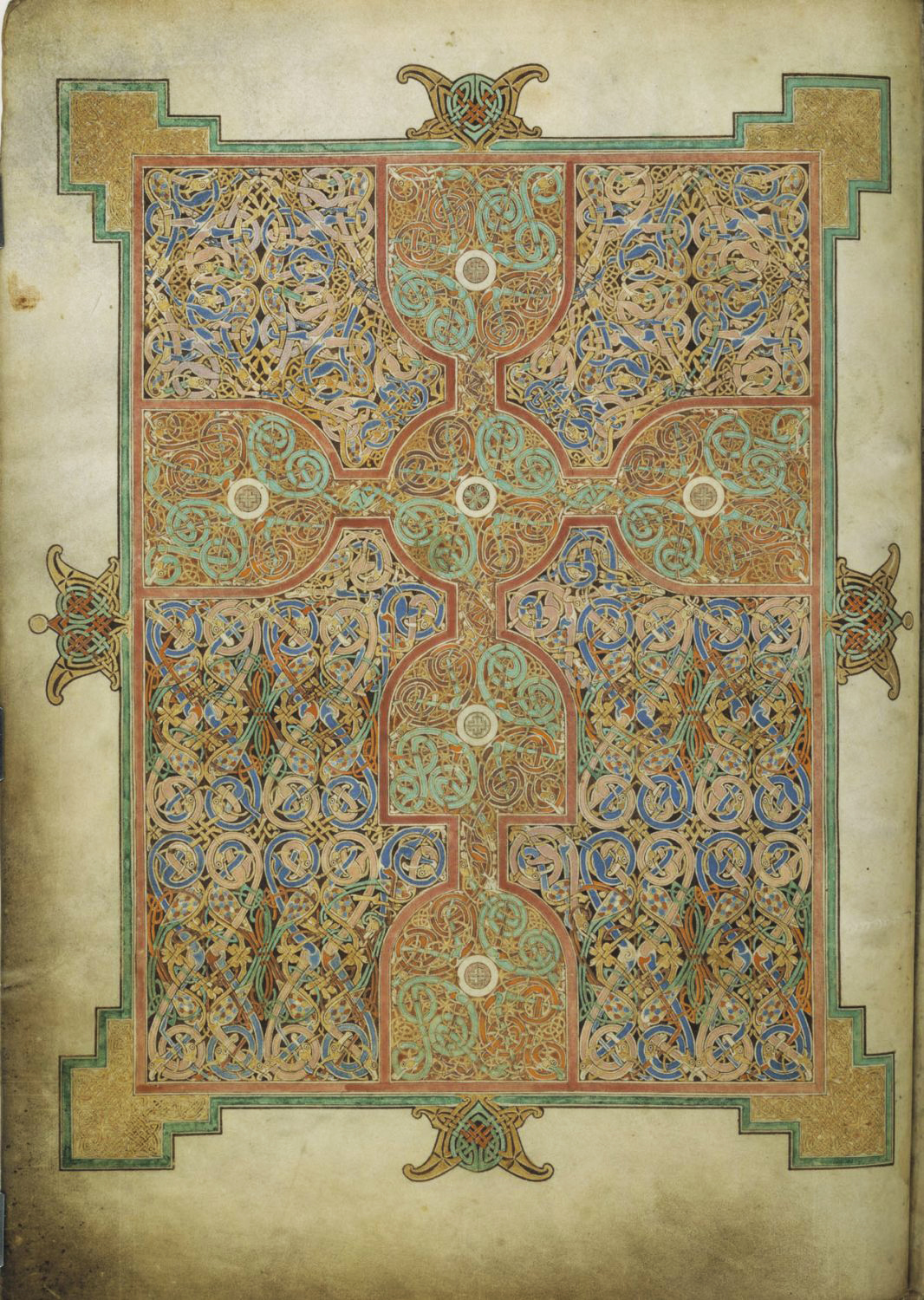


Design and contents
Physically, the manuscript was produced on prepared animal skin (vellum) and combines extensive decorative elements with the written text. Its pages include:
- full-page carpet pages—geometric, interlace and knotwork patterns that function as decorative frontispieces;
- ornamented initial letters that introduce sections and chapters;
- portraits and symbolic depictions of the four evangelists;
- carefully ruled text columns executed by a skilled scribe and illuminator.
Attribution and production
Medieval and modern authorities attribute the work to Eadfrith, who was a monk and later bishop of Lindisfarne. Eadfrith is traditionally credited with serving both as scribe and artist, though the production of such a complex volume may have involved several craftsmen working within the monastic scriptorium. The book demonstrates a fusion of Mediterranean manuscript models with local Anglo-Saxon and Celtic decorative motifs, a hallmark of insular art.
History and later additions
The Gospels remained a treasured object at Lindisfarne until Viking raids prompted monks to remove the community and its relics inland. In the 10th century, Aldred, provost of Chester-le-Street, wrote an interlinear translation, rendering the Latin text into Old English between the lines; this is the oldest surviving translation of the Gospels into English. Over the centuries the manuscript changed hands and locations, associated with centers such as Durham Cathedral, and later entered the collections of the British Museum before being housed at the British Library.
Significance and legacy
The Lindisfarne Gospels are important for multiple reasons: they are a high point of Insular art, a rare intact witness to early medieval book production, and a primary source for the history of the English language because of Aldred’s interlinear translation. Scholars study the manuscript to understand monastic culture, artistic exchange between Irish, Anglo-Saxon and continental traditions, and the technical aspects of parchment preparation, pigments and scripts. Reproductions and scholarly editions have made the Gospels widely known beyond specialists, and the volume remains a focal object for exhibitions and research.
Further reading and resources
General introductions and museum catalogues provide accessible contexts for the work. For more on illuminated books and monastic scriptoria see introductory materials from major libraries and research centers such as those represented by institutional pages like book, monastery or studies focused on individual figures such as the monk traditionally named as its creator. Detailed codicological and art-historical studies explore the hand, iconography and materials in depth; museum collection pages and scholarly projects also provide images and commentary under specified access terms (illuminated manuscript, Northumberland, Lindisfarne).
For primary-source display and current holdings see the institution that curates the object today at the British Library. Historical provenance pathways trace the manuscript through medieval relocations and later institutional transfers, reflecting the turbulent history of religious houses and collecting practices in Britain.
Questions and answers
Q: What is the Lindisfarne Gospels?
A: The Lindisfarne Gospels is an Illuminated manuscript book of the gospels which was made at a monastery off the coast of Northumberland at Lindisfarne, about 700 AD.
Q: Where can it be found today?
A: The manuscript is now on display in the British Library.
Q: What style does it combine?
A: The Lindisfarne Gospels combines Mediterranean, Anglo-Saxon and Celtic elements.
Q: Who is thought to have created it?
A: The Lindisfarne Gospels are thought to be by Eadfrith, a monk who became Bishop of Lindisfarne in 698 and died in 721.
Q: What type of script was used for its text?
A: The text is written in a hand known as 'insular script'.
Q: Who translated the Latin text into Old English?
A: In the 10th century an Old English translation of the Gospels was written word-for-word between the lines of the Latin text by Aldred, Provost of Chester-le-Street.
Q: How did it end up at its current location?
A: The Gospels may have been taken from Durham Cathedral during the Dissolution of the Monasteries, ordered by Henry VIII. In the 18th century it was given to the British Museum before being transferred to its current location at British Library when this was split off from British Museum.
Related articles
Author
AlegsaOnline.com Lindisfarne Gospels: an illustrated Insular manuscript from early medieval England Leandro Alegsa
URL: https://en.alegsaonline.com/art/58220
Sources
- books.google.com.au : Celtic and Anglo-Saxon Art: geometric aspects
- bl.uk : Lindisfarne Gospels
- sunderlandecho.com : Let Gospels come home
- bl.uk : Time line