
Lied: the German art song tradition and its musical forms
Lied (plural Lieder) denotes the German art song: typically a setting of poetry for voice and piano. This article explains forms, history from medieval minnesingers to Romantic masters, performance practice and legacy.
Overview
The German word Lied (pronounced “leed”) simply means "song"; its plural is Lieder. In classical-music contexts the term is used specifically for songs that set high-quality poetry to composed music, usually for a solo singer with piano accompaniment. Many English-language sources translate Lied as "art song" to distinguish these composed pieces from folk song and popular song. The art of the Lied places special emphasis on the intimate relationship between text and musical expression: the composer crafts the vocal line and accompaniment to illuminate the poem's mood, imagery and narrative.
Image gallery
2 Images
Characteristic features and musical forms
Most Lieder are written for a single voice and piano, although arrangements and orchestral versions exist. The piano often does more than support the singer: it provides atmosphere, paints scenes, and interacts contrapuntally with the vocal line. Two common structural approaches are strophic form, where the same music repeats for several verses (A–A–A), and durchkomponiert (through-composed), where music changes with each stanza to follow the text’s nuances. Composers also use modified strophic patterns (A–A–B, A–B–A) and brief internal refrains. Typical expressive devices include word painting, shifting tonal centers to reflect emotion, varied accompaniment textures, and economical motivic reuse across a set of songs.
Origins and early development
The Lied has deep roots in German-speaking regions. Medieval poet-composers known as minnesingers combined vernacular verse and melody in courtly contexts; a prominent figure from that tradition is Walther von der Vogelweide, whose role as both poet and composer foreshadows later text-centered practice. During the Classical period composers such as Mozart and Beethoven experimented with solo song settings that treated the voice as an expressive vehicle distinct from operatic declamation. As the piano evolved in the late 18th and early 19th centuries, its expanded dynamic range and sustaining capability made it a more versatile partner for the vocal soloist than earlier keyboard instruments.
The Lied in the 19th century: Romantic flowering
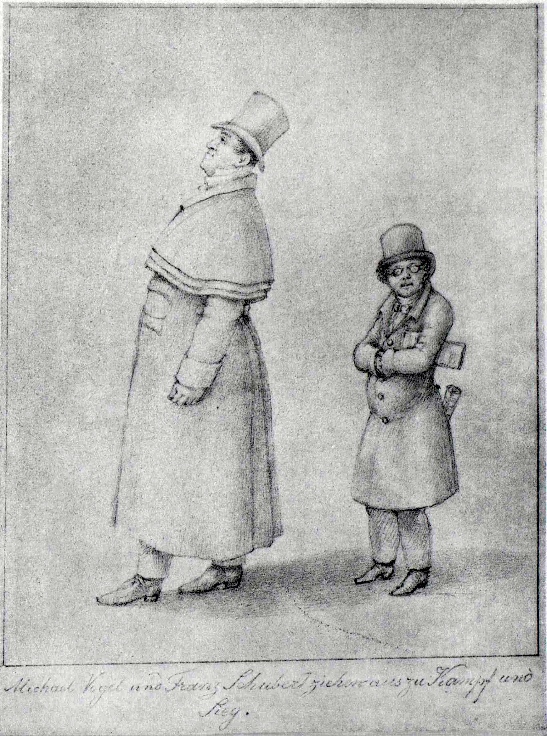
The 19th century is commonly regarded as the golden age of the Lied. Composers selected poetry by leading literary figures and created settings that became concert staples. Franz Schubert stands central to this flowering: he produced more than six hundred songs that range from short lyrical miniatures to expansive narrative scenes. Schubert used strophic, modified-strophic and through-composed techniques, and he advanced the piano's role as an equal expressive partner, often encoding mood and action in the accompaniment. Robert Schumann, a composer and pianist, contributed many cycles and songs with richly colored accompaniments and a strong affinity for the poems of Heinrich Heine and Joseph von Eichendorff. Johannes Brahms, Hugo Wolf and Richard Strauss extended the Lied’s expressive palette, each emphasizing different balances between voice and piano or orchestra. Parallel developments include songs with orchestral forces and the emergence of the song cycle as a unified dramatic or psychological arc.
Song cycles, notable works and composers
The idea of grouping songs into cycles that tell a story or explore a theme became central in the Romantic Lied. Examples that illustrate the range of the genre include Schubert's long narrative cycles, which follow protagonists through emotional journeys; Schumann's psychologically intimate cycles; Mahler's orchestral songs and integrative use of folksong; and Strauss's late orchestral Lieder that reflect a mature harmonic language. Representative works and references include well-known titles that singers and listeners frequently encounter in recitals and recordings:
- Franz Schubert – prolific Lied composer, e.g., Erlkönig and Die Winterreise.
- Robert Schumann – reciter of poetic cycles such as Dichterliebe.
- Johannes Brahms – intimate Lieder including lullabies and serious songs.
- Hugo Wolf – concentrated, intense musical miniatures often grouped by language or poet.
- Richard Strauss – late orchestral songs including his final song set.
- Gustav Mahler – orchestral songs and incorporation of song material into symphonies.
- Wolfgang Amadeus Mozart and other classical precursors who explored solo-song writing.
Poetry, text setting and performance practice
A defining characteristic of the Lied tradition is its close collaboration with poetry. Composers often set texts by established poets, believing the craft of the poem provided a worthy foundation for musical elaboration. Poets such as Goethe and Schiller supplied texts that composers found especially resonant; later composers turned to a wider range of poets and vernacular sources. In performance, singers balance textual clarity, expressive nuance and technical demands while the pianist—orchestra in orchestral versions—must shape color, pacing and harmonic shading. Historical performance considerations include choices about tempo rubato, articulation, use of rubato to emphasize textual inflection, and whether to perform piano reductions or full orchestrations.
Forms, adaptations and legacy
Beyond the core solo-voice-and-piano configuration, Lieder have been adapted for voice with chamber ensembles and full orchestra; they have been transcribed for different voice types; and they have inspired composers outside German-speaking areas to apply similar text-centered techniques in their own languages. The song cycle as structural idea influenced 20th-century song composers and film composers who seek to link music and narrative. In addition, the Lied tradition helped raise the standing of the art song as a recital genre and shaped modern vocal pedagogy by demanding precise diction, nuanced storytelling, and a collaborative rapport between singer and accompanist.
Key characteristics and distinctions
- Primary language: German, though the form influenced many languages.
- Typical forces: solo voice with piano; notable exceptions use full orchestra.
- Text origin: high-quality poetry rather than vernacular folksong, though folk material is sometimes incorporated.
- Forms: strophic, modified strophic, through-composed, and cyclical sets.
- Performance focus: intimate storytelling, precise diction and piano–voice interplay.
Further topics and resources
For readers seeking deeper study, important related topics include discussions of individual composers, the role of specific poets, historical context for keyboard instruments, and the distinctions between operatic and art-song writing. The list below points to a range of names and subjects associated with the Lied tradition; each entry links to a thematic placeholder for further reading or archival references.
- Definition and etymology of the word Lied
- Plural form: Lieder
- Place of the Lied in classical music
- German-speaking composers
- Classical music context
- Piano accompaniment and its evolution
- The 19th century and Romanticism
- Romantic period characteristics
- German cultural background
- Medieval origins
- Walther von der Vogelweide and minnesingers
- Courtly performance contexts
- Poet-composers in earlier eras
- Harpsichord and keyboard predecessors
- Techniques: pianistic figurations
- Word painting and musical illustration
- Settings of Goethe and other poets
- Song cycles (Liederkreis)
- Poets: Heine, Eichendorff and others
- Harmonic experiments in late-Romantic Lieder
- Influence of Wagner
- Integration of song and symphony
- Performance settings: salon, recital, court
- Vocal types and casting in cycles
- Mahler’s orchestral songs
- Brahms’s approach to voice and accompaniment
- Hugo Wolf’s concentrated miniatures
- Richard Strauss’s late songs
- Classical precursors such as Mozart
Questions and answers
Q: What is the meaning of the German word "Lied"?
A: The German word "Lied" means "song".
Q: What type of songs are Lieder?
A: Lieder are songs for a singer with piano accompaniment.
Q: When were most Lieder composed?
A: Most Lieder were composed in the 19th century, which was known as the Romantic period.
Q: Who were some of the famous composers of Lieder?
A: Some famous composers of Lieder include Franz Schubert, Robert Schumann, Johannes Brahms, Hugo Wolf and Richard Strauss.
Q: How did 19th century composers usually create their songs?
A: In the 19th century, most songs were created by two different people - a poet wrote the words and then a composer would set them to music.
Q: Who was one of earliest minnesinger who composed and sang songs for important people at royal court?
A: Walther von der Vogelweide was one of earliest minnesinger who composed and sang songs for important people at royal court.
Q: What is an example of a song written by Schubert that follows a form used by Walther von der Vogelweide? A: One example is Erlkönig (Erlking), which follows a form consisting three verses with two having same music (A-A-B).
Related articles
Author
AlegsaOnline.com Lied: the German art song tradition and its musical forms Leandro Alegsa
URL: https://en.alegsaonline.com/art/57827