
Libyan Desert: geography, history and notable features
A concise overview of the Libyan Desert — a vast, extremely arid region of the Sahara — covering landscape, climate, notable sites, human history and its scientific and cultural importance.
Overview
The Libyan Desert denotes the portion of the Sahara occupying much of present-day Libya and adjoining areas. In modern usage it commonly refers to the desert within the borders of the state of Libya (present-day Libya), while in older classical sources it described the wasteland south of Ancient Libya (Ancient Libya). It is widely regarded as one of the driest, most remote and least populated parts of the Sahara.
Image gallery
6 Images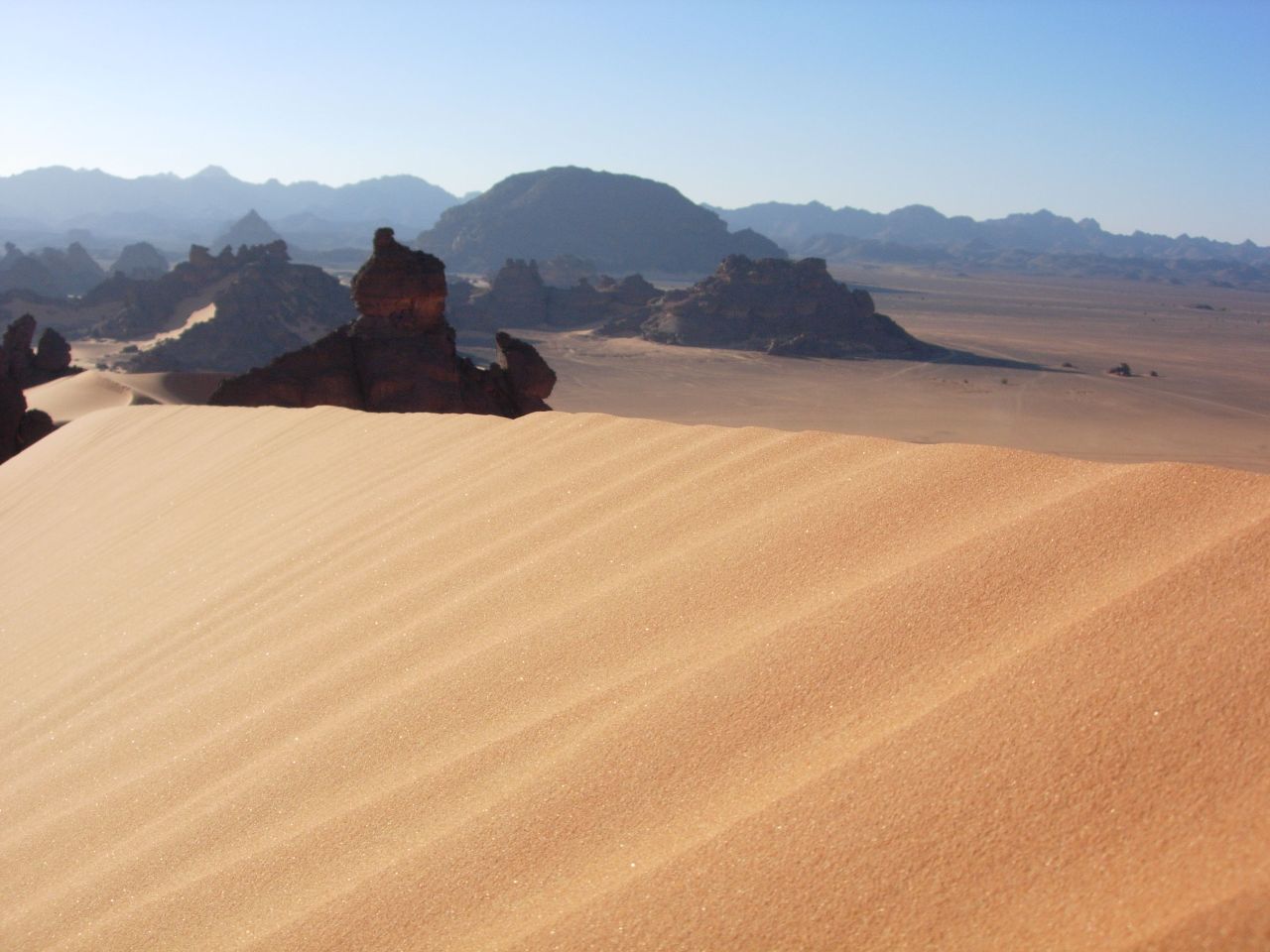
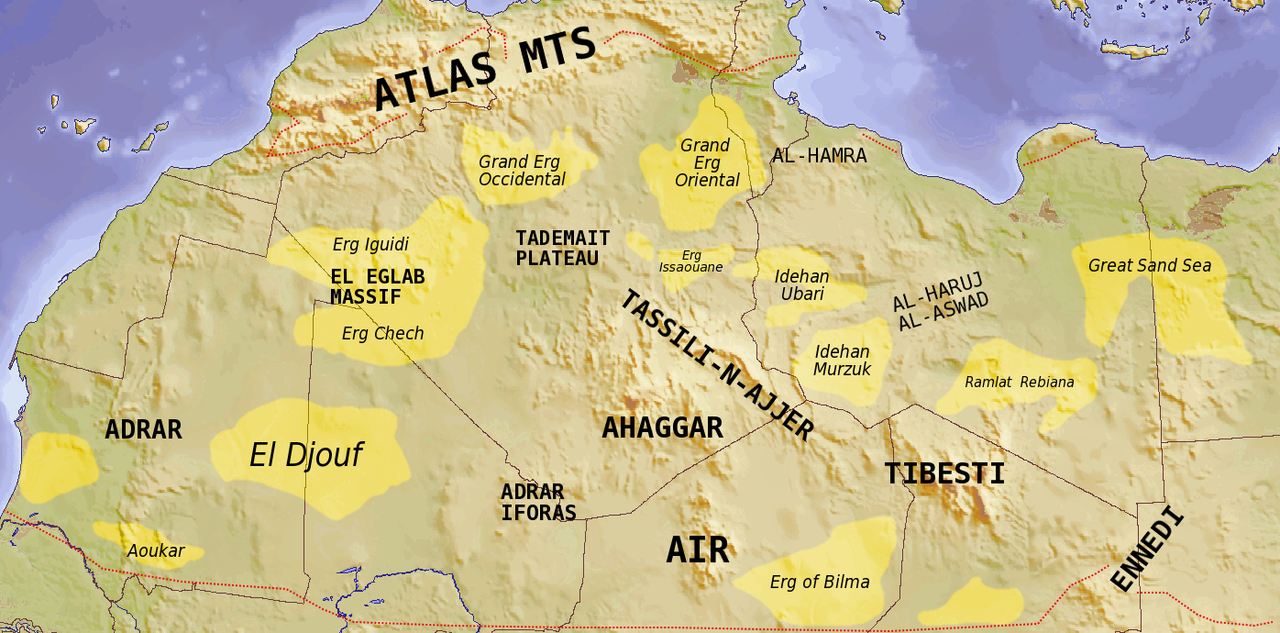


Landscape and climate
The terrain mixes extensive sand seas (ergs), flat rocky plateaus (hamada), scattered salt pans and intermittent depressions. Rainfall is extremely scarce and unpredictable, and temperatures can be very high by day with sharp nocturnal cooling. This combination produces a stark, largely barren environment where water and vegetation are limited to rare oases and dry riverbeds.
Notable features
- Large sand fields and dune seas that shift with prevailing winds.
- Isolated plateaus such as the Gilf Kebir, known for dramatic escarpments and prehistoric rock art.
- Oases and lake depressions, including the Ubari Lakes and the Kufra region, that support small settlements and caravan stops.
- The Libyan Desert Glass fields — natural glass fragments found in parts of the eastern Sahara and of interest to geologists.
Human history and uses
Although sparsely inhabited, the Libyan Desert bears evidence of ancient human presence in the form of rock paintings and traces of former lakes, indicating wetter climates in prehistory. Historically it sat along trans-Saharan caravan routes used for trade. In more recent centuries nomadic groups such as Tuareg and other Saharan peoples traversed parts of the region. During the 20th century the desert gained strategic attention during military campaigns and later as an area for exploration and scientific study.
Ecology and significance
Vegetation is limited to drought-adapted shrubs and grasses near water sources; animal life includes hardy reptiles, insects and occasional camel and goat populations maintained by human communities. The Libyan Desert continues to be important for geological research, archaeology, and increasingly for regulated adventure tourism, while remaining one of the planet's most extreme natural environments.
Distinctive facts
Distinctive aspects include its extreme aridity, the contrast between vast empty spaces and isolated pockets of life, and cultural landmarks such as prehistoric rock art and oases that have long served as lifelines across the sands. Scientific debates, for example on the origin of Libyan Desert Glass, illustrate how the region continues to intrigue researchers.
Questions and answers
Q: What is the Libyan Desert?
A: The Libyan Desert forms the northern and eastern part of the Sahara Desert, and it lies within the present-day state of Libya.
Q: What is the historical significance of the Libyan Desert?
A: The Libyan Desert historically describes the desert to the south of Ancient Libya, a territory which lay to the east of the present-day state.
Q: What kind of environment can we find in the Libyan Desert?
A: The Libyan Desert is one of the driest, harshest, and most remote parts of the Sahara, and it is barren, dry, and rainless.
Q: What is the size of the Libyan Desert compared to the rest of the Sahara?
A: The Libyan Desert is a part of the Sahara Desert, which is the world's largest hot desert.
Q: How would you describe the overall condition of the Libyan Desert?
A: The Libyan Desert is a barren and dry place with no rainfall.
Q: What kind of challenges could humans face while living in the Libyan Desert?
A: Humans could face challenges such as lack of water, harsh weather conditions, and the remoteness of the area while living in the Libyan Desert.
Q: Can animals survive in the Libyan Desert?
A: Despite the harsh conditions, some animals such as desert reptiles, rodents, and camels have adapted to live in the Libyan Desert.
Related articles
Author
AlegsaOnline.com Libyan Desert: geography, history and notable features Leandro Alegsa
URL: https://en.alegsaonline.com/art/57786