
Army of the Tennessee — Union field army in the Western Theater
Union field army in the American Civil War named for the Tennessee River; fought major Western campaigns including Fort Donelson, Shiloh, Vicksburg, Chattanooga, and the Atlanta campaign.
Overview
The Army of the Tennessee was a principal Union field army that operated in the Western Theater of the American Civil War. Its name derived from the Tennessee River, which flowed through many of the regions where it campaigned; the designation distinguished it from other Union formations and from the Confederate force with the similar-sounding title. As a mobile combined-arms formation, the army played central roles in operations that sought to seize control of strategic riverways, rail hubs, and southern strongpoints.
Image gallery
10 Images




Organization and characteristics
Like other Civil War armies, the Army of the Tennessee was organized into corps, divisions, and brigades, combining infantry, artillery and cavalry elements to conduct large-scale maneuvers and sieges. Its structure evolved over the war as units were created, merged, or reassigned; commanders relied on both regular volunteer regiments and specialist detachments for reconnaissance, engineering, and river transport. The army’s mobility on rivers and railroads and its ability to coordinate assaults and entrenchments were defining operational traits.
History and major operations
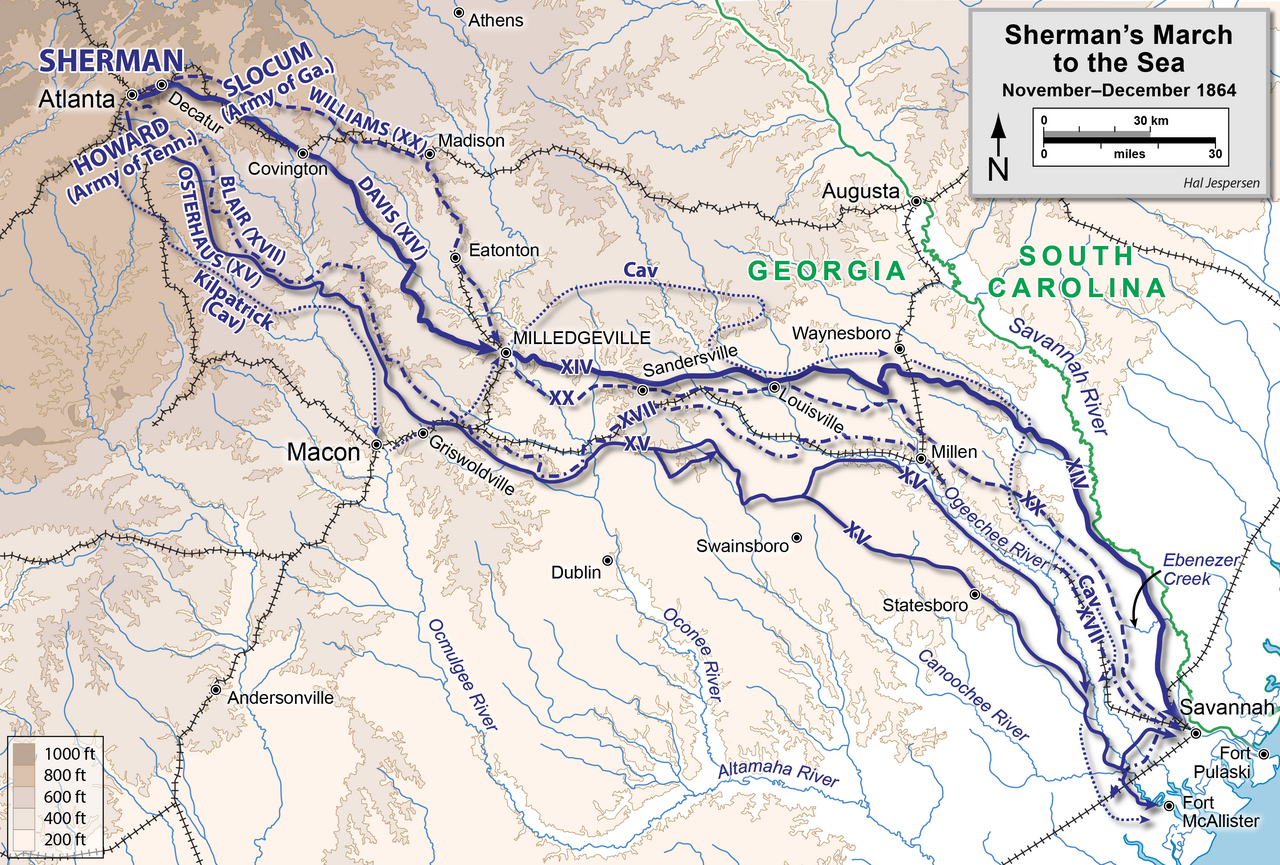
Formed early in the conflict under Union leadership in the West, the army participated in a series of key campaigns. In 1862 it helped secure victories that opened the Mississippi valley and Tennessee river approaches, including early operations that culminated in battles such as Fort Donelson and Shiloh. In 1863 the army was a central force in the Vicksburg campaign, an extended operation that gained Union control of the Mississippi River and split the Confederacy. Later that year its elements contributed to the actions around Chattanooga that reopened the gateway to the Deep South. In 1864 components of the army took part in the Atlanta campaign, helping to sever Confederate lines of communication and industry.
Commanders and notable engagements
The Army of the Tennessee was led at different times by several prominent Union generals whose decisions shaped Western campaigns. Figures commonly associated with the army include Ulysses S. Grant, who used it effectively in coordinated river and land operations; William T. Sherman, who later relied on its veteran corps in wider campaigns; and James B. McPherson, who commanded with distinction before his death in the field. Major engagements often cited in the army’s service record include Fort Donelson, Shiloh, the Vicksburg campaign, Chattanooga, and actions during the Atlanta operations.
Importance and legacy
The Army of the Tennessee contributed materially to Union strategic goals by securing vital waterways, capturing transportation hubs, and breaking Confederate territorial continuity in the West. Its campaigns helped isolate the Confederacy, enabled deeper incursions into southern territory, and supported political objectives at the national level. Veterans of the army, battle honors, and its operational doctrines influenced later military thinking about combined-arms coordination and riverine logistics.
Distinction and common confusion
The Army of the Tennessee should not be confused with the Confederate formation named the Army of Tennessee. The similar names reflect different naming conventions: the Union force took its name from the Tennessee River and the Confederates named theirs after the state of Tennessee. The Union army was part of the federal war effort and is sometimes referred to in sources simply as a Western army or a component of the Military Division that coordinated operations in the Mississippi and southern inland regions. The opposing force was a Confederate field army operating under Southern commands, and thus the two are separate entities despite the near-identical titles; one is a Confederate formation while the other was a Union formation documented in many contemporary reports and histories.
Further reading and resources
- Basic summaries of Union Western operations are available in general Civil War surveys and reference works; consult dedicated unit histories for corps- and regimental-level detail. See a general entry on the army as a Union field army.
- Campaign studies of Vicksburg and Atlanta provide the most detailed operational accounts of the army’s actions and consequences for the wider war effort.
Questions and answers
Q: What was the Army of the Tennessee?
A: The Army of the Tennessee was a Union field army during the American Civil War.
Q: In which theater did the Army of the Tennessee fight?
A: The Army of the Tennessee fought in the Western Theater.
Q: How did the army get its name?
A: The Army of the Tennessee was named after the Tennessee River.
Q: Is the Army of the Tennessee the same as the Army of Tennessee?
A: No, the Army of the Tennessee is not the same as the Army of Tennessee.
Q: What was the Army of Tennessee?
A: The Army of Tennessee was a Confederate army named after the state of Tennessee.
Q: Where did the Army of Tennessee fight?
A: It is not specified where the Army of Tennessee fought.
Q: Was the Army of Tennessee on the same side as the Army of the Tennessee during the Civil War?
A: No, the Army of Tennessee was a Confederate army while the Army of the Tennessee was a Union army.
Related articles
Author
AlegsaOnline.com Army of the Tennessee — Union field army in the Western Theater Leandro Alegsa
URL: https://en.alegsaonline.com/art/5764