
Levi Strauss: Founder of Levi Strauss & Co. and inventor of riveted jeans
Biography and legacy of Levi Strauss, the 19th-century German‑born American entrepreneur who co‑pioneered riveted denim work pants and established the Levi's brand.
Overview
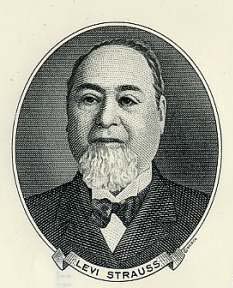
Levi Strauss (born Löb Strauss) was a German‑born American entrepreneur whose business innovations in the mid‑19th century helped create one of the world’s best‑known clothing products: the riveted denim pant. Emigrating as a young man to the United States, he established a dry‑goods firm in San Francisco that evolved into Levi Strauss & Co., the company best known today by the shortened brand name "Levi's." His work combined practical needs of laborers with durable materials and a patented reinforcement technique that transformed workwear into a global garment.
Image gallery
3 Images

Early life and move to America
Born into a Jewish family in Bavaria, Strauss moved with family members to New York City as a teenager where he joined relatives in a dry‑goods business. Adopting the name Levi Strauss, he later traveled west during the California Gold Rush. In San Francisco he sold a range of supplies to miners and settlers, including cloth, hardware and tent canvas. Recognizing the harsh conditions faced by miners and manual laborers, he adapted his merchandise to local need and expanded his wholesale and retail activities.
From sailcloth to denim: the making of a garment
Miners and laborers needed trousers that would withstand constant abrasion and strain. Strauss initially used heavy canvas for overalls, then switched to a twilled cotton fabric known broadly as denim — originally serge de Nîmes — which offered strength with greater comfort. The distinctive construction that set his product apart combined sturdy fabric with reinforced stress points. This approach responded directly to complaints about torn pockets and split seams common in frontier workwear.
The rivet patent and manufacturing
A pivotal development came when a tailor who bought cloth from Strauss began reinforcing pockets with metal rivets to prevent tearing. After joining forces with that tailor and funding a patent application, Strauss and his collaborator were granted a U.S. patent for the use of copper rivets at strain points. That legal protection enabled the company to manufacture and market the riveted work pant on a larger scale. Over time the product line expanded, production methods modernized, and the brand name became associated both with practical work clothing and with broader cultural movements.
Business growth, succession and cultural legacy
Levi Strauss never patented a fashion but built a family business that survived natural disasters, changing markets and the transition from regional outfitter to international brand. After his death the company remained in family hands and continued to innovate in manufacturing, distribution and design. The trousers Strauss helped popularize moved beyond mining camps and factories to become symbols of casual dress and youth culture in the 20th century. Today, riveted denim pants are produced worldwide in myriad styles, while the Levi's name retains strong recognition tied to durability, blue denim and a particular cut and hardware arrangement that echoes the original workwear.
Characteristics, uses and notable facts
- Material: Traditionally heavy‑weight twill cotton (denim), often dyed with indigo for a characteristic blue color.
- Reinforcements: Metal rivets at pocket corners and other high‑stress points to reduce tearing.
- Primary uses: Initially practical workwear for miners, carpenters and laborers; later embraced for everyday and fashion wear worldwide.
- Iconic status: Certain cuts and models have become cultural symbols and are collected or reproduced as heritage garments.
- Business impact: The brand influenced ready‑to‑wear manufacturing, retailing and global apparel markets.
Further reading and references
- Reference 1
- Reference 2
- Reference 3
- Reference 4
- Reference 5
- Reference 6
- Reference 7
- Reference 8
- Reference 9
- Reference 10
- Reference 11
- Reference 12
- Reference 13
- Reference 14
- Reference 15
- Reference 16
- Reference 17
- Reference 18
- Reference 19
- Reference 20
- Reference 21
- Reference 22
- Reference 23
- Reference 24
- Reference 25
- Reference 26
- Reference 27
- Reference 28
- Reference 29
- Reference 30
The history of Levi Strauss bridges immigrant enterprise, industrial innovation and cultural transformation. From heavy canvas and rivets to contemporary fashion, the garment and the company exemplify how a design rooted in utility can come to embody broad social and economic change.
Questions and answers
Q: Who was Levi Strauss?
A: Levi Strauss was a German-born American maker of clothing. He was born as Löb Strauss into a Jewish family in Buttenheim, Bavaria, Germany.
Q: When did Levi Strauss move to San Francisco?
A: In 1853, Strauss moved to bustling San Francisco, California.
Q: What inspired the invention of Levi's jeans?
A: Prospectors and miners often complained about their easily torn cotton "britches" and pockets that "split right out", which gave Levi the idea to make a rugged overall trouser for them to wear.
Q: What fabric did he use for his trousers?
A: Initially he used bolts of brown canvas sailcloth but eventually switched to a sturdy fabric called serge made in Nimes, France. This fabric became known as denim.
Q: Who helped him patent his process?
A: Jacob Davis, a Reno Nevada tailor who purchased cloth from the company, suggested that they take out the patent together and so they received United States patent #139121 for using copper rivets to strengthen the pockets of denim work pants.
Q: How long did it take for Levi's brand of jeans to be manufactured after receiving the patent?
A: After receiving the patent in 1873, Levi's brand of jeans began manufacturing shortly afterwards using fabric from Amoskeag Manufacturing Company in Manchester New Hampshire.
Q: Who inherited his fortune after his death?
A: After his death on September 26 1902 at age 73, he left his business to his four nephews—Jacob, Louis Abraham and Sigmund Stern—who helped rebuild it after 1906 San Francisco earthquake and fire. The following year Jacob Davis sold back his share of the company and Peter Haas and his family are now primary heirs to the Levi Strauss fortune.
Related articles
Author
AlegsaOnline.com Levi Strauss: Founder of Levi Strauss & Co. and inventor of riveted jeans Leandro Alegsa
URL: https://en.alegsaonline.com/art/57568