
Lesser Sunda Islands (Nusa Tenggara)
Island chain in southeastern Indonesia and Timor-Leste forming the eastern Sunda Islands, noted for volcanic landscapes, Wallacean biodiversity, and diverse cultures.
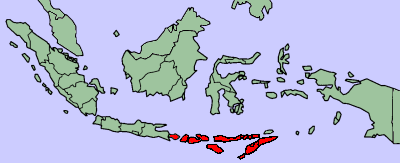
The Lesser Sunda Islands, also called Nusa Tenggara, form the eastern half of the Sunda Islands chain in maritime Southeast Asia. The group lies east of the Greater Sunda Islands and stretches roughly from Bali in the west to Timor in the east. The archipelago is located in a chain of islands in southern Southeast Asia, north of Australia (see map region), and is commonly referred to collectively as part of the Sunda Islands.
Image gallery
8 Images



Geography and main islands
Politically the islands are divided between Indonesia and the sovereign state of East Timor. The chain includes several well-known islands and many smaller ones. Among the principal islands are:
- Bali
- Lombok
- Sumbawa
- Flores
- Sumba
- Alor and the Alor archipelago
- Wetar and nearby islets
- Timor (western part under Indonesia, eastern part is Timor-Leste)
- Smaller satellite islands such as Rote and Savu
Geology and volcanic activity
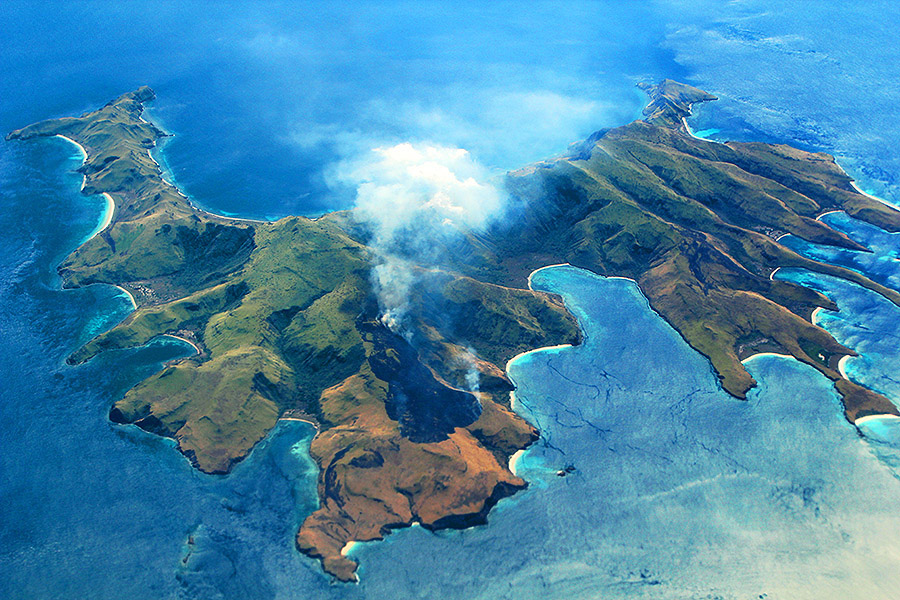
The Lesser Sundas lie along the Sunda Arc, a volcanic chain produced by subduction of the Australian Plate beneath the Eurasian (Sunda) Plate. Volcanoes, seismicity and uplift have shaped the islands over millions of years. The subduction occurs along features including the Java Trench and related trenches to the south, giving the region an active tectonic character and many volcanic peaks.
Biodiversity and biogeography
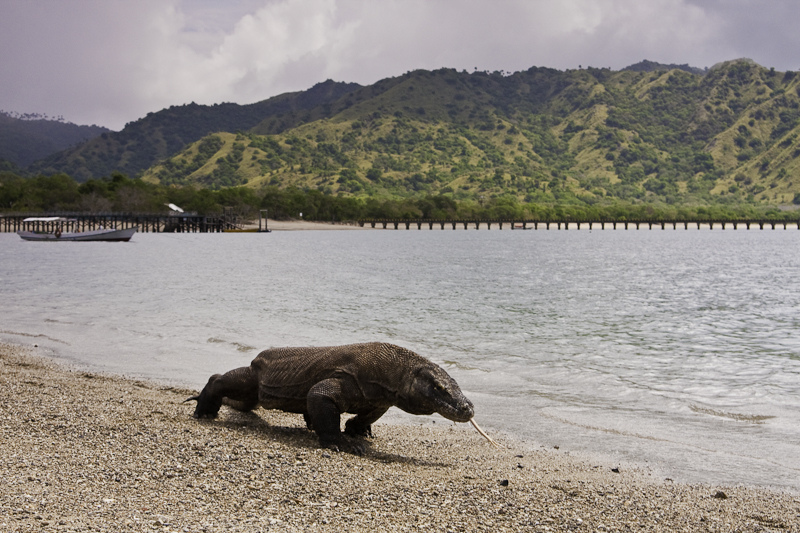
Biologically the Lesser Sundas occupy a transition zone called Wallacea, between Asian and Australasian faunas. This results in a mix of species and a high level of endemism. Famous residents include Komodo dragons on a few islands and numerous endemic birds, reptiles and plants. The islands’ varied habitats—dry forests, monsoon woodlands, volcanic highlands and coral reefs—support both terrestrial and marine conservation importance.
History, culture and economy
Human settlement on these islands has a long history, with Austronesian languages and local cultural traditions shaping social life. European contact brought Portuguese and Dutch influences at different times, and colonial competition affected political boundaries. Today tourism (notably Bali and Komodo National Park), subsistence agriculture, fishing and small-scale commerce drive local economies. Cultural diversity is reflected in languages, crafts and religious practices across the islands.
Conservation and challenges
The Lesser Sundas face environmental pressures: habitat loss, overfishing, invasive species and the impacts of tourism. Conservation efforts focus on protecting endemic species and key marine and terrestrial habitats, while balancing local development needs. For further regional context and resources see general references at regional overview and geological summaries such as subduction studies.
Notable facts: the archipelago bridges major biogeographic realms, forms part of an active volcanic arc, and contains both world-famous tourist destinations and remote, culturally distinct communities.
Questions and answers
Q: Where are the Lesser Sunda Islands located?
A: The Lesser Sunda Islands (or Nusa Tenggara) are a group of islands in southern Southeast Asia, north of Australia.
Q: What countries do the Sunda Islands belong to?
A: The islands belong to Indonesia and East Timor.
Q: What is the Sunda Arc?
A: The Sunda Arc is formed by subduction along the Java Trench in the Java Sea.
Q: How were the Sunda Islands formed?
A: The Sunda Islands are part of a volcanic arc, which was formed by subduction along the Java Trench in the Java Sea.
Q: Are there any other islands that make up the Sunda Islands?
A: Yes, together with the Lesser Sunda Islands, there are also Greater Sunda Islands to the west that make up part of this archipelago.
Q: How far away from Australia are these islands located?
A: The Lesser Sunda Islands are located north of Australia.
Related articles
Author
AlegsaOnline.com Lesser Sunda Islands (Nusa Tenggara) Leandro Alegsa
URL: https://en.alegsaonline.com/art/57460