
Armistice of 11 November 1918
The ceasefire signed in a railway carriage at Compiègne Forest that halted fighting on the Western Front in World War I and set conditions later formalized by the Treaty of Versailles.
Overview
The armistice signed on 11 November 1918 ended large-scale hostilities on the Western Front of the First World War. Negotiated and concluded in a railway carriage in the Compiègne Forest, it brought immediate cessation of fighting while leaving many political, territorial and economic matters to be settled later.
Image gallery
10 Images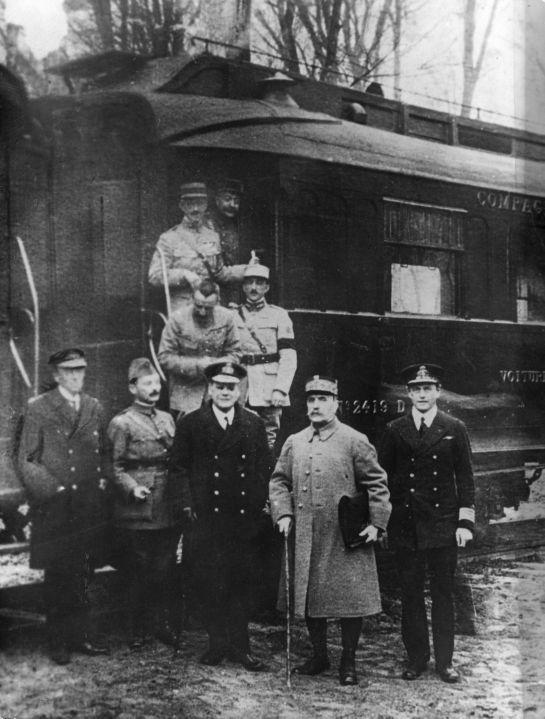




Where and when
Representatives met in a railway coach set in the woods near Compiègne. The agreement was concluded in the early hours of 11 November and was arranged to come into effect at the eleventh hour of the eleventh day of the eleventh month — 11:00 Paris time — a moment that later became emblematic of remembrance ceremonies across many countries.
Principal negotiators and context
The armistice was signed by senior figures representing the belligerents. On the Allied side the military terms were largely formulated by Marshal Ferdinand Foch, the Allied commander. Germany's delegation included civilian and military representatives, among them Matthias Erzberger, who signed for Germany. The German high command, including Paul von Hindenburg, had already sought a suspension of hostilities amid political unrest in cities such as Berlin and Munich and collapsing front-line positions.
Core terms and immediate obligations
The armistice contained a set of operational and logistical provisions intended to prevent further combat and to give the Allies time to secure positions while political settlement proceeded. Key obligations included:
- Immediate cessation of offensive operations and withdrawal of German forces to specified lines, notably to the east of the Rhine area later occupied by Allied forces (Rhineland).
- Surrender or internment of military equipment, including aircraft and naval vessels, and the handing over of materiel required to reduce German military capability.
- Release and repatriation of Allied prisoners of war and certain civilian internees, while German prisoners remained subject to Allied control in many cases.
- Continuation of economic restrictions, including the naval blockade in force until a final peace treaty addressed reparations and liabilities.
Aftermath and legacy
Although the armistice stopped fighting, it was a temporary arrangement that had to be extended several times while diplomats negotiated a permanent peace. The formal treaty that concluded the state of war on paper was the Treaty of Versailles, which came into effect later. The armistice and treaty had profound political and economic consequences for Germany, contributing to the collapse of the imperial government and the abdication of the Kaiser. The unsettled conditions of the 1920s and the perception of harsh terms became factors in later political developments within Germany, including the rise of nationalist movements associated with figures like Adolf Hitler; historians treat these links with nuance, noting many contributing causes.
Notable facts and remembrance
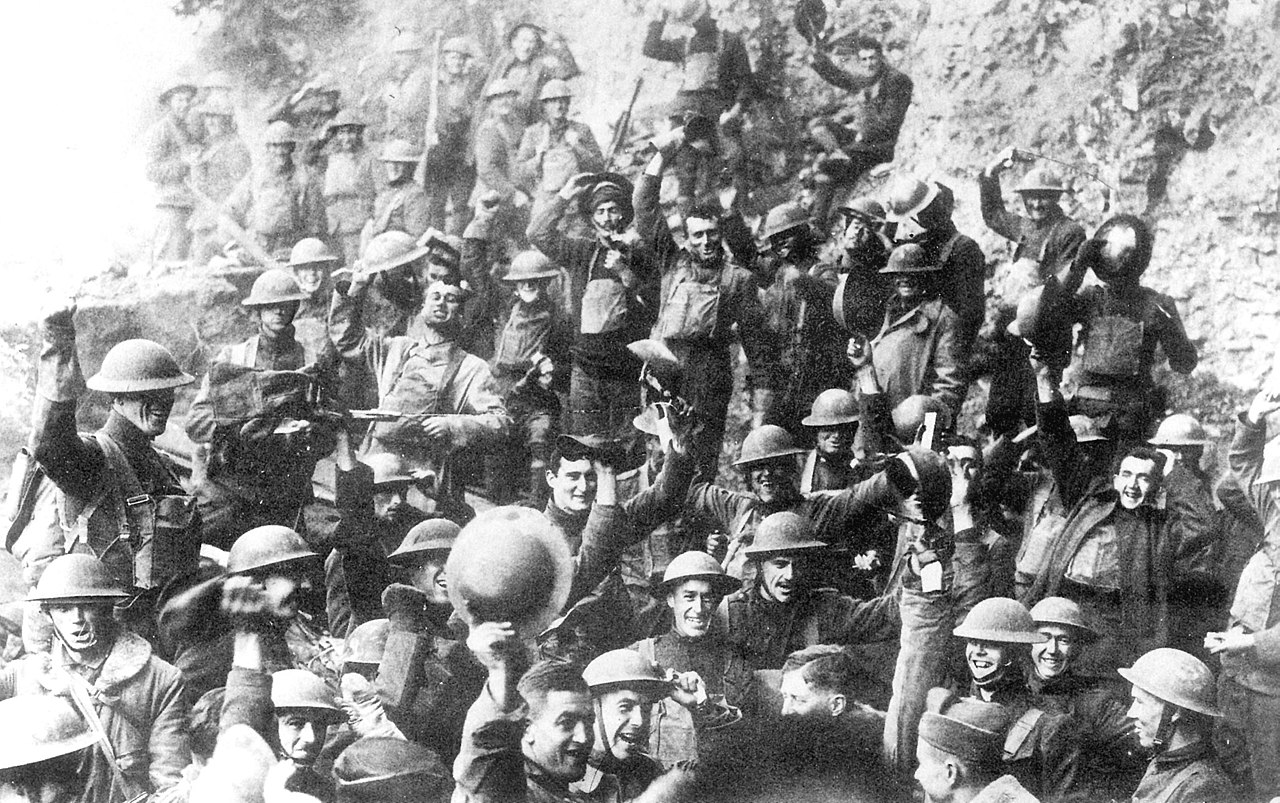
The signing location — a simple railway carriage — and the precise timing helped create enduring symbols: annual remembrance ceremonies, memorials at sites linked to the armistice, and the choice of 11 November as a day to mark the end of the Great War in many nations. The document itself was sometimes referred to simply as the Armistice, and its historical significance continues to be studied in military, diplomatic and social contexts. The agreement brought immediate relief from battle for millions and shaped the map and politics of post-war Europe for decades.
For additional background on the parties and the broader conflict, consult summaries of the role of the Allied powers and the German state at the close of the war (Germany, Allied representatives) and biographies of principal signatories such as Matthias Erzberger and Paul von Hindenburg. Contextual and commemorative material often points to Paris as the time standard used for the armistice moment (Paris).
Questions and answers
Q: What was the Armistice?
A: The Armistice was an agreement between the Allies and Germany to end fighting on the Western Front during World War I.
Q: When did it take effect?
A: The Armistice took effect at 11 AM Paris time on 11 November 1918.
Q: Who were the most important persons who signed it?
A: Marshal Ferdinand Foch, the Allied Commander-in-chief, and Matthias Erzberger, Germany's representative were the most important persons who signed it.
Q: Where was it signed?
A: It was signed in a railway carriage in Compiègne Forest.
Q: What were some of its terms?
A: Its terms included ending hostilities, withdrawing German forces to behind the Rhine, Allied occupation of the Rhineland and bridgeheads further east, surrendering aircraft, warships, and military materiel, releasing Allied prisoners of war and interned civilians, eventual reparations payments from Germany to Allies countries for damages caused by WWI , no release of German prisoners and no relaxation of naval blockade against Germany.
Q: How long did it take for a complete settlement to be reached?
A: It took much longer for a complete settlement to be reached after the armistice had been agreed upon.
Q: When did Treaty of Versailles take effect?
A:The Treaty of Versailles took effect on 10 January 1920.
Related articles
Author
AlegsaOnline.com Armistice of 11 November 1918 Leandro Alegsa
URL: https://en.alegsaonline.com/art/5738