
Les Demoiselles d'Avignon
Pablo Picasso’s radical 1907 painting presenting five women in a brothel with fractured forms and mask-like faces; a pivotal work at the origin of Cubism and modern art.
Overview
Les Demoiselles d'Avignon is a decisive work by Pablo Picasso completed in 1907 that marks a turning point in early modernism. Executed on a large, nearly square canvas, it depicts five nude women in a brothel confronted by the viewer in a compressed, jagged space. The painting is often described as an early cubist painting and as the moment when Picasso began to abandon traditional pictorial illusion in favor of fractured planes and simultaneous viewpoints. Picasso himself, represented in many accounts by close associates, is the central figure behind the work: Pablo Picasso experimented intensively with form and reference during this period.
Image gallery
10 Images
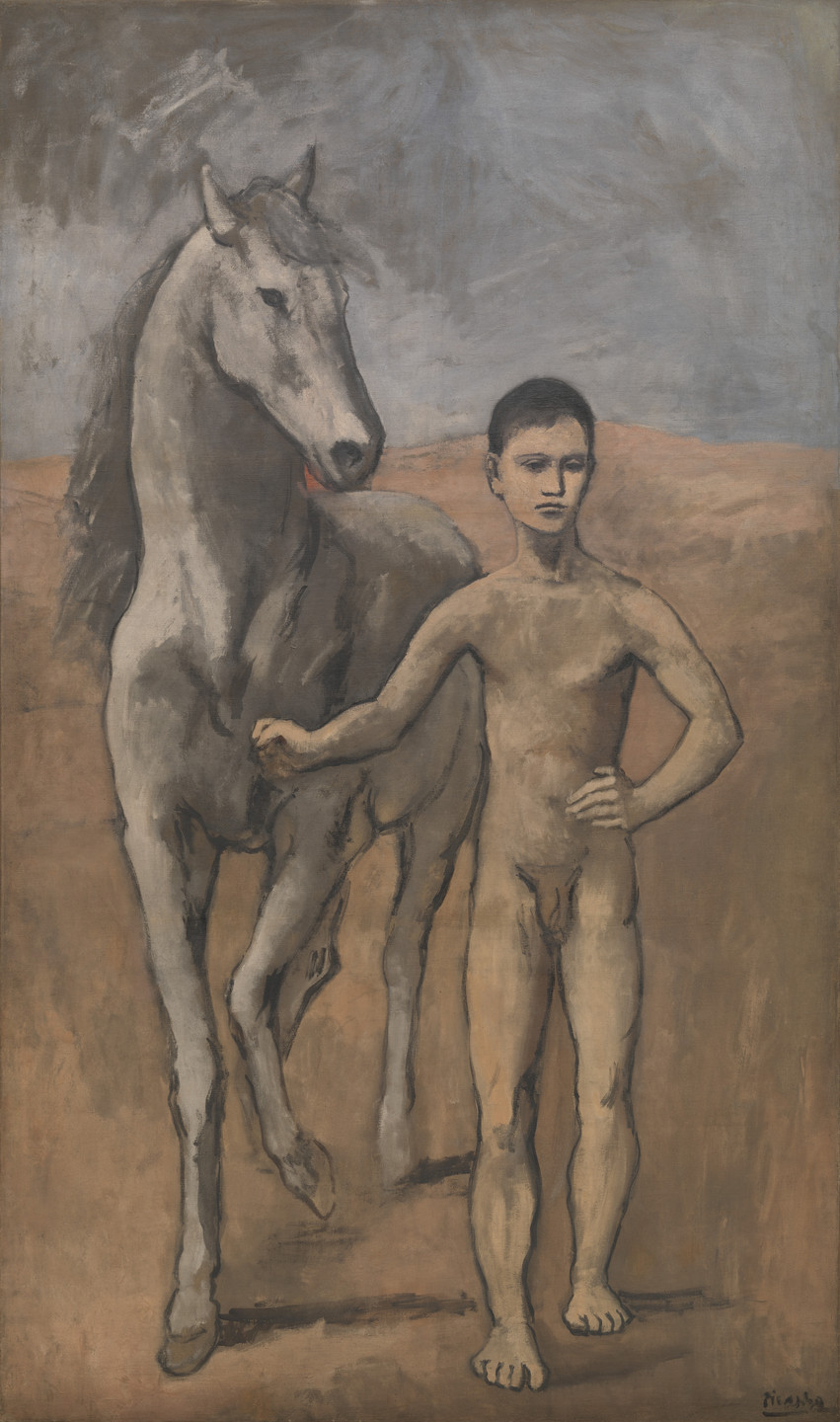


Composition and technique
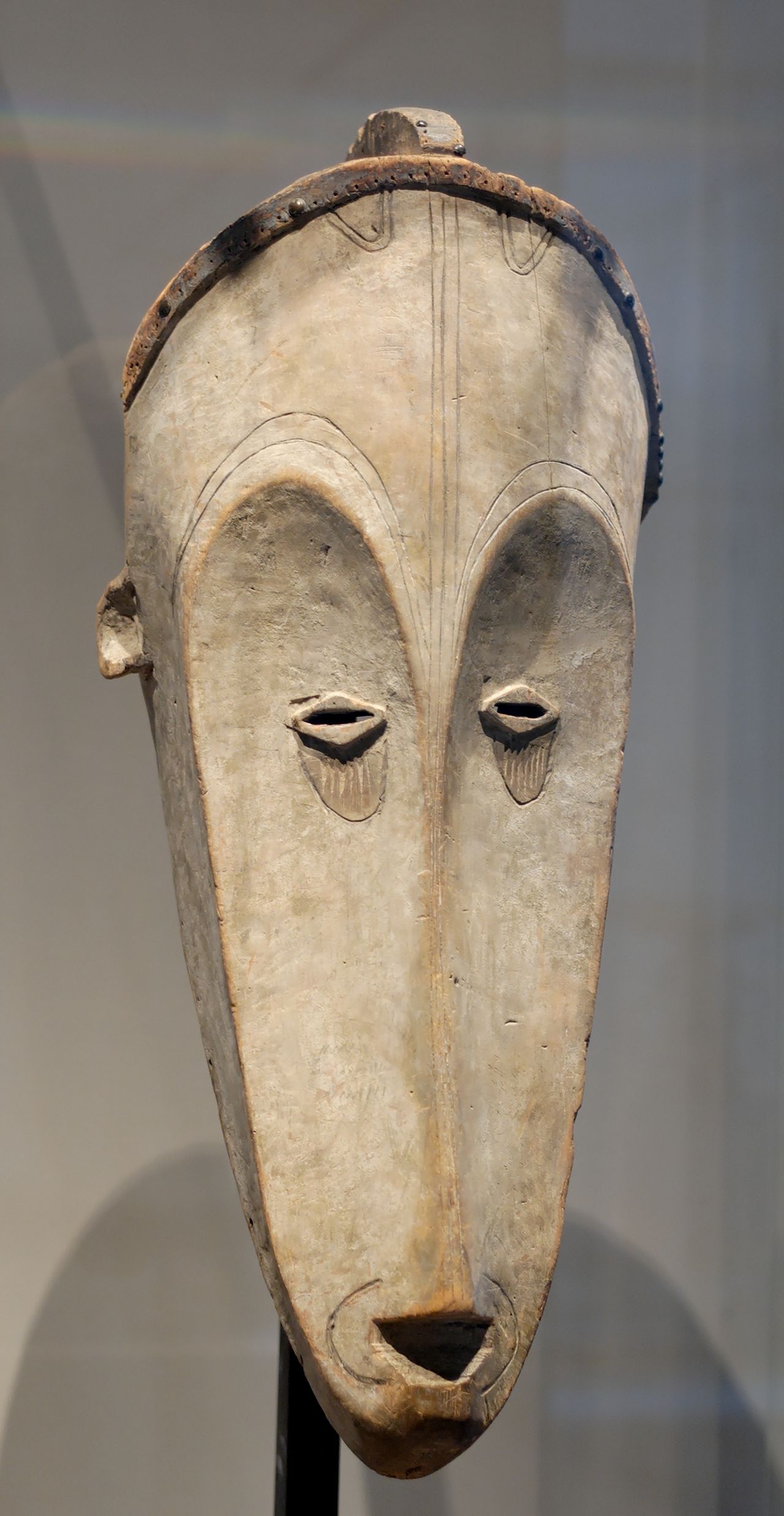
The figures are rendered by sharp contours, flattened volumes and a collapse of spatial depth. Faces and bodies break into geometric facets that resist a single viewing angle, a strategy that anticipates Analytic Cubism. The subject is explicitly that of women in a brothel, but Picasso’s treatment denies any conventional eroticizing or idealization. Two of the figures on the right bear faces recalling African masks; other heads evoke Iberian or archaic sculptural types and deliberately mix visual sources.
Influences and sources
Picasso drew on multiple influences current in Paris at the time. The simplification and abstraction of form show the presence of Paul Cézanne’s structural approach, while non‑Western sculpture and objects circulating among avant‑garde artists contributed new ways of thinking about face and body. Histories of the work emphasize the role of African and other ethnographic art in shaping Picasso’s formal choices, and scholars note that the painting synthesizes Iberian, Oceanic and modern European visual experiments.
Reception and early responses
When Picasso displayed the work privately to friends and peers, reactions were extreme. A group of painters and critics who saw the canvas in his studio responded with shock and derision; contemporaries recorded strong negative judgments from fellow painters and critics. Henri Matisse is reported to have dismissed it as a deliberate provocation, and some witnesses used terms like hoax to express incomprehension. Such early hostility contrasts with later celebration.
Legacy and significance
Over time Les Demoiselles d'Avignon came to be regarded as foundational in the development of modern art. It helped open avenues later pursued in collaboration with Georges Braque and others that evolved into Cubism proper; art historians and critics now often call it one of the most significant paintings of the twentieth century. The painting’s mixture of borrowed motifs and radical formal invention also made it a focal point for debates about primitivism, influence and cultural appropriation.
Iconography and contested readings
Scholars continue to debate the meaning and ethics of Picasso’s borrowings. The two figures on the right, whose faces display mask-like features, are frequently cited in discussions about how modern artists incorporated non‑European art into new visual languages. Interpretations range from formalist readings that emphasize structure and innovation to critical perspectives that contextualize the work within colonial-era collecting and power relations.
Provenance and display
Following a complex history of ownership and study, the painting entered a major public collection and is now accessible to a broad audience. It has been the subject of numerous exhibitions and scholarly studies, which have traced its preparatory drawings, changes in composition and the many sketches Picasso produced while developing the work. These studies illuminate the painting’s long gestation and reveal how radically Picasso reworked figuration in pursuit of a new pictorial language.
Why it still matters
Les Demoiselles d'Avignon remains central to narratives about the emergence of modern art because it posed new questions about representation, surface and cultural exchange. Its shock value has been replaced by sustained attention to technique, influence and context; the painting endures both as an icon of artistic rupture and as a prompt for ongoing critical reflection.
Questions and answers
Q: What is Les Demoiselles d'Avignon?
A: Les Demoiselles d'Avignon is a cubist painting created by Picasso in 1907. It represents five women in a brothel.
Q: How long did it take Picasso to paint Les Demoiselles d'Avignon?
A: It took Picasso nine months to paint Les Demoiselles d'Avignon.
Q: What inspired the distortion of the female figures in Les Demoiselles d'Avignon?
A: The influence of African art inspired the distortion of the female figures in Les Demoiselles d'Avignon.
Q: How did the public and critics react to the painting when it was first shown?
A: The public and critics were outraged by Les Demoiselles d'Avignon. Henri Matisse called it a hoax and an attempt to paint the fourth dimension, while André Salmon wrote, "It was the ugliness of the faces that froze with horror the half-converted". Another painter, André Derain, wrote, "One day we shall find Pablo has hanged himself behind his great canvas".
Q: Why is Les Demoiselles d'Avignon considered significant?
A: Les Demoiselles d'Avignon is considered one of the most significant paintings of the 20th century because it marked a departure from traditional painting and sparked the development of cubism.
Q: Who are the two figures on the right of Les Demoiselles d'Avignon?
A: The two figures on the right of Les Demoiselles d'Avignon are shown with African mask-like features, reflecting Picasso's interest in African art at the time.
Q: How big is the painting Les Demoiselles d'Avignon?
A: Les Demoiselles d'Avignon is 8 square feet (0.74 m2) in size.
Related articles
Author
AlegsaOnline.com Les Demoiselles d'Avignon Leandro Alegsa
URL: https://en.alegsaonline.com/art/57334
Sources
- pbs.org : "Pablo Picasso's Les Demoiselles d'Avignon 1907"
- pablopicasso.org : "Les Demoiselles d'Avignon, 1907 by Pablo Picasso"