
Leiopelmatidae: primitive frogs of New Zealand and North America
Small family of archaic frogs in the suborder Archaeobatrachia: New Zealand Leiopelma and North American Ascaphus. Notable for primitive anatomy, ancient lineage, restricted ranges and conservation concerns.
Overview
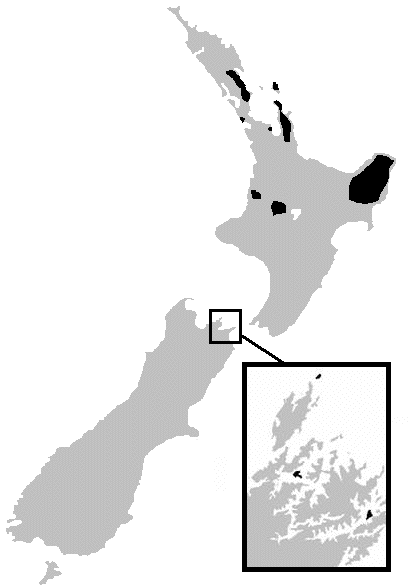
Leiopelmatidae is a small family of frogs placed in the suborder Archaeobatrachia, a group often described as the most primitive or basal living frogs. The family today is split between two genera with a highly disjunct distribution: Leiopelma in New Zealand and Ascaphus in western North America. Only a handful of species survive: four Leiopelma and two Ascaphus species are currently extant.
Image gallery
4 Images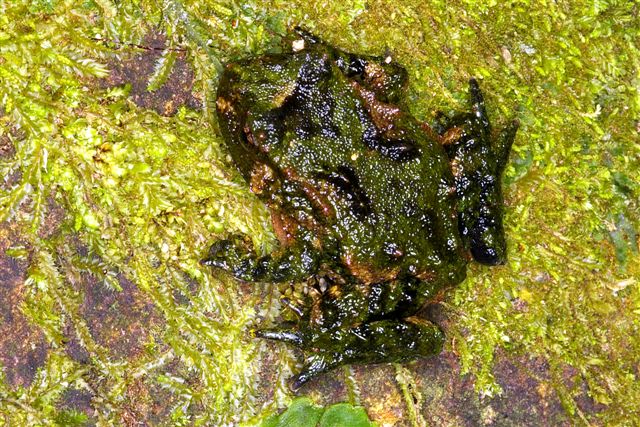

Key characteristics
Members of Leiopelmatidae retain several anatomical and life-history traits that are uncommon among most modern frogs. Compared with more derived frog families, they show features interpreted as primitive and useful for understanding early frog evolution. Typical characteristics include a compact body, relatively simple calls, and skeletal details that differ from those of neobatrachian frogs.
- Small to moderate body size and terrestrial or streamside habits.
- Distinctive reproductive adaptations: Ascaphus males possess a tail-like extension associated with internal fertilization; Leiopelma display various parental behaviours and terrestrial egg care in some species.
- Life histories that can include direct development or prolonged larval stages depending on species and habitat.
Evolution and biogeography
The split between New Zealand and North American representatives has long attracted biogeographic interest. The family represents an ancient lineage that diverged early in frog evolution. Its distribution and fossil evidence are interpreted as remnants of a much older and once more widespread group, offering insight into continental movements and long-term persistence in isolated refuges.
Conservation and importance
Leiopelmatidae species are of high conservation concern because most have small ranges, specialized habitat needs, and vulnerability to introduced predators, disease and habitat degradation. Conservation efforts focus on habitat protection, predator control and population monitoring. Because these frogs retain primitive traits, they are also important for scientific studies of amphibian anatomy, development and evolutionary history.
Distinctions and notable facts
- Ascaphus (tailed frogs) is notable for its unique copulatory organ among frogs, an adaptation to internal fertilization in cold, fast-flowing streams.
- Leiopelma species are restricted to New Zealand and exhibit a range of unusual behaviours and morphologies compared with more widespread frog groups.
- Both genera illustrate how small, relict populations can preserve ancient biological information and why they are priorities for research and protection.
Questions and answers
Q: What is Leiopelmatidae?
A: Leiopelmatidae is a family of primitive frogs found in New Zealand and North America.
Q: Which suborder does Leiopelmatidae belong to?
A: Leiopelmatidae belongs to the suborder Archaeobatrachia.
Q: How many species of Leiopelma and Ascaphus are still alive?
A: There are four species of Leiopelma and two species of Ascaphus alive today.
Q: Where are Leiopelma found?
A: Leiopelma are found only in New Zealand.
Q: Where are Ascaphus found?
A: Ascaphus are found only in North America.
Q: What is special about Leiopelmatidae compared to other frog families?
A: Leiopelmatidae is a primitive frog family, meaning they have characteristics that resemble the first frogs that evolved.
Q: Are there any Leiopelma or Ascaphus species outside of New Zealand and North America?
A: No, there are no known Leiopelma or Ascaphus species outside of their respective regions.
Related articles
Author
AlegsaOnline.com Leiopelmatidae: primitive frogs of New Zealand and North America Leandro Alegsa
URL: https://en.alegsaonline.com/art/57053
Sources
- tolweb.org : "Leiopelma"
- doc.govt.nz : "DOC: Photo-stage and Archey's Frog"
- tolweb.org : "Ascaphus"
- doi.org : 10.1080/03014223.2004.9518366
- collections.tepapa.govt.nz : "Holotype of Leiopelma markhami"
- collections.tepapa.govt.nz : "Holotype of Leiopelma waitomoensis"