
Lecompton, Kansas: Territorial Capital and Historic Town
Lecompton, a small city in Douglas County, Kansas, served as the territorial capital (1855–1861) and played a central role in the struggle known as Bleeding Kansas. The town preserves several 19th-century historic sites.
Overview
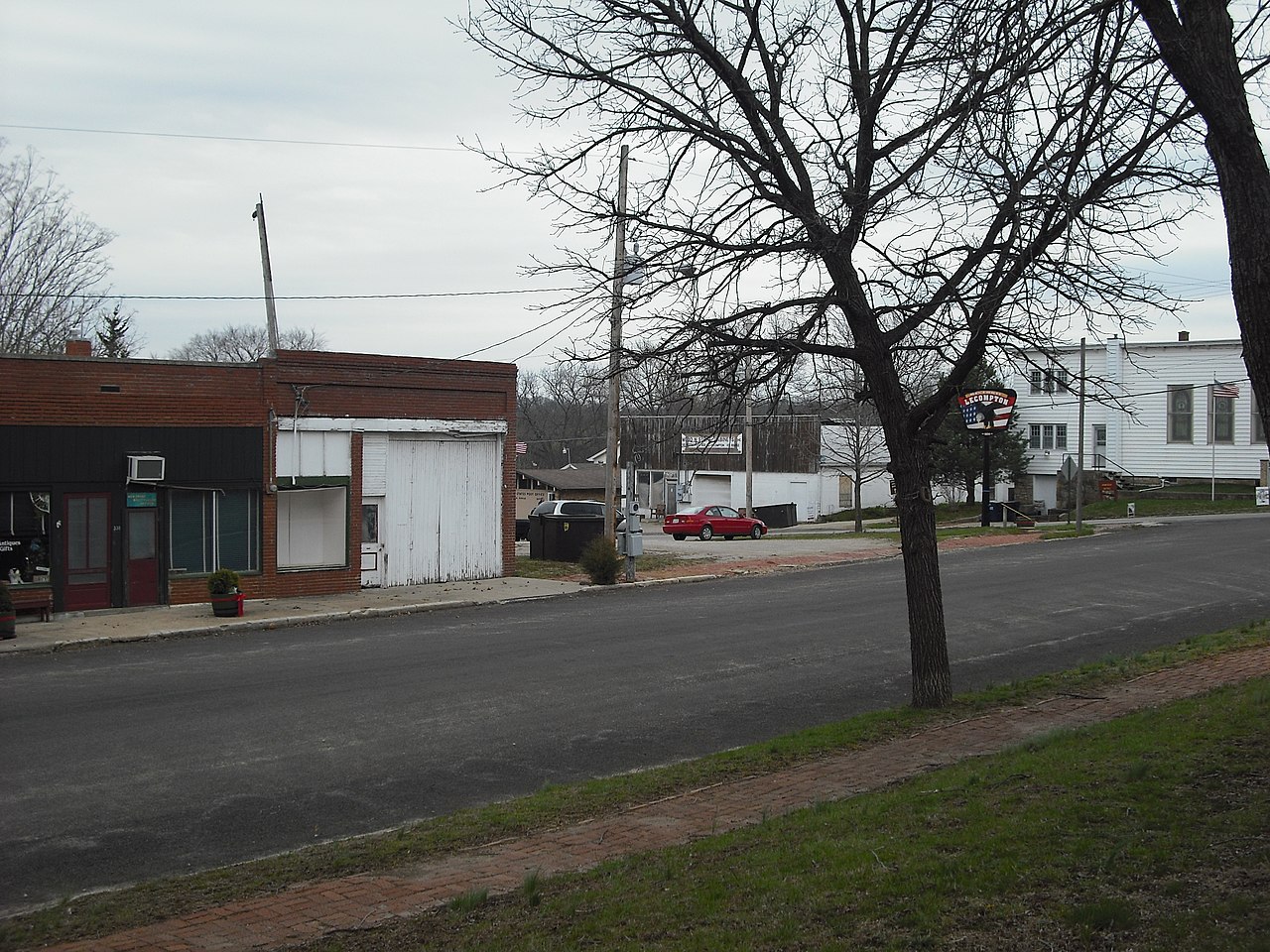
Lecompton is a small city in Douglas County, in the state of Kansas, United States. At the 2010 census the community's population was recorded as 625 (2010). Although modest in size today, Lecompton is widely known for its pivotal role during the territorial era of the 1850s.
Image gallery
10 Images




Historical significance
In the decade before the American Civil War, Lecompton served as the territorial capital of Kansas from 1855 until 1861. The town became a focal point of the conflict between proslavery and anti-slavery factions — a violent and politically charged period often referred to as Bleeding Kansas. Lecompton is especially associated with the controversial Lecompton Constitution, a proposed proslavery state constitution drafted there in 1857 that intensified national debate over slavery and statehood.
Characteristics and notable sites
Lecompton preserves a number of mid-19th century buildings and historic sites that interpret its territorial past. Key landmarks include early government buildings and residences that reflect the town's role as an administrative and political center. Visitors encounter museums and interpretive exhibits that explain the events, documents, and personalities linked to the town's place in national history.
Development and legacy
Founded and developed during a volatile era of migration and political organization, Lecompton's later trajectory followed the broader settlement patterns of eastern Kansas. After Kansas achieved statehood and the end of its tenure as a territorial capital, the town transitioned to local civic and agricultural life. Its historic legacy, however, has given it an outsized cultural importance relative to its population.
Uses and modern importance
Today Lecompton attracts historians, school groups, and visitors interested in the antebellum period and the origins of Kansas statehood. Preservation efforts and local programming aim to maintain historic structures and to place the town's experiences in the wider context of American political and social history. These efforts help explain how territorial contests shaped national policy in the years before the Civil War.
Further reading and context
- Lecompton's role in national politics
- Pre-Civil War tensions in Kansas Territory
- Connection to broader U.S. history
Lecompton remains a significant site for understanding mid-19th century American conflicts over slavery, statehood, and the rule of law. Its historic district and interpretive resources continue to provide insight into a formative chapter of United States history.
Questions and answers
Q: Where is Lecompton located?
A: Lecompton is located in Douglas County, Kansas, United States.
Q: How many people lived in Lecompton in 2010?
A: In 2010, there were 625 people living in Lecompton.
Q: What was Lecompton's role in pre-Civil War America?
A: Lecompton played a big historical role in pre-Civil War America as the territorial capital of Kansas from 1855 to 1861.
Q: What was the time period known as when Lecompton was the territorial capital of Kansas?
A: The time period when Lecompton was the territorial capital of Kansas was known as Bleeding Kansas.
Q: What does Bleeding Kansas refer to?
A: Bleeding Kansas was a term used to describe the violent period of conflict in Kansas during the mid-1850s, between those who supported the expansion of slavery into Kansas and those who opposed it.
Q: Was Lecompton a significant place in American history?
A: Yes, Lecompton was a significant place in American history due to its role as the territorial capital of Kansas during the time period known as Bleeding Kansas.
Q: Is Lecompton still the territorial capital of Kansas?
A: No, Lecompton is no longer the territorial capital of Kansas. Its tenure as the capital lasted from 1855 to 1861.
Related articles
Author
AlegsaOnline.com Lecompton, Kansas: Territorial Capital and Historic Town Leandro Alegsa
URL: https://en.alegsaonline.com/art/56859
Sources
- geonames.usgs.gov : Geographic Names Information System (GNIS) details for Lecompton, Kansas; United States Geological Survey (USGS); October 13, 1978.
- census.gov : "US Gazetteer files 2010"
- hdl.handle.net : A pronunciation guide to Kansas place names
- factfinder2.census.gov : "2010 City Population and Housing Occupancy Status"
- books.google.com : Exploring Kansas Highways
- kshs.org : "Kansas Post Offices, 1828-1961"
- census.gov : "US Gazetteer files: 2010, 2000, and 1990"
- weatherbase.com : Climate Summary for Lecompton, Kansas
- census.gov : "Annual Estimates of the Resident Population for Incorporated Places: April 1, 2010 to July 1, 2014"