
Leatherback sea turtle (Dermochelys coriacea)
A large, cosmopolitan sea turtle with a unique leathery carapace. Covers appearance, behavior, diving and migration, life cycle, threats, conservation, and notable records.
Overview
The leatherback sea turtle (Dermochelys coriacea) is the largest living sea turtle and the only surviving member of the family Dermochelyidae. It is widely recognized for its flexible, leathery carapace rather than the hard, scute-covered shell of other turtles. Because of its size and ancient lineage it ranks among the largest modern reptiles and has been the subject of considerable scientific and public interest. For general size comparisons see largest sea turtles and summaries of reptile rankings at reptile lists and crocodilian comparisons.
Image gallery
9 Images



Physical characteristics
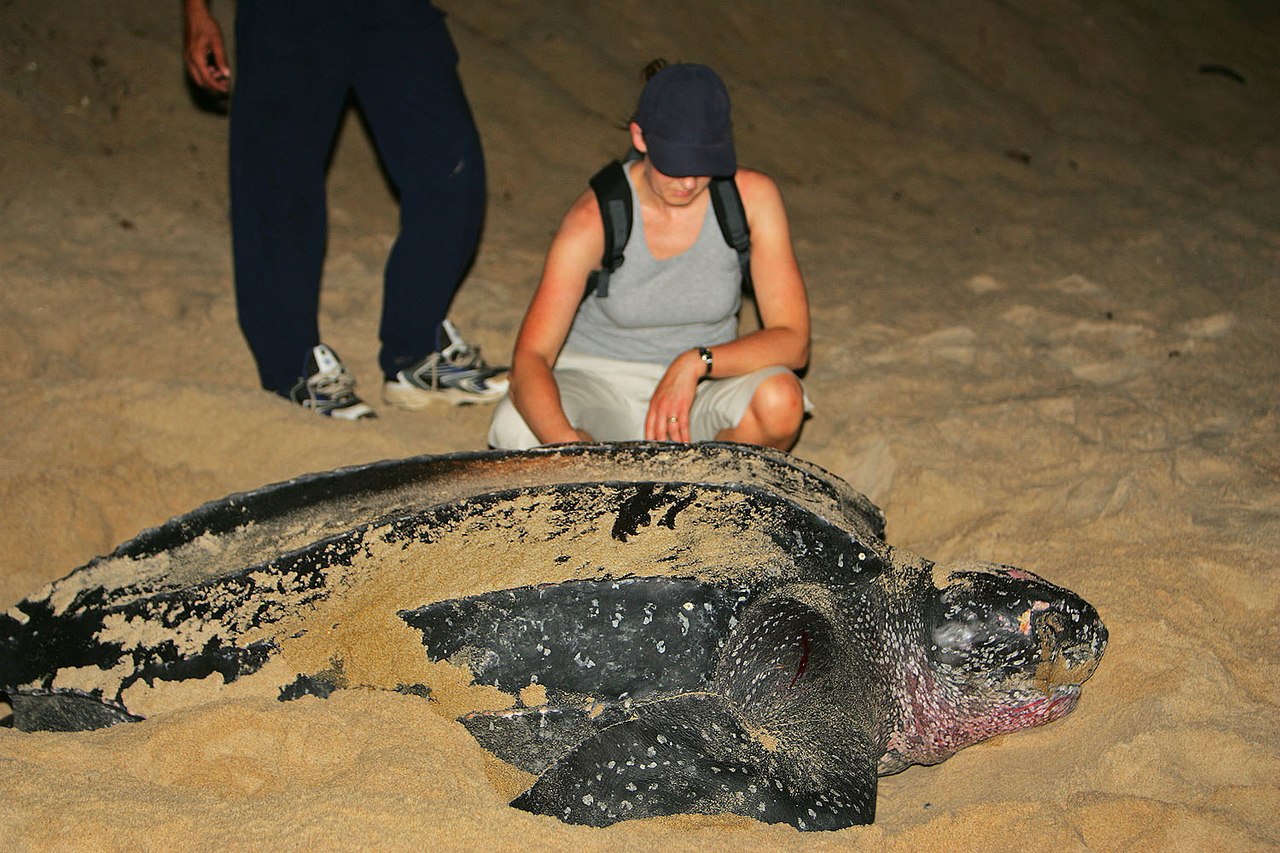
Leatherbacks have a streamlined body, long front flippers, and a softened carapace with seven prominent longitudinal ridges. Adults typically measure about 1–1.75 m in carapace length and 1.8–2.2 m overall, and commonly weigh between 250 and 700 kg. The largest reliably recorded individuals exceeded 3 m and approached 900–1,000 kg; a famously large specimen was reported on a beach in Wales, noted in regional records (Wales specimen).
Behavior, diving and locomotion
Leatherbacks are powerful, long-distance swimmers. They can reach bursts of speed higher than most reptiles, and historical records have cited rapid relocation speeds in the water (speed record), though routine swimming is much slower and energy-efficient. They are among the deepest-diving reptiles: recorded dives exceed 1,000 m, allowing them to forage on deep-water prey. Physiological adaptations — including large body size, insulating fat, and circulatory mechanisms that conserve heat — let leatherbacks exploit cold, productive seas.
Distribution and migration
Leatherbacks are cosmopolitan in tropical and temperate oceans. Individuals and populations travel vast distances between tropical nesting beaches and distant feeding grounds. They have been observed as far north as Alaska (Alaska sightings) and Norway (Norway sightings), and as far south as the Cape of Good Hope (South Africa records) and New Zealand (New Zealand records). They commonly occupy warm tropical and subtropical seas, and some individuals penetrate well into high-latitude waters near the Arctic Circle (Arctic observations).
Diet, reproduction and life cycle
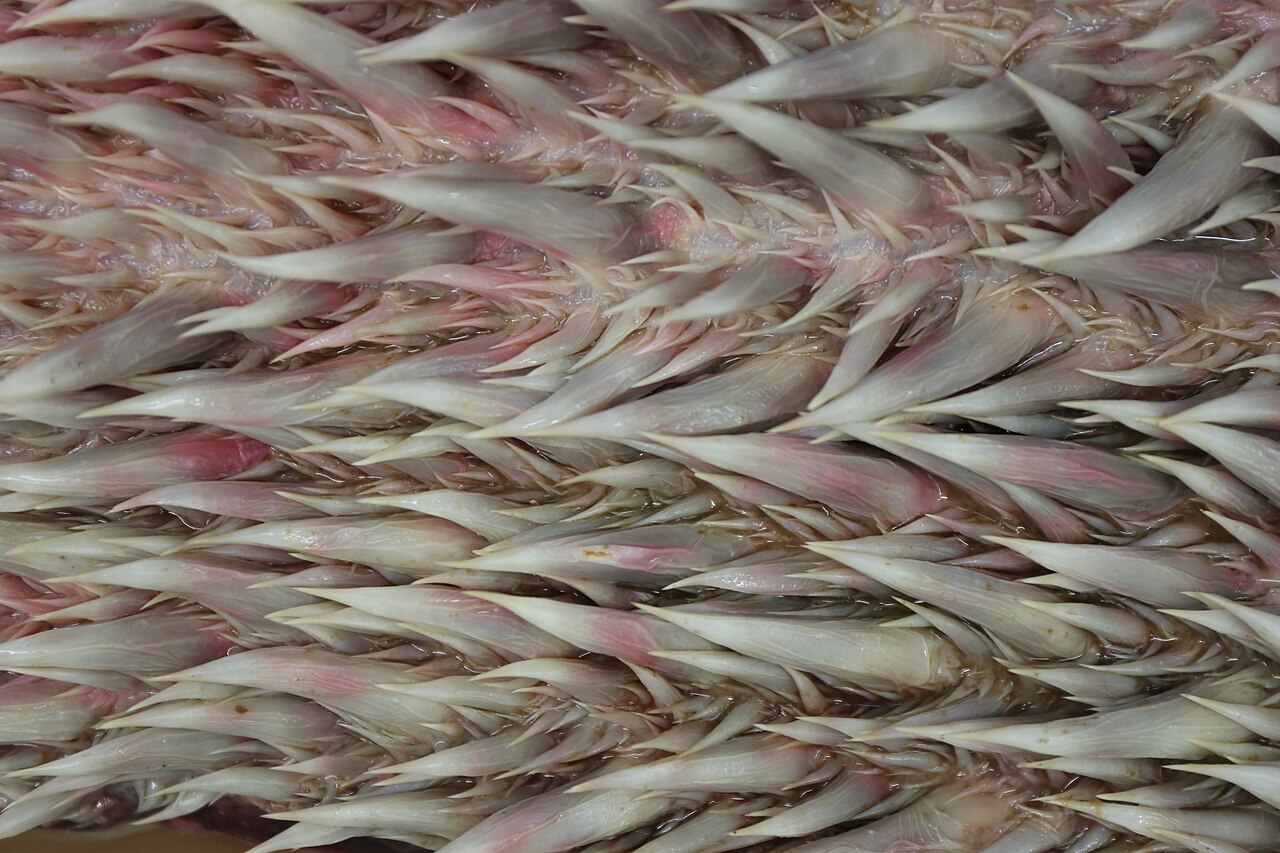
Leatherbacks feed mainly on gelatinous prey such as jellyfish and tunicates; their sharp-edged jaws and flexible throat help them consume slippery, soft-bodied organisms. Females return to sandy beaches to nest, laying several clutches of eggs per season with dozens to over a hundred eggs per clutch. Hatchlings emerge at night and instinctively head to the sea, where mortality is high because eggs and young are taken by mammals, birds and crabs. Adults have few natural predators, though large sharks and orcas may occasionally attack them. Like other sea turtles, sex is determined by incubation temperature, making nests sensitive to climate change.
Conservation status and threats
Leatherback populations have declined in many regions. Major human-caused threats include incidental capture in fishing gear (bycatch), ingestion of plastic (often mistaken for jellyfish), coastal development that destroys nesting beaches, illegal egg harvest, and changing climate that alters nesting success and sex ratios. Conservation efforts combine beach protection and monitoring, bycatch reduction measures, public education, and international cooperation. Leatherbacks are covered by multiple conservation agreements and local protection programs; some regional populations are especially imperiled and receive targeted recovery work.
Evolutionary and notable facts
Dermochelys coriacea represents an ancient turtle lineage with fossil relatives known from deep time; it is the only extant member of its family. Notable records and curiosities include exceptional body size, long transoceanic migrations, deep diving capacity, and a suite of warm-blooded-like adaptations that let it forage in cool waters. These traits make the leatherback both ecologically important—as a major predator of jellyfish—and a flagship species for marine conservation worldwide.
- Unique carapace: flexible, ridged and leather-like rather than scuted.
- Diet: specialist on gelatinous prey, important in controlling jellyfish blooms.
- Long migrations: cross-ocean routes connecting nesting and feeding areas.
- Conservation: threatened by bycatch, pollution, habitat loss and climate change.
For further reading on distribution, natural history and conservation techniques consult regional sea turtle programs and scientific summaries available through conservation organizations and research groups (species overviews, behavioral studies, tropical ecology).
Questions and answers
Q: What is the largest living sea turtle?
A: The leatherback sea turtle is the largest of all living sea turtles.
Q: How big can leatherback sea turtles grow to be?
A: Adults average 1–1.75 metres (3.3–5.7 ft) in shell length, 1.83–2.2 metres (6.0–7.2 ft) in total length and weigh 250 to 700 kilograms (550 to 1,540 lb). The largest ever found was over 3 metres (9.8 ft) from head to tail and weighed 916 kilograms (2,019 lb).
Q: What predators pose a threat to leatherback sea turtles?
A: Eggs and young are often eaten by predators, but adults can defend themselves aggressively against larger predators such as sharks or orcas that may try to attack them.
Q: How deep do leatherback sea turtles dive?
A: Leatherback turtles are one of the deepest diving marine animals and have been recorded diving to depths as great as 1,280 metres (4,200 ft).
Q: How fast do they swim?
A: Leatherback turtles are also the fastest-moving reptiles and have been recorded swimming at 35.28 kilometres per hour (21.92 mph), usually swimming at 0.5–2.8 metres per second (1
Related articles
Author
AlegsaOnline.com Leatherback sea turtle (Dermochelys coriacea) Leandro Alegsa
URL: https://en.alegsaonline.com/art/56805
Sources
- panda.org : "WWF - Leatherback turtle"
- turtles.org : "The Leatherback Turtle (Dermochelys coriacea)"
- conserveturtles.org : "Species Fact Sheet: Leatherback Sea Turtle"
- news.bbc.co.uk : Mystery of Wales turtle 'solved'
- seaworld.org : "Sea Turtle"
- doi.org : 10.3354/esr00076
- hypertextbook.com : "Speed of a Turtle or Tortoise"
- nature.com : "Occurrence of the Leathery Turtle in the northern North Sea and off western Norway"
- doi.org : 10.1038/179163a0
- iucnredlist.org : "Dermochelys coriacea"
- ct.gov : "Leatherback sea turtle"