
Leaf-cutter ant (Atta and Acromyrmex): fungus-farming tropical ants
Tropical ants of the genera Atta and Acromyrmex that cut vegetation to cultivate fungal gardens; notable for complex colonies, division of labor, ecological impact and mutualisms.
Overview
Leaf-cutter ants are a group of fungus-farming ants in the tribe Attini, represented principally by the genera Atta and Acromyrmex. Around forty to fifty species are commonly recognized; they inhabit tropical and subtropical regions of Central and South America, Mexico and parts of the southern United States. Rather than eating leaves directly, these ants cut and transport fresh plant material to supply and nourish an obligate fungal cultivar that provides the colony's primary nutrition. This system of agriculture, practiced by insects for millions of years, is a classic example of mutualism between animals and fungi.
Image gallery
8 Images


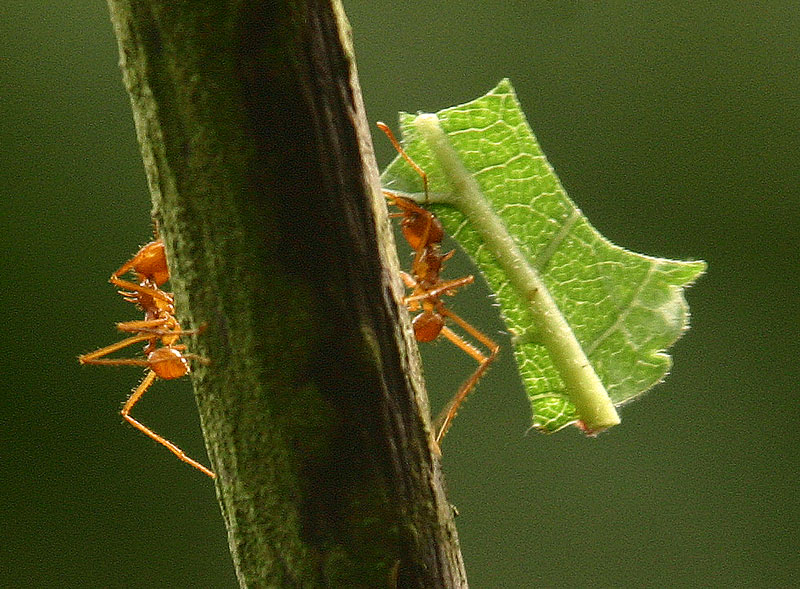
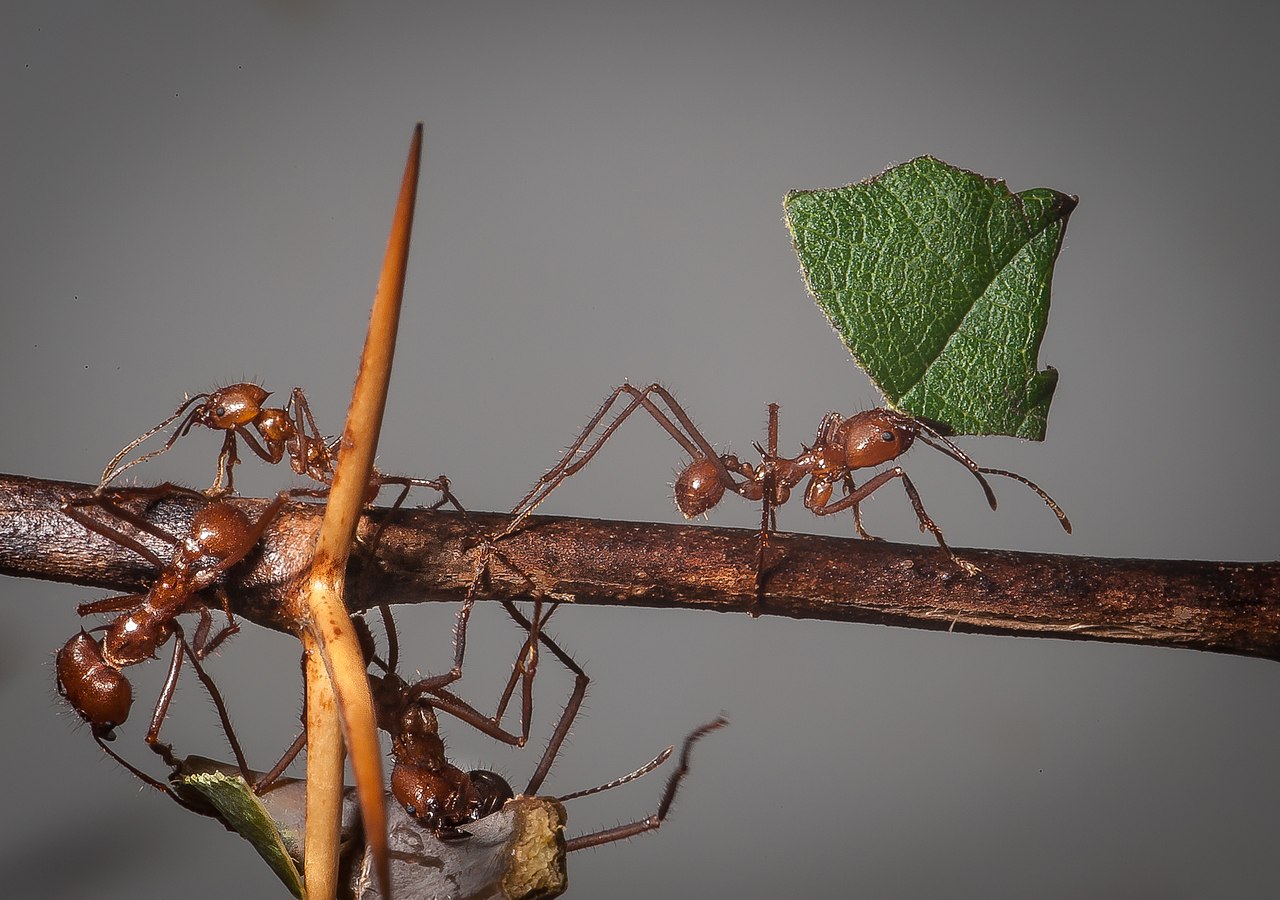


Appearance and caste system
Colonies have a complex caste structure with marked size differences among queens, male reproductives and worker subcastes. Large soldier workers use powerful mandibles for defense and cutting, while smaller workers tend the fungus gardens, process leaf fragments and care for brood. Externally, Atta and Acromyrmex resemble each other but can be distinguished by features such as the number of spines on the thorax and the texture of the exoskeleton: Atta typically shows three pairs of thoracic spines and a smoother upper surface, whereas Acromyrmex often has four pairs and a rougher cuticle. Practical keys and species lists are available in specialist treatments and guides (species list, identification notes).
Fungus farming and microbial partners
Leaf fragments are chewed and mixed into a mulch on which a symbiotic fungus grows. The cultivated fungus produces nutrient-rich swollen hyphal tips that the ants consume. The fungal cultivar most commonly associated with leaf-cutters is a member of the basidiomycete group; it cannot survive long outside the ant colony. Leaf-cutter ants also maintain bacterial symbionts on their cuticle that produce antibiotics to suppress specialized fungal parasites (for example, the pathogen Escovopsis). Those interested in the biology of this multipartite mutualism can consult technical summaries and reviews (fungal mutualism, bacterial defenses).
Colony structure and nests
Nests of leaf-cutter ants range from modest mounds to extensive underground complexes that may persist and expand for many years. A mature colony can contain hundreds of thousands to several million individuals and can occupy hectares of foraging territory. Inside the nest are large, tended fungal chambers, specialized waste dumps and networks of tunnels that segregate clean fungal gardens from refuse. Detailed field studies and maps illustrate how nests develop and how foraging columns radiate from central chambers (nest architecture, foraging behavior).
Ecological role and interactions with humans
Leaf-cutter ants are major herbivores in Neotropical ecosystems. By cutting vegetation they influence plant community composition, soil turnover and nutrient cycling, often enhancing local soil fertility around nest sites. In agricultural landscapes they may be perceived as pests because they remove leaves from crops and young trees; management and mitigation practices are an active area of applied research (ecological impact, pest management).
Notable facts and further resources
- Leaf-cutting is a cooperative behaviour: columns of foragers can travel tens of meters to collect material, with complex communication and trail-following using pheromones (foraging studies).
- The ant–fungus mutualism is obligate: neither partner thrives long-term without the other (mutualism overview).
- Research into their symbiotic bacteria and chemical ecology informs studies of natural antibiotics and coevolution (microbial interactions).
- For general introductions, field keys and conservation notes see additional resources (further reading).
The leaf-cutter ant system is widely studied because it combines social complexity, agriculture, microbial symbiosis and ecosystem engineering. Those seeking more detailed taxonomic, ecological or applied information should consult specialist literature and regional faunal guides linked above.
Questions and answers
Q: What is a leafcutter ant?
A: Leafcutter ant is the general name for any of 47 species of leaf-chewing ants of the two genera Atta and Acromyrmex.
Q: What do leafcutter ants eat?
A: Leafcutter ants "cut and process fresh vegetation (leaves, flowers, and grasses) to serve as nutrition for their fungal cultivars".
Q: Where are leafcutter ants found?
A: These species of tropical, fungus-growing ants are all endemic to South and Central America, Mexico and parts of the southern United States.
Q: How are Acromyrmex and Atta ants different?
A: The two can be identified by their external differences. Atta ants have three pairs of spines and a smooth exoskeleton on the upper surface of the thorax, while Acromyrmex ants have four pairs and a rough exoskeleton.
Q: What is the size of a leafcutter ant colony?
A: Next to humans, leafcutter ants form the largest and most complex animal societies on Earth. In a few years, the central mound of their underground nests can grow to more than 30 metres (98 ft) across, with smaller, radiating mounds extending out to a radius of 80 metres (260 ft), taking up 30 to 600 square metres (320 to 6,460 sq ft) and containing eight million individuals.
Q: Where do leafcutter ants build their nests?
A: Leafcutter ants build their nests underground, with a central mound and smaller, radiating mounds that can extend out to a radius of 80 metres.
Q: What is the purpose of the fungal cultivars that leafcutter ants feed?
A: The fungal cultivars serve as nutrition for the leafcutter ants.
Related articles
Author
AlegsaOnline.com Leaf-cutter ant (Atta and Acromyrmex): fungus-farming tropical ants Leandro Alegsa
URL: https://en.alegsaonline.com/art/56763
Sources
- ncbi.nlm.nih.gov : "Major evolutionary transitions in ant agriculture"
- ui.adsabs.harvard.edu : 2008PNAS..105.5435S
- doi.org : 10.1073/pnas.0711024105
- pubmed.ncbi.nlm.nih.gov : 18362345
- cs.unc.edu : Diagnoses of the North American ant enera (Hymenoptera: Formicidae)
- bbc.co.uk : bbc.co.uk