
Leadbeater's possum — ecology, threats and conservation
Leadbeater's possum is an endangered Australian marsupial confined to wet eucalypt forests in Victoria; it depends on tree hollows, year-round food supply and is threatened by logging and wildfire.
Overview
Leadbeater's possum (Gymnobelideus leadbeateri) is a small nocturnal marsupial endemic to the central highlands of Victoria, Australia. A member of the glider and possum group within the family Petauridae, it was once thought to be extinct and remains one of Australia’s most threatened forest mammals. The species is listed as endangered and is notable for its narrow distribution, reliance on hollow-bearing trees for daytime shelter, and need for a year-round supply of nectar, sap and invertebrate prey.
Image gallery
5 Images



Taxonomy and physical description
Leadbeater’s possum is distinctive for its small size, large forward-facing eyes adapted to nocturnal activity, and a long tail used for balance as it moves through the canopy. Fur is typically grey-brown with paler underparts. Like other possums, females rear young in a pouch; litters are small and young remain dependent until able to forage independently. The species lives in small family groups that share dens and established foraging routes.
Diet and behaviour
Its diet is varied and seasonally dependent. Leadbeater’s possum feeds on insects and other arthropods, nectar and pollen from flowering eucalypts and understorey shrubs, and tree exudates such as sap and lerp. Foraging occurs mainly at night across canopy foliage and dense understorey; during daylight the animals shelter in tree hollows or artificial nest boxes. Social structure includes stable group membership and the use of multiple den sites within a home range.
Habitat and distribution
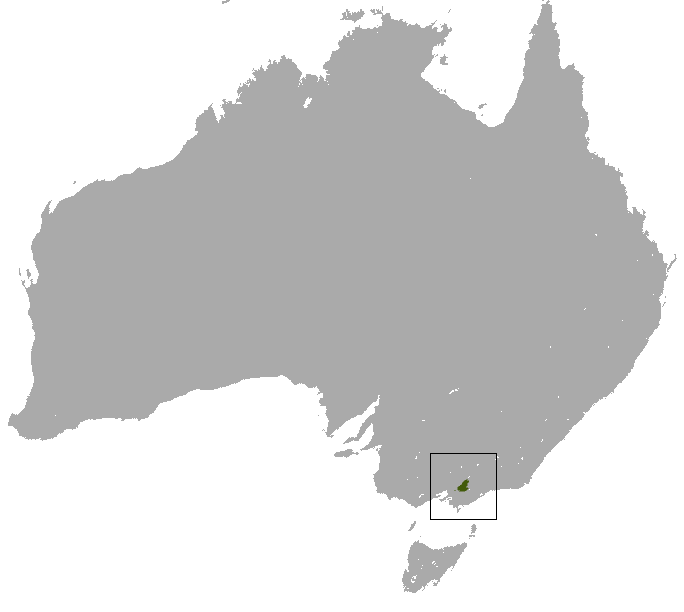
The species is associated with wet sclerophyll forests dominated by tall Eucalyptus species known as mountain ash. These forests need a mosaic of tree ages: older trees produce the larger hollows used for nesting, while younger and mid‑age stands supply flowering plants and invertebrate prey. Remaining populations are restricted to fragmented stands of old and mixed‑age mountain ash forest in the central highlands north‑east of Melbourne, where suitable den sites and continuous food resources persist.
Threats
Leadbeater’s possum faces several interlinked threats. Habitat loss and fragmentation from timber harvesting reduce the availability of mature hollow‑bearing trees and can isolate populations. Severe wildfire is a major risk: mountain ash forests contain volatile oils and can burn intensely, removing both shelter and food resources over large areas. Climate change may increase the frequency and severity of drought and fire, further stressing populations. The long time required for tree hollows to develop means recovery of nesting habitat can take many decades, making repeated disturbance especially damaging.
Conservation and management
Conservation efforts aim to secure remaining habitat, maintain a mix of forest ages across the landscape, reduce the immediate shortage of dens and connect isolated patches. Actions used by managers and researchers include the protection of critical habitat, installation and maintenance of artificial nest boxes, fire management planning to reduce the risk of stand‑replacing fires, and habitat restoration where feasible. Recovery programs combine field monitoring, research into population dynamics and genetics, and in some cases captive‑holding, translocation or targeted reintroduction as temporary measures while habitat is recovered. These measures are supported by legal protections at state and federal levels and by local reserve design.
Research, monitoring and community involvement
Long‑term monitoring using nest boxes, spotlight surveys and radio tracking informs management decisions. Research themes include habitat requirements, demographic trends, effects of forest management, and the development of best practice for fire and logging regimes. Community groups, land managers and volunteers frequently participate in nest box programs and surveys, contributing valuable local knowledge and helping to raise awareness of the species’ needs.
Significance
Leadbeater’s possum is emblematic of the conservation challenges for hollow‑dependent fauna in productive forests. Protecting the species helps conserve broader ecological values: mature trees and structural diversity support many other birds, mammals, reptiles and invertebrates. Management choices for these forests therefore have consequences beyond a single species and reflect wider debates about balancing conservation, timber production and fire risk.
Further reading and resources
- Species and threat status information
- General information on Australian possums
- Wet sclerophyll forest ecology
- Role of Acacia and understorey plants
- Mountain ash (Eucalyptus) forest descriptions
- Habitat distribution and mapping resources
- Regional context: central highlands and proximity to Melbourne
- Eucalyptus species and forest dynamics
- Impact and reports on the Black Saturday fires
Questions and answers
Q: What species is Leadbeater's possum?
A: Leadbeater's possum is an endangered species of Australian possum.
Q: What kind of habitat do Leadbeater's possums need?
A: Leadbeater's possums need mixed-age wet sclerophyll forest with plenty of Acacia and trees with holes where they can hide during the day.
Q: Where do Leadbeater's possums live?
A: Leadbeater's possums live in small areas of old and mixed age mountain ash forest in the central highlands of Victoria, north-east of Melbourne.
Q: Why were Leadbeater's possums thought to be extinct?
A: Leadbeater's possums were once thought to be extinct due to habitat loss and fragmentation.
Q: What is Black Saturday bushfire?
A: Black Saturday bushfire is a disastrous bushfire that occurred in 2009, burning about half the area in the central highlands of Victoria.
Q: How did the Black Saturday bushfire affect Leadbeater's possum habitat?
A: The Black Saturday bushfire destroyed large areas of the forest around Marysville, Narbethong, and Healesville, which are part of Leadbeater's possum habitat.
Q: What kind of trees do Leadbeater's possums live in?
A: Leadbeater's possums live in mountain ash forest, which is a species of Eucalyptus.
Related articles
Author
AlegsaOnline.com Leadbeater's possum — ecology, threats and conservation Leandro Alegsa
URL: https://en.alegsaonline.com/art/56735
Sources
- web.archive.org : Leadbeater's possum
- web.archive.org : ARKive
- web.archive.org : Facts