
Lascaux: Upper Paleolithic cave paintings in the Vézère Valley
Lascaux is a decorated cave complex in the Vézère Valley of southwestern France, noted for its Upper Paleolithic animal paintings, archaeological importance, and extensive conservation and replica projects.
Overview
The name Lascaux denotes a group of decorated caves located near the village of Montignac in the Vézère Valley of southwestern France. The site is celebrated for its extensive cave paintings, discovered in 1940, which rank among the best-known examples of Upper Paleolithic parietal art. These paintings are remarkable for their naturalism, scale and technical variety, and they form part of the prehistoric ensemble inscribed as a UNESCO World Heritage property.
Image gallery
10 Images



Artistic characteristics and techniques
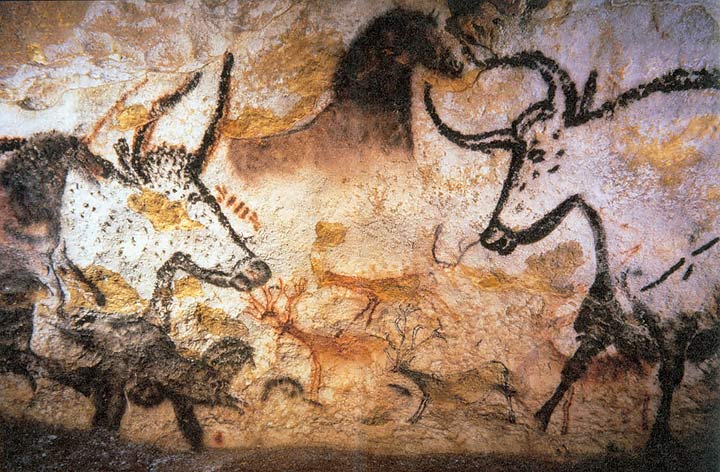
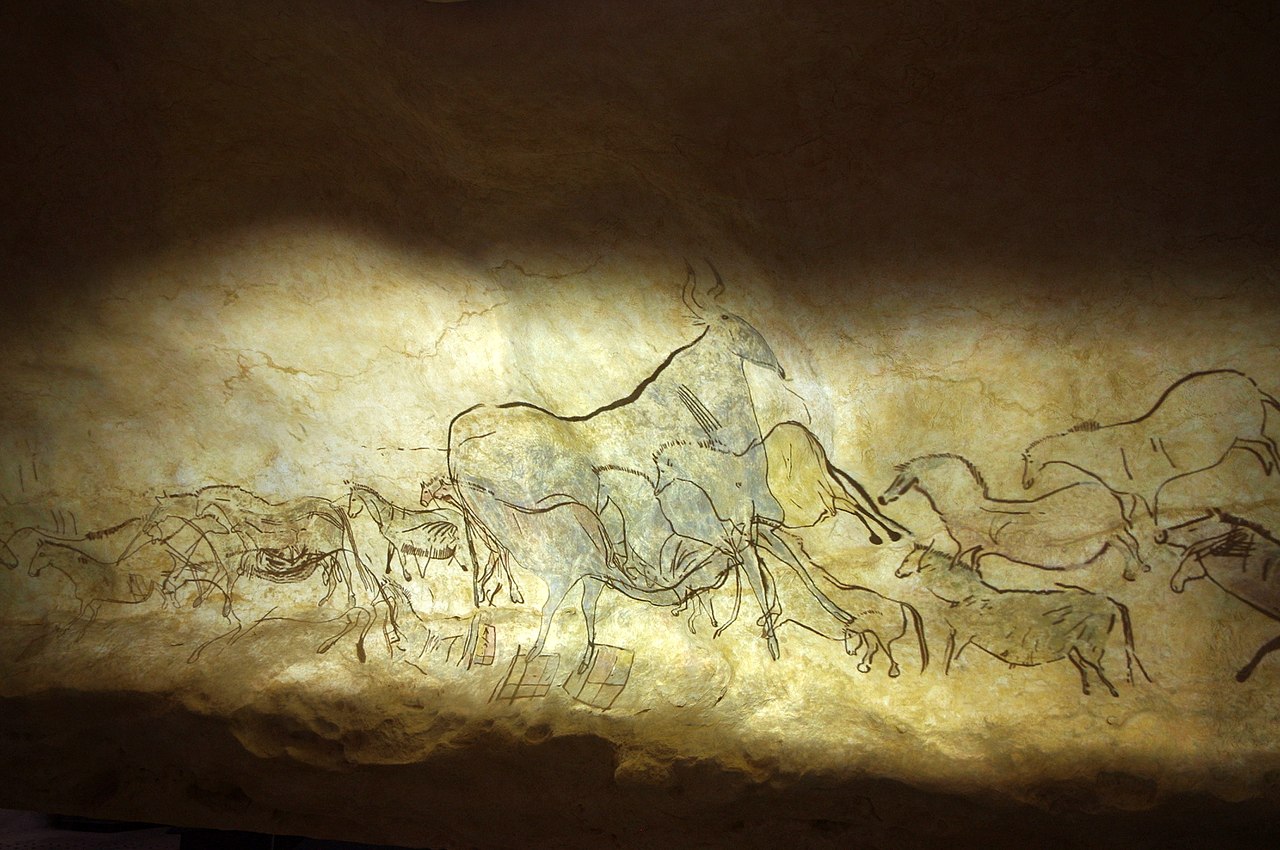
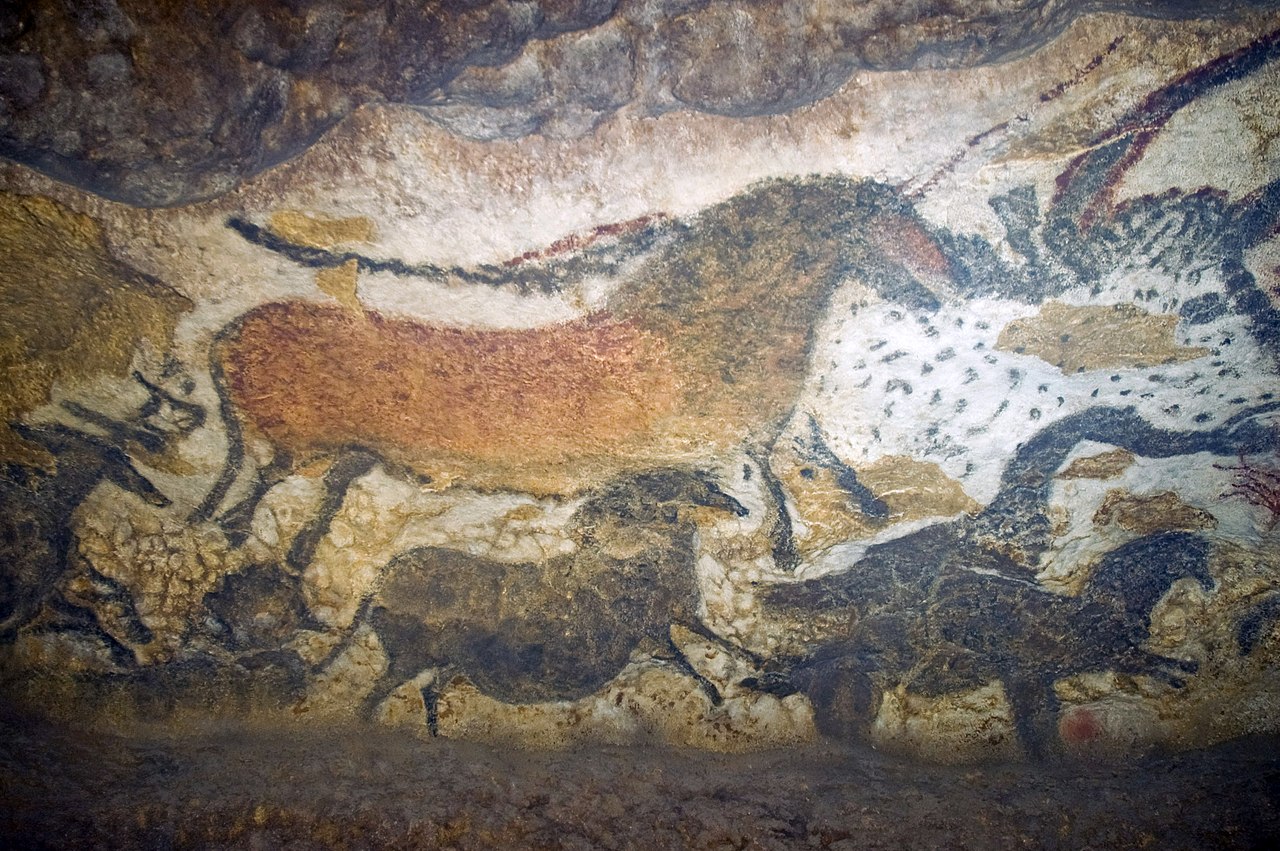
The imagery at Lascaux predominantly depicts large wild mammals—horses, aurochs, deer, bison and other fauna known from local fossil remains. Artists used mineral pigments (ochres and manganese), charcoal and simple binders, applying colour with brushes, pads, fingers and by blowing pigment to achieve soft contours and shading. Superimposition, outline drawing, and selectively detailed rendering combine to create dynamic scenes in which animals are often shown in naturalistic poses. Some panels also contain signs and abstract motifs whose meanings remain debated.
Cave layout and notable panels
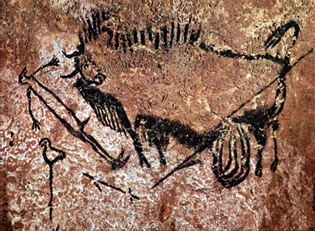
The decorated areas occupy several linked chambers and passages cut into limestone. Among the best-known compositions is the "Great Hall of the Bulls," featuring large overlapping bovine figures, and the so-called "Shaft" or "Shaft of the Dead Man," an unusual scene combining animal figures with a human-like form and symbolic elements. These compositions vary in size from small vignettes to monumental friezes that cover whole walls and vaults.
Discovery, study and dating
Lascaux attracted immediate attention after its discovery by local children and teenagers in 1940. From the 1940s onward, archaeologists, art historians and conservators studied the site, applying stylistic comparisons and absolute dating methods. Much of the work is attributed to the Upper Paleolithic, commonly associated with the Magdalenian cultural phase, with many estimates placing the paintings at roughly 17,000 years before present. Research has combined archaeological excavation, pigment analysis and modern imaging to understand techniques and sequence.
Conservation, damage and replicas
Intense visitation in the 20th century led to changes in the cave microclimate and the growth of mould and algae, which began to threaten pigments. The original caverns were closed to the public in 1963 to protect the art. To balance public interest and preservation, a faithful replica called Lascaux II opened in 1983, and later international travelling exhibitions and further reproduction projects—sometimes referred to by names such as Lascaux III and Lascaux IV in museum contexts—have presented high-quality facsimiles. These efforts aim to allow public access while minimising risk to the original surfaces.
- The caves are situated in the Dordogne département near Montignac, a point of access for visitors.
- Montignac lies about 40 km from Périgueux and roughly 25 km from Sarlat-la-Canéda, both regional centres often used by people touring the Vézère Valley.
- Replica projects and travelling exhibitions extend public engagement beyond the site and support research and education.
Ongoing research and interpretation
Scholars continue to debate the social and symbolic roles of the paintings. Proposed interpretations include ritual or ceremonial functions, mnemonic or educational uses, narrative or mythic representations, and expressions of group identity or hunting practice. No single explanation commands universal agreement, and interpretations remain cautious and pluralistic. Scientific work now focuses on non-invasive monitoring, microbiology, material science and digital documentation.
Significance and public information
Lascaux remains a touchstone for understanding prehistoric visual expression, technical skill and human relationships with animals during the Upper Paleolithic. Conservation programmes attempt to reconcile research, preservation and the educational needs of the public. For authoritative visitor and research information consult site resources and regional cultural bodies, for example: Lascaux site information, Vézère Valley heritage, French cultural services, cave art summaries, Dordogne tourism, fossil records, UNESCO, World Heritage, Périgueux and Sarlat-la-Canéda.
Because of the site's fragility, management and scientific teams publish updates on conservation status and access arrangements; readers interested in visiting should consult official sources before travel.
Questions and answers
Q: What is Lascaux?
A: Lascaux is the name of a cave in southwestern France that is famous for its cave paintings.
Q: What types of paintings are found in Lascaux?
A: The paintings found in Lascaux are images of large animals from the Upper Paleolithic period, many of which have been proven to have lived in the surrounding area.
Q: Where are the caves near Lascaux located?
A: The caves near Lascaux are located near the village of Montignac in the Dordogne département in France.
Q: What is the significance of the site of Lascaux?
A: The site of Lascaux is significant because it contains some of the best-known Upper Paleolithic art and was added to the UNESCO World Heritage Sites list in 1979.
Q: What is the name of the Valley that contains the site of Lascaux?
A: The valley that contains the site of Lascaux is the Vézère Valley.
Q: How far is Montignac from Périgueux?
A: Montignac is about 40 kilometres (25 mi) from Périgueux.
Q: How far is Montignac from Sarlat-la-Canéda?
A: Montignac is about 25 kilometres (16 mi) from Sarlat-la-Canéda.
Related articles
Author
AlegsaOnline.com Lascaux: Upper Paleolithic cave paintings in the Vézère Valley Leandro Alegsa
URL: https://en.alegsaonline.com/art/56127
Sources
- commons.wikimedia.org : Lascaux
- persee.fr : Les datations par C14 de Lascaux (Dordogne) et Philip Cave (S.W. Africa)
- jcgi.pathfinder.com : « Saving Beauty »
- hominides.com : Lascaux toujours victime du Fusarium solani
- cndp.fr : « Lascaux : la rechute »