
Arkose: A Feldspar-rich Sandstone — Composition, Formation, and Significance
Arkose is a coarse, feldspar-rich sandstone formed chiefly from the breakdown of granite; this article explains its composition, formation environments, diagenesis, uses and how it differs from other sandstones.
Overview: Arkose is a type of sandstone notable for containing a high proportion of feldspar. By definition it typically contains at least about 25% feldspar together with abundant quartz, and it commonly shows coarse sand-sized grains and angular to subangular clasts. Cementing minerals in arkose most often include calcite or silica and the rock may be stained by iron oxide, giving it shades from grey to red or brown. Because of its feldspar content and texture, arkose is regarded as a relatively "immature" sandstone in sedimentary terms.
Image gallery
4 Images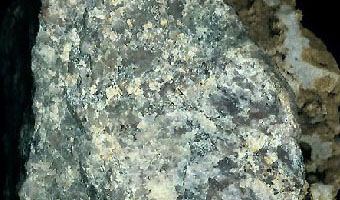


Composition and texture
Arkose is characterized by several consistent features that distinguish it from other sandstones. Its dominant components are quartz and feldspar; specific feldspar minerals are often potassium feldspar (orthoclase) or plagioclase. Grains are commonly coarse, poorly sorted and angular, reflecting limited transport. Rock fragments can also be present and the matrix, if any, is usually scant. Common observable traits include:
- High feldspar content (commonly ≥25%) and abundant quartz.
- Coarse, angular to subangular sand grains with poor sorting.
- Intergranular cement of calcite or silica, and iron staining.
- Relatively low clay matrix compared with mud-rich sandstones.
Formation and depositional environments
Arkose forms where feldspar-rich source rocks undergo rapid weathering and transport that is short enough to preserve unstable feldspar grains. The most common sources are granite and other coarse igneous rocks, and sometimes metamorphic rocks that contain abundant feldspar. Such conditions arise where uplifted bedrock is quickly eroded and shed into nearby depositional settings. Typical environments include alluvial fans at the mouths of mountain drainages, proximal fluvial systems, and nearshore continental basins; arkose can be associated with conglomerate where large, angular clasts indicate a close volcanic or plutonic source. The iconic Australian monolith Uluru is an example of a landscape-forming arkose deposited during the late Neoproterozoic to early Cambrian after extensive erosion of a granitic highland.
Diagenesis, uses and significance
After deposition, arkose undergoes diagenesis: feldspar may alter to clay minerals, pore spaces are reduced by cementation, and mobile ions can create coloration or secondary minerals. Because feldspar weathers relatively quickly, long burial or repeated transport tends to convert arkose into more quartz-dominated sandstones over geological time. Arkose can act as a reservoir rock for groundwater or hydrocarbons if porosity and permeability are preserved, but its heterogeneous texture often reduces permeability. It has limited use as dimension stone or crushed aggregate where durability is acceptable, and it provides useful information to geologists about provenance, tectonics and paleogeography of sedimentary basins.
Distinctions and notable facts
Arkose is usually contrasted with other sandstone types: quartz arenite is dominated by quartz with very little feldspar, indicating extensive weathering or long transport; greywacke contains abundant fine matrix and rock fragments typical of rapid submarine deposition. The presence of abundant feldspar in arkose therefore signals proximity to a feldspar-rich source and rapid sedimentation. Because feldspar readily alters, well-preserved arkose is most common in relatively young or rapidly buried deposits where alteration has been limited.
For students and professionals, recognizing arkose in the field or core samples helps reconstruct past landscapes and sediment pathways. Further reading and illustrative images can be found through geological references and field guides that treat sedimentary rock classification and provenance analysis (sandstone resources, feldspar guides). Additional technical material and mapping databases are available from academic and governmental geological services linked in specialist bibliographies and online portals.
Questions and answers
Q: What is arkose?
A: Arkose is a type of sandstone that is rich in the mineral feldspar.
Q: What is the composition of arkose?
A: Arkose is mostly made up of quartz and contains at least 25% feldspar. It may also consist of fragments of rock and small amounts of calcite cement.
Q: What color is arkose?
A: Arkose is usually grey to reddish in color.
Q: What kind of sand grains does arkose have?
A: The sand grains in arkose are usually coarse.
Q: How is arkose formed?
A: Arkose is generally formed from the weathering of igneous or metamorphic rocks, usually granite rocks that contain a lot of feldspar and quartz.
Q: What is arkose often found with?
A: Arkose is often found with conglomerate deposits where the sediment is made of granite.
Q: What is the central Australian monolith Uluru made of?
A: The central Australian monolith Uluru is made of late Neoproterozoic/Cambrian arkose, deposited by the erosion of a granite-based mountain range.
Related articles
Author
AlegsaOnline.com Arkose: A Feldspar-rich Sandstone — Composition, Formation, and Significance Leandro Alegsa
URL: https://en.alegsaonline.com/art/5612
Sources
- lib.utexas.edu : Petrology of Sedimentary Rocks