
Las Médulas — Ancient Roman gold-mining landscape in Spain
Las Médulas is a striking archaeological landscape near Ponferrada where Roman hydraulic mining transformed mountains to extract gold; today it is a protected heritage and popular hiking area.
Overview
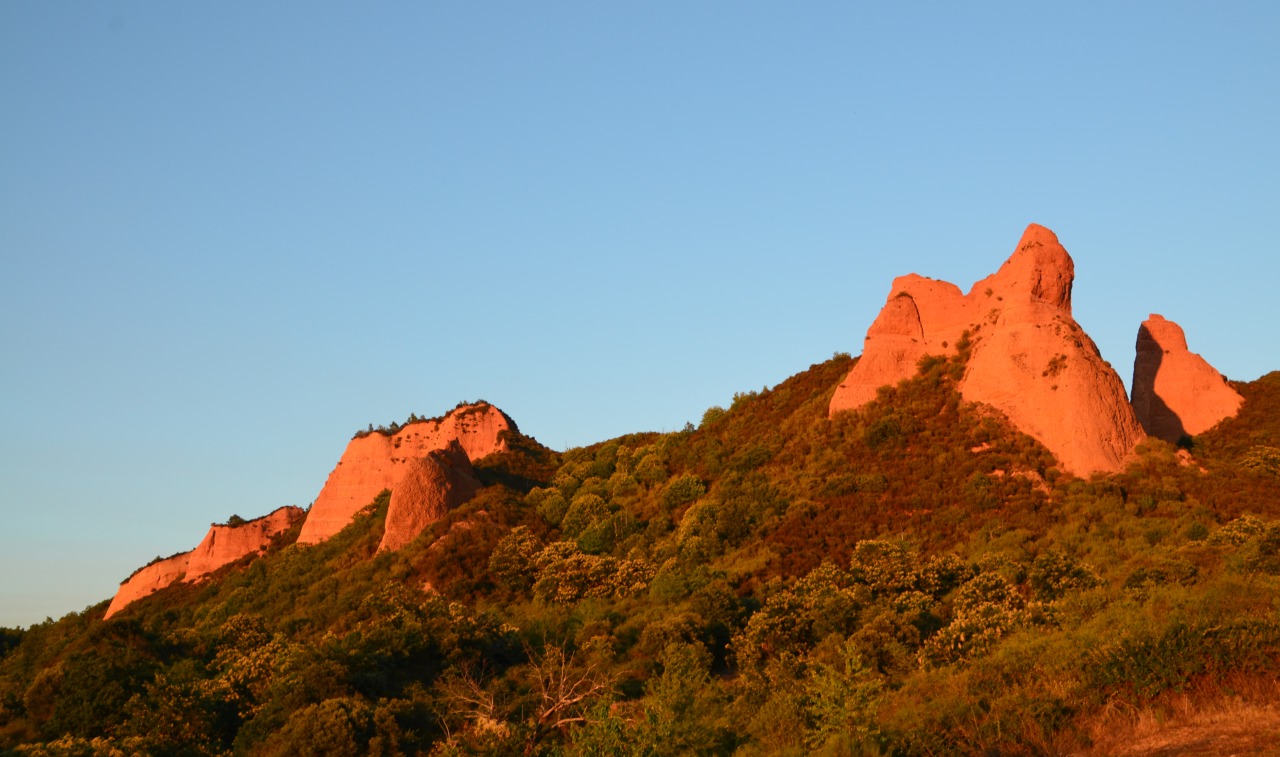
Las Médulas is an archaeological landscape and former mining district near the town of Ponferrada in Spain. Known in Galician as As Médulas, it preserves dramatic red clay pinnacles, steep gullies and tunnels formed when ancient miners removed ore-bearing rock on a grand scale. The site is recognized internationally and listed by UNESCO among the World Heritage Sites.
Image gallery
9 Images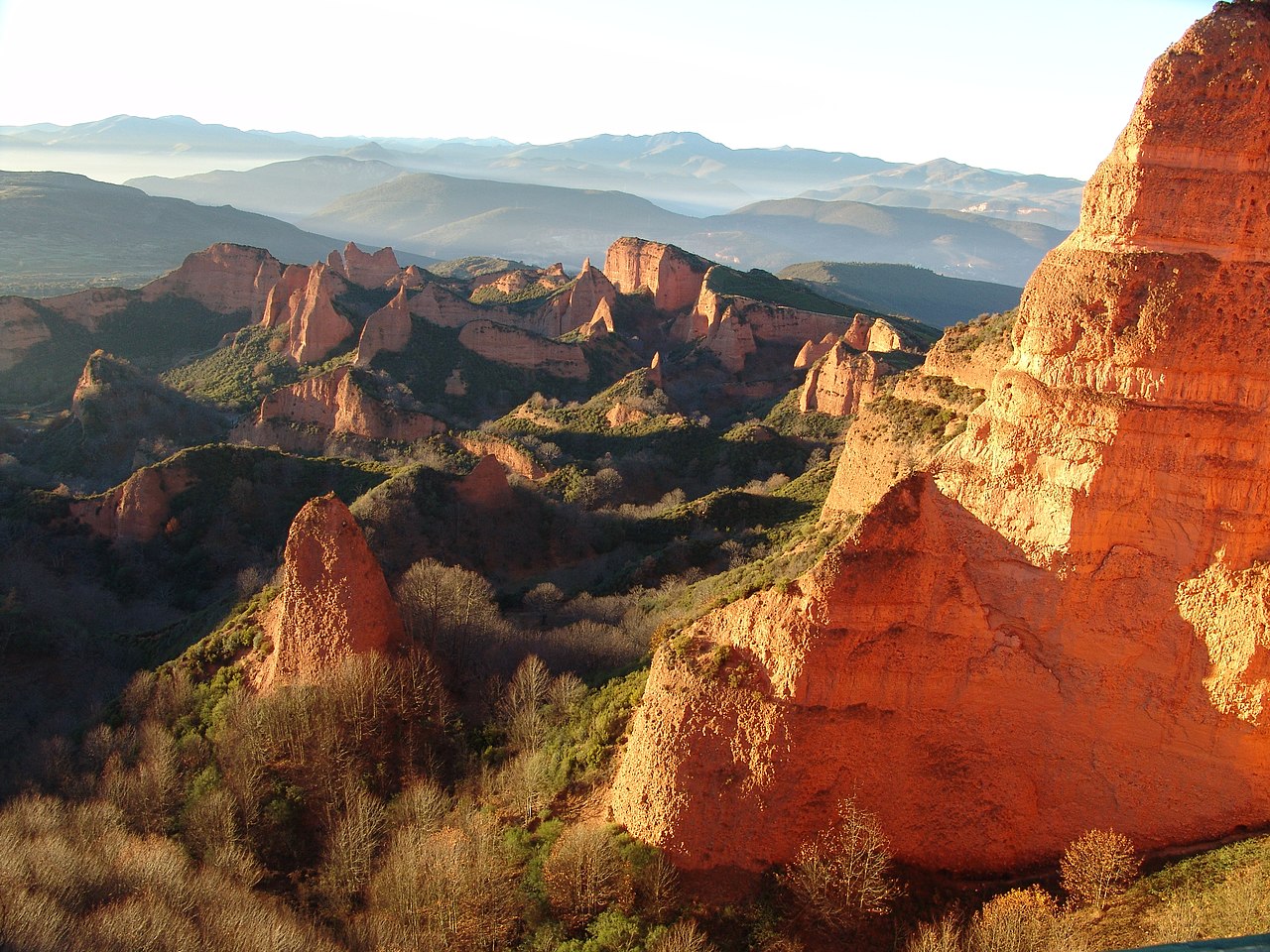



How it was made
During the Roman period this area was developed to exploit local gold deposits. Engineers redirected water from streams through a network of channels and reservoirs to deliver powerful surges that could wash away loose rock — a technique often called ruina montium or "hushing". By repeatedly undermining and collapsing slopes the miners effectively dismantled hills, leaving the jagged landscape seen today. The Romans adapted aqueduct engineering and used wooden tanks and sluices to concentrate force where needed.
History, scale and impact
Most intensive mining at Las Médulas took place in the first centuries AD, with activity concentrated roughly between the 2nd and 4th centuries AD. Ancient sources and modern research suggest very large quantities of material were moved and that the workforce included enslaved people and laborers under Roman control, producing significant amounts of gold for the Roman Empire. The physical process removed whole sections of mountain and altered drainage, creating caves and tunnels and a network of gullies and channels that reshaped the local environment.
Archaeology and remains
Archaeologists study the surviving earthworks, the remains of aqueducts and settling basins, and the pattern of spoil heaps to reconstruct mining operations. Surviving tunnels, terraces and engineered embankments provide evidence of Roman planning and water management. Scientific surveys combine fieldwork and remote sensing to estimate extraction volumes and to understand environmental consequences.
Present-day value and visitation
Today Las Médulas is valued both for its cultural-historical importance and for its scenic qualities. It offers marked walking trails, viewpoints and interpretive displays; the nearby town of Ponferrada serves as a common base for visitors. Conservation measures balance public access with protection of archaeological features and the recovering vegetation. The site is an instructive example of how ancient industry can leave a lasting imprint on landscape and ecology.
Notable facts
- Las Médulas is one of the most extensive known examples of hydraulic mining from antiquity and is often cited in studies of Roman engineering and resource extraction.
- Its distinctive terrain—eroded peaks and deep gullies—was produced intentionally by large-scale water works rather than natural erosion.
- The site is a living classroom for archaeology, engineering history and conservation; visitors can view aqueduct routes and surviving mining structures interpreted by local museums and guides.
For additional orientation and resources about local names, history and visitor information, see regional and archaeological guides associated with the area.
Questions and answers
Q: Where is Las Médulas located?
A: Las Médulas is located near the town of Ponferrada in Spain.
Q: What was Las Médulas used for in the Roman Empire?
A: Las Médulas was the most important gold mine in the Roman Empire.
Q: How did the Romans remove the gold from Las Médulas?
A: The Romans washed away an entire mountain to remove the gold from Las Médulas.
Q: When did the Romans use slaves to mine gold at Las Médulas?
A: The Romans used slaves to mine about 900 tons of gold from Las Médulas from the 2nd to the 4th century AD.
Q: What did the mining at Las Médulas leave behind?
A: The mining at Las Médulas left a series of rock pinnacles, gullies, caves, and tunnels.
Q: What is the UNESCO's opinion of Las Médulas?
A: Las Médulas is listed by the UNESCO as one of the World Heritage Sites.
Q: What is the name of Las Médulas in the Galician language?
A: The name of Las Médulas in the Galician language is As Médulas or As Meduas.
Related articles
Author
AlegsaOnline.com Las Médulas — Ancient Roman gold-mining landscape in Spain Leandro Alegsa
URL: https://en.alegsaonline.com/art/56107