
Largentière: historic subprefecture and medieval town in Ardèche
Largentière is a small subprefecture in Ardèche, southeastern France, known for its medieval centre, historic silver-mining connections, and role as a local administrative and cultural hub.
Overview
Largentière is a small town in southeastern France, officially a commune in the Ardèche department of the Auvergne-Rhône-Alpes region. It serves as a subprefecture, which gives it an administrative role for the surrounding rural territory. The town is often mentioned by its Occitan name, L'Argentièira, reflecting local linguistic heritage.
Image gallery
8 Images


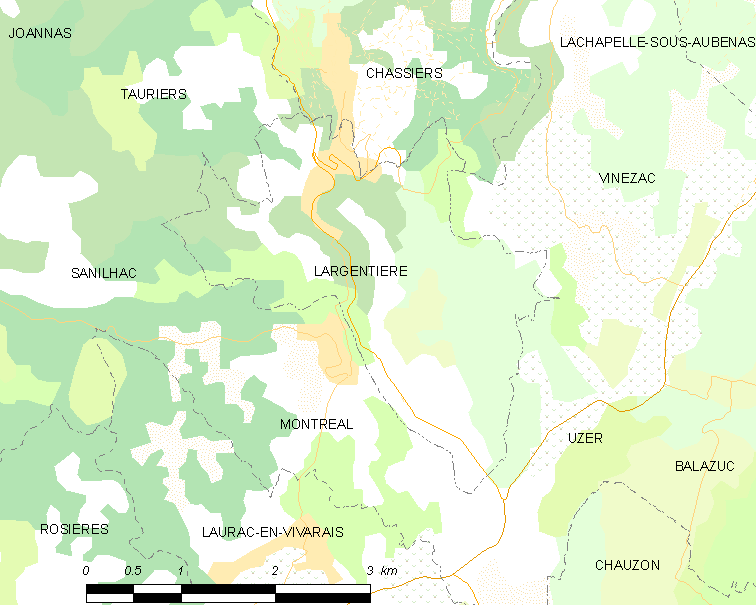

Location and geography
Largentière lies in a valley setting within the hilly landscape of southern Ardèche. The position on a small river and the surrounding mixed farmland, chestnut woods and vineyards have shaped its economy and settlement pattern. The compact urban form and preserved medieval core are legible from the streets and nearby viewpoints.
History and origins
The town's name alludes to silver (French: argent) and refers to a past in which silver-bearing ores and metalworking contributed to local prosperity. Over time Largentière developed as a market, mining and religious centre; ecclesiastical and civic authority influenced its street pattern and public buildings. Much of its visible built fabric dates to the medieval and early modern periods, with later conservation efforts retaining that character.
Main sights and architecture
- Remains of a medieval castle and sections of former fortifications that mark the old defensive circuit.
- Historic churches with Romanesque and Gothic elements, and stone houses clustered along narrow lanes.
- Small museums, local interpretation centres and displays that explain mining, craft traditions and rural life.
- Markets, seasonal festivals and gastronomic events that present regional produce and crafts.
Administration and civic life
As a subprefecture, Largentière hosts administrative services for the arrondissement and acts as a local hub for public administration. Municipal institutions, cultural associations and local markets contribute to civic life. The town's role as a service centre supports nearby villages and hamlets.
Economy and tourism
Local activity combines public administration, hospitality, small-scale agriculture and artisanal trades. Heritage tourism centred on the medieval core, walking and rural experiences is important for local businesses. Visitors are drawn by the compact historic centre, regional food and opportunities for countryside recreation.
Access and practical information
While small in size, Largentière is accessible by regional roads and serves as a node for local bus services and rural transport. It functions as a base for exploring southern Ardèche and the wider regional landscape, with services for visitors and residents alike.
Further information
For administrative, cultural and regional context see the departmental overview at department overview and broader information about the Auvergne-Rhône-Alpes region. Local language and heritage resources are available through Occitan references such as L'Argentièira, and practical civic links can be consulted via the town's commune page (commune) or subprefecture information (subprefecture).
Readers seeking cultural guides, museum listings or event calendars can follow regional portals and local tourist information services for up-to-date schedules and visitor advice (Ardèche, regional context).
Questions and answers
Q: Where is Largentière located?
A: Largentière is located in the Ardèche department of the Auvergne-Rhône-Alpes region in southeastern France.
Q: What is the meaning of "subprefecture"?
A: A subprefecture is a lower-level administrative division in France, with powers between those of a commune and a department.
Q: What is the official language of Largentière?
A: The official language of Largentière is French. However, the Occitan language is also spoken in the region.
Q: What is the population of Largentière?
A: The current population of Largentière is not provided in the given text.
Q: What does "L'Argentièira" mean in Occitan language?
A: "L'Argentièira" means "the silver mine" in the Occitan language.
Q: Does Largentière have any special significance or status?
A: Yes, Largentière is a subprefecture of the Ardèche department and is therefore an important administrative center in the region.
Q: What is the climate like in Largentière?
A: The given text does not provide information on the climate of Largentière.
Related articles
Author
AlegsaOnline.com Largentière: historic subprefecture and medieval town in Ardèche Leandro Alegsa
URL: https://en.alegsaonline.com/art/56029
Sources
- insee.fr : "Commune de Largentière (07132)"
- map-france.com : "City of Largentière"
- annuaire-mairie.fr : "Ville de Largentière"
- habitants.fr : "Ardèche"
- insee.fr : "Régions, départements, arrondissements, cantons et communes"