
L'Aquila, capital of Abruzzo, Italy
L'Aquila is the administrative capital of Abruzzo in central Italy, noted for its medieval centre, surrounding Apennine setting, historic university and long-term recovery after a major 2009 earthquake.
Overview
L'Aquila is an Italian city that serves as the administrative capital of the Abruzzo region and of the province that shares its name. Perched on a hill above the valley of the Aterno river, the city has a compact medieval core of stone buildings, churches and public squares. It is also the regional seat of government and of many public services. The city is commonly described as the capital of Abruzzo, a region of central Italy with a varied landscape that includes both mountains and a coastline.
Image gallery
10 Images





Geography and setting
The town occupies a basin formed by the Aterno river and is ringed by the central Apennine Mountains. This setting gives L'Aquila a continental climate, with cold winters and often snowy conditions in higher surrounding areas, and warm summers. Its position has historically made it a gateway to mountain villages, national parks and winter sports areas in the nearby highlands.
History
L'Aquila has medieval origins: in the Middle Ages several castles and settlements joined together to form a single communal town that developed as a regional administrative, religious and commercial centre. Over centuries it accumulated churches, convents and palazzi. International media and travel writers have long noted the quality of its urban fabric: for example the Financial Times, a leading newspaper, described L'Aquila among the most handsome cities of the Abruzzo region. The city’s name literally means "the eagle" in Italian and features in local heraldry and symbols.
Architecture and landmarks
The historic centre contains several notable monuments and public spaces. Key sights include:
- Forte Spagnolo (the Spanish Fort), a large 16th–17th century fortress that dominates the skyline.
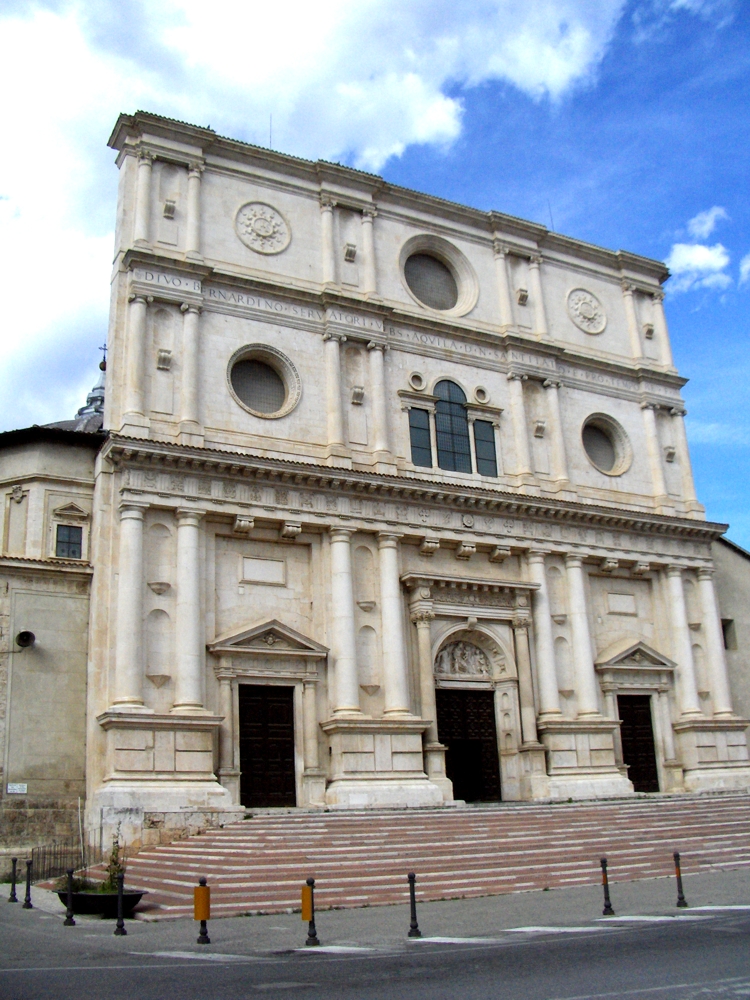
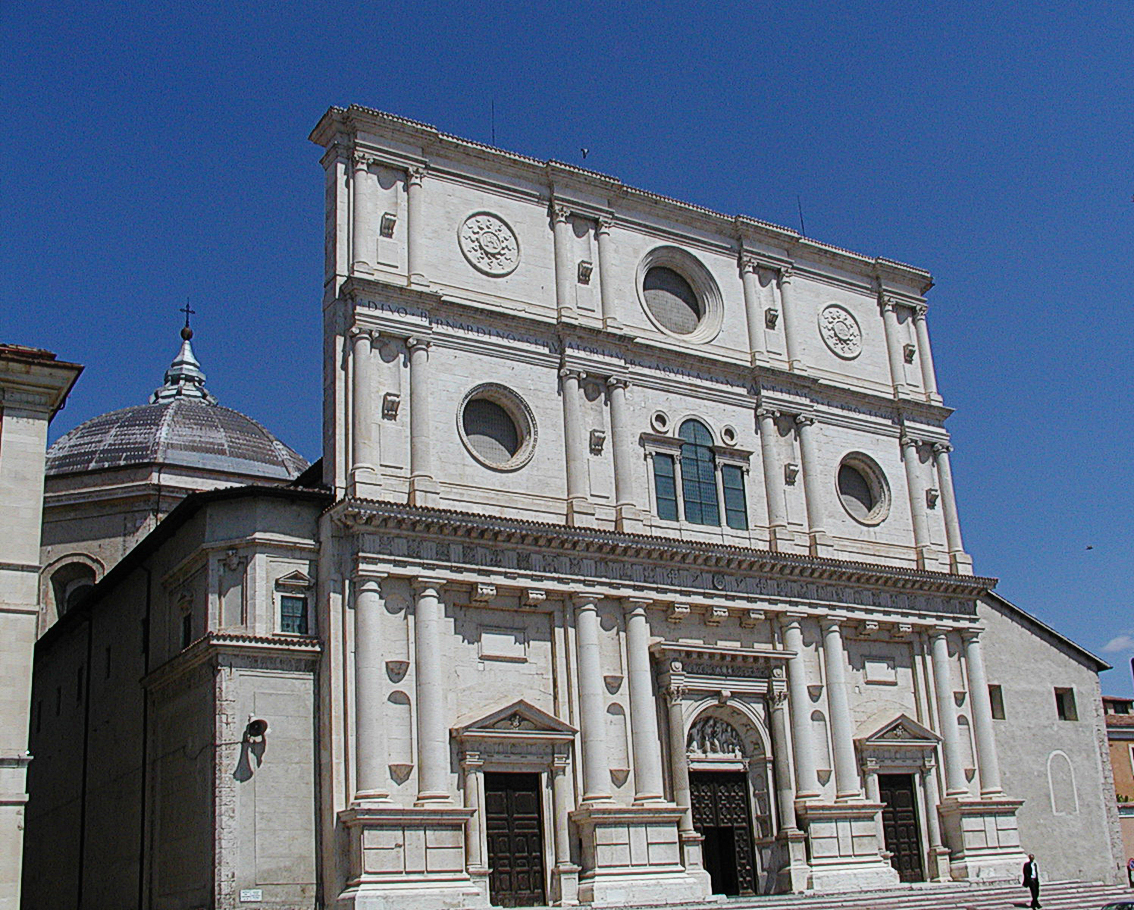
- The Basilica of San Bernardino and other churches reflecting Renaissance and Baroque styles.
- The Fontana delle 99 Cannelle, a medieval fountain with numerous spouts linked to local traditions.
- The cathedral, civic palaces and traditional piazzas that form the heart of public life.
Culture, education and economy
The city hosts the University of L'Aquila, which contributes to a lively student community and to cultural activity including festivals, research and regional partnerships. Local crafts, seasonal markets and tourism linked to mountain activities are important to the economy, alongside public administration and services tied to its role as a provincial capital.
2009 earthquake and recovery
On 6 April 2009 a severe earthquake struck the area, causing extensive damage to the historic centre and to many homes; it resulted in loss of life and the displacement of residents. The post‑quake period has involved long-term recovery efforts: emergency relief, stabilisation of monuments, conservation and seismic strengthening, reconstruction of housing and public infrastructure, and ongoing debates about restoration approaches that balance heritage preservation with modern safety standards. Recovery has drawn national and international attention and funding, and has shaped urban policy in the city into the present.
Transport and access
L'Aquila is accessible by regional roads and by rail links that connect it with larger cities in central Italy; nearby airports serve longer‑distance travel. The city functions as a hub for visitors seeking mountain recreation, historical sites and regional culture.
Questions and answers
Q: Where is L'Aquila located?
A: L'Aquila is an Italian city located on a hill in the valley of the Aterno river.
Q: How many inhabitants does L'Aquila have?
A: L'Aquila has about 71,989 inhabitants.
Q: What is the capital of Abruzzo?
A: L'Aquila is the capital of Abruzzo.
Q: What did the Financial Times say about L'Aquila?
A: The Financial Times, an important newspaper, wrote that L'Aquila is "the most handsome city of Abruzzo".
Q: What can be found in L'Aquila?
A: L'Aquila is a very old town full of beautiful buildings and churches, and it has a university.
Q: Where is L'Aquila circled by?
A: L'Aquila is circled by the Apennine Mountains.
Q: Is L'Aquila located in Italy?
A: Yes, L'Aquila is an Italian city.
Related articles
Author
AlegsaOnline.com L'Aquila, capital of Abruzzo, Italy Leandro Alegsa
URL: https://en.alegsaonline.com/art/56006