
Lap dance
A lap dance is an erotic dance performed close to or on a seated patron, most often in strip clubs. Practices, legal rules, types, economics and controversies vary widely by jurisdiction and venue.
Overview
A lap dance is a form of erotic performance in which a dancer performs for an individual or a small group while the patron is seated or lying down. It is commonly offered in venues known as strip clubs, although variations occur in private parties and other commercial settings. As a genre of sex work, a lap dance can range from a brief, music-length performance on a chair to longer private sessions in a secluded area of a club.
Image gallery
2 Images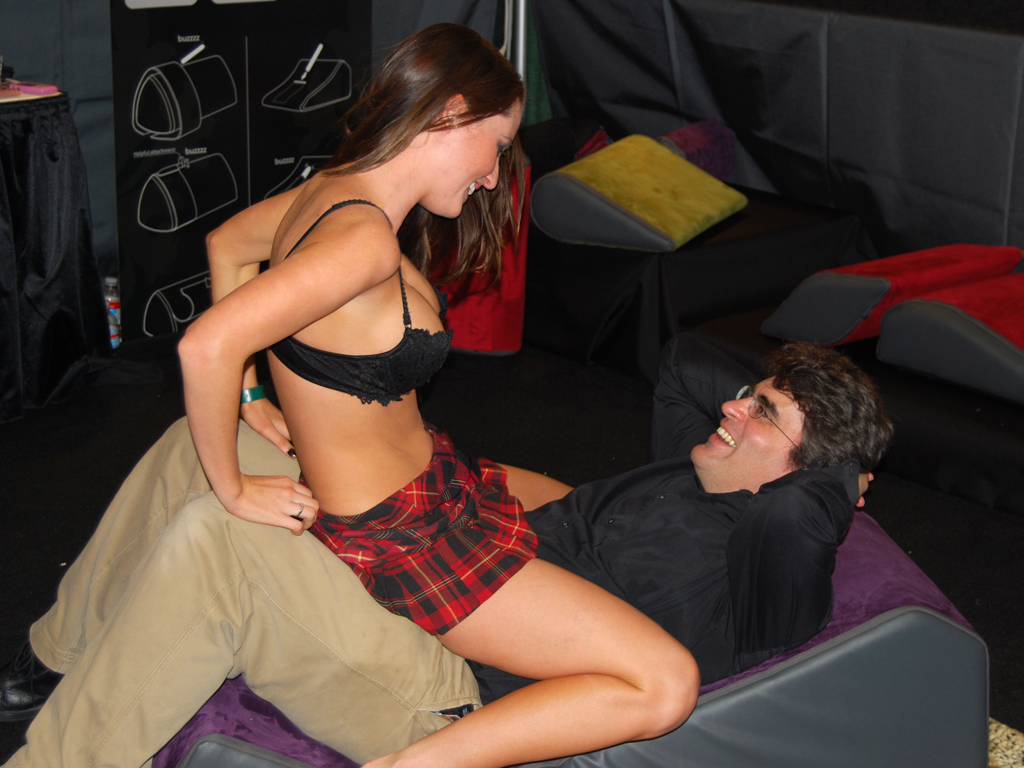

Characteristics and common types
Lap dances differ by degree of contact, costume, and setting. Typical distinctions include:
- Contact versus non-contact: In some venues the dancer may press against or sit on the patron (contact dancing); in others touching is forbidden and the dancer remains a short distance away.
- Public-stage versus private: Short dances are often performed on the club floor to a single song, whereas block sessions or private rooms allow for extended time and greater intimacy.
- Variants by posture: A couch dance involves a patron seated on a couch; a bed dance takes place with the patron reclining on a bed or sofa in a private room.
- Costume variations: Dancers may perform naked, partially nude, or wearing attire such as a bikini top and bottom; local rules and venue policies determine what is permitted. For instance, some dancers perform fully nude while others wear a bikini or similar garments.
Legal and regulatory context
Laws and regulations governing lap dances vary widely by country, state and municipality. Rules may restrict nudity, require distance between bodies, prohibit touching by patrons, or limit private rooms and late-night operation. Enforcement is handled by local licensing authorities and police, and clubs often publish internal policies that can be more restrictive than local law. In many places the legal distinctions turn on whether sexual contact is permitted, whether money is exchanged for private time, and how venues are zoned.
Economic and social aspects
Lap dances are a revenue stream for many adult-entertainment venues and can be an important source of earnings for performers. Pricing models include per-song charges, time-based rates for private sessions, and tips. The economics of the trade are affected by stage fees, house rules, and local demand. Some dancers work independently within a club while others are employed or contracted, and the division of income between performers and management varies considerably.
Controversies, safety and notable issues
Lap dancing raises a range of social and legal debates. Critics argue that certain business practices—such as poorly supervised private booths or high fees—can create incentives for more explicit sexual activity or exploitation. Supporters contend that, when regulated and consensual, lap dancing is legitimate work and a form of adult entertainment. Issues of performer safety, sexual harassment, workplace rights, and the stigma attached to sex work are recurring themes. Clubs and advocacy groups have developed policies and training to reduce risks, and some jurisdictions have reformed regulations to address health, safety and labor concerns.
For further reading on the social, legal and economic dimensions of lap dancing, see material that addresses adult-entertainment law, occupational safety in nightlife venues, and debates about sex work regulation. The cultural practice continues to evolve alongside changing laws, public attitudes and market demand. For context on performance settings, many descriptions note that lap dances are typically set to music in venues where dancers may take off their clothes as they dance, and may at times be performed with minimal clothing or nude appearances.
Questions and answers
Q: What is a lap dance?
A: A lap dance is a type of sex work performed in some strip clubs, where a dancer performs an erotic dance either contacting their body with a seated patron or within close proximity to them.
Q: What are the different types of lap dances?
A: The different types of lap dances include couch dances, which are performed while the customer is seated on a couch, and bed dances, which involve the customer lying down on a bed. In some clubs, block sessions of lap dances can be booked in private rooms called champagne rooms.
Q: How long does a typical lap dance last?
A: The duration of most lap dances is usually determined by the length of the song being played by the club's DJ.
Q: Does contact between patrons and dancers occur during lapdances?
A: Depending on local laws and club policies, contact between patrons and dancers may or may not occur during lapdances. Some clubs forbid any touching by patrons while others allow for levels of contact to be negotiated between participants.
Q: Are there criticisms against certain aspects oflap dancing?
A: Yes, critics have argued that some club owners encourage sexual acts between customers and dancers by installing dark private booths and charging high stage fees for dancers to work at their clubs. Additionally, research has shown that many women become involved in this form of sex work due to poverty and lack of other job opportunities.
Q: Is it common for people to book block sessions forlap dancing?
A: Yes, in some clubs it is common for people to book block sessions lasting anywhere from half an hour up to an hour for private room performances known as champagne rooms.
Tags
Related articles
Author
AlegsaOnline.com Lap dance Leandro Alegsa
URL: https://en.alegsaonline.com/art/55978
Sources
- theguardian.com : "The reality of lap-dancing, by a former dancer"