
Laozi — the Old Master and the origins of Daoist thought
Laozi, a semi-legendary Chinese figure credited with the Tao Te Ching, is central to Daoism. His teachings stress the Tao (Way), wu wei (non-action), simplicity and naturalness and shaped Chinese religion and philosophy.
Overview
Laozi (literally "Old Master") is a foundational figure in Chinese intellectual history, traditionally credited as the author of the Tao Te Ching and regarded as an early exponent of what became Daoism. His life is shrouded in legend: classical accounts describe him as a wise archivist or teacher who lived in the era of the late Zhou dynasty, but modern scholars treat many biographical details as uncertain. Over time Laozi became not only a philosophical authority but also a religious figure and deity in Daoist and popular beliefs (deification).
Image gallery
8 Images


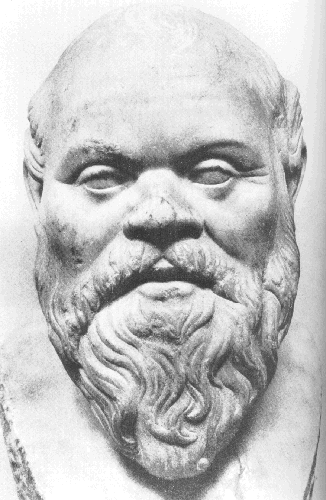
Teachings and main ideas
The core text associated with Laozi is the Tao Te Ching, a compact collection of short, often paradoxical sayings that emphasise living in accord with the Tao (the Way) and cultivating Te (virtue or inner power). Central themes include wu wei (non-forcing or effortless action), simplicity, humility, and harmony with the natural order.
- Wu wei: acting without contrivance so results follow from natural conditions.
- Ziran: naturalness or spontaneity rather than artificial behavior.
- Relativity and balance: many sayings stress complementary opposites and the limits of ordinary categories.
- Governance: rulers are urged to rule gently, avoid heavy-handed measures, and let people find their own equilibrium.
History, authorship and transmission
Classical sources, notably the historian Sima Qian, place Laozi in conversation with other early thinkers and sometimes as a contemporary of Confucius. However, the historical existence of a single author named Laozi is disputed. Scholars propose that the Tao Te Ching may be a compilation of sayings from a variety of authors or schools that were later assembled and edited. Regardless of authorship, the book circulated widely by the late classical period and became a touchstone for diverse interpretations.
Influence and reception
Laozi's ideas have been interpreted in many ways. They informed religious movements that developed into institutional Daoism, where he was often venerated as a sage or immortal. Politically and philosophically, his emphasis on flexible, low-profile rulership attracted later readers who preferred restraint in governance; other thinkers engaged his texts critically or adapted the ideas to very different agendas, so that his work has been read by both anti-authoritarian critics and, in varied contexts, by advocates of pragmatic statecraft (Legalist and other schools interacted with Daoist themes).
Notable distinctions and legacy
The name "Laozi" has been romanized in several ways (Lao-tzu, Lao Tse, etc.) and may originally have been an honorific rather than a personal name. The brevity and suggestive form of the Tao Te Ching invite many translations and commentaries; its aphoristic style has made it influential beyond China in literature, art, ethics, and contemporary discussions of leadership, ecology and mindful practice. For general introductions and primary-text access see resources on Laozi as a Chinese philosopher, the tradition of Daoism, the Tao Te Ching and accounts of his later religious elevation (deity status) as well as scholarly treatments of intellectual exchange with other schools (Legalism).
Questions and answers
Q: Who was Laozi?
A: Laozi was a Chinese philosopher known for Taoism and the Tao Te Ching.
Q: What is Taoism?
A: Taoism is a Chinese philosophy that emphasizes living in harmony with the Tao, which is the natural order and flow of the universe.
Q: What is the Tao Te Ching?
A: The Tao Te Ching is a book written by Laozi that outlines the principles of Taoism.
Q: Is Laozi considered a deity in Chinese religions?
A: Yes, Laozi is considered a deity in Taoism and Chinese folk religions.
Q: When did Laozi live?
A: Laozi may have lived during the Warring States period in China.
Q: Did Laozi's work have any influence on other philosophers?
A: Yes, Laozi's work influenced anti-authoritarian and Legalist philosophers.
Q: What is the significance of Laozi in Chinese culture?
A: Laozi is a legendary figure in Chinese culture and his teachings continue to be influential in Taoism and beyond.
Related articles
Author
AlegsaOnline.com Laozi — the Old Master and the origins of Daoist thought Leandro Alegsa
URL: https://en.alegsaonline.com/art/55977
Sources
- literati-tradition.com : Article by Bing YeYoung "The Shamanic Origins of Laozi and Confucius"
- lastleader.com : Inspiring thoughts of Lao Tzu
- taoism.net : True Tao Home Page
- reportret.info : portrait of Laozi
- taopage.org : Lao Tzu Page
- synaptic.bc.ca : Critical Thinkers: Lao Tse & Daoism
- plato.stanford.edu : Stanford Encyclopedia of Philosophy entry
- tao-te-king.org : 老子 Lǎozĭ 道德經 Dàodéjīng - 拼音 Pīnyīn + 王弼 WángBì + 馬王堆 Mǎwángduī + 郭店 Guōdiàn
- gutenberg.org : Works by Lao Zi