
Languages of Canada: Official status, diversity, and Indigenous tongues
Overview of Canada's linguistic landscape: English and French status, census measures, immigrant languages, Indigenous tongues, and regional differences in policy and usage.
Canada is a multilingual country with a long history of language contact and policy. At the federal level, English and French are recognized as the country's official languages, which means federal statutes and many services are provided in both languages. For introductions and general summaries about the country's language profile see overview resources. When discussing the two dominant languages it is common to refer directly to English and French; both shape national institutions, media and public life in different regions.
Image gallery
9 Images





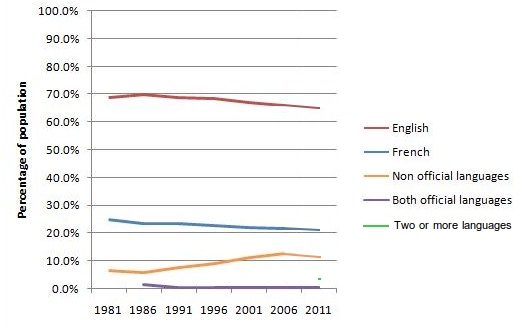
Official status and regional arrangements
Canadian law treats English and French as official at the federal level; this constitutional recognition obliges Parliament and federal agencies to produce legislation and offer services in both languages. Provinces and territories vary in their arrangements. Quebec recognizes French as its official language and uses language laws to promote French in education, commerce and signage; background information is available via provincial resources such as Quebec sources. New Brunswick is unique among provinces in having both English and French declared official at the provincial level; see provincial context at New Brunswick.
How language use is measured
Statistics Canada collects detailed language information through the national census and other surveys. These measures go beyond a simple question of mother tongue: they include mother tongue (first language learned and still understood), language spoken most often at home, knowledge of official languages, and the first official language spoken for practical purposes. For technical definitions and census categories consult the census materials at census documentation. This nuanced approach helps policymakers track bilingualism, language shift, and the needs of minority-language communities.
Immigrant and minority languages
Large-scale immigration has introduced and sustained many languages other than English and French. Roughly one in five Canadians has a mother tongue other than English or French; this group is largely composed of immigrants and their descendants. Many continue to use their heritage languages in the home and community. The most widely reported non-official mother tongues include:
These languages are important in specific urban and regional communities, where they support ethnic media, places of worship, cultural organizations and bilingual or multilingual service provision.
Indigenous languages
Canada is also home to many Indigenous languages from three major families: Algonquian (including Cree and Ojibway), Inuit languages (such as Inuktitut), and several Athabaskan languages among others. Although Indigenous languages are central to cultural identity and heritage, relatively few Canadians speak them as a daily language; their use has declined over the last century and many are considered endangered. Community-led revitalization and education initiatives aim to support intergenerational transmission, often in partnership with government and academic programs.
Practical effects and notable distinctions
Language affects everyday services, education, signage and political life. In some regions, bilingual public services and schooling are widely available; in others, one language predominates. The federal bilingual framework coexists with provincial diversity in language policy, creating a complex map of rights and services across the country. Understanding local context — whether municipal, provincial or Indigenous community — is essential when considering language access, schooling choices or cultural programming. For more region-specific or language-specific material consult the linked resources above for authoritative details and updates.
Further reading and official sources: See national overviews and government pages for current policy and statistics at overview resources, detailed pages about English and French language policy, provincial contexts like New Brunswick and Quebec, census methodology at Statistics Canada, and community or language-specific pages for immigrant languages such as Italian, German, Chinese, Punjabi, Arabic and Dutch.
Questions and answers
Q: What are the official languages of Canada?
A: The official languages of Canada are English and French.
Q: Which Canadian province uses both English and French as its official languages?
A: Only New Brunswick uses both English and French as its official languages.
Q: What is Quebec's official language?
A: Quebec's official language is French.
Q: What does it mean that English and French are recognized as "official languages" in Canada?
A: It means that all laws of the federal government are in both English and French and that federal government services can be available in both languages.
Q: What information does Canada's census collect about languages?
A: Canada's census collects information about home language, mother tongue, first official language, and language of work.
Q: What percentage of Canadians have a first language or mother tongue that is not English or French?
A: About 18% of Canadians (about 6.1 million people, most are immigrants) have a language other than English or French as their first language or mother tongue.
Q: What are some of the most common languages spoken in Canada, after English and French?
A: Some of the most common languages spoken in Canada, after English and French, are Italian, German, Chinese, Punjabi, Arabic, and Dutch.
Related articles
Author
AlegsaOnline.com Languages of Canada: Official status, diversity, and Indigenous tongues Leandro Alegsa
URL: https://en.alegsaonline.com/art/55915