
Languages of Africa: families, use, decline and revival
Survey of Africa’s linguistic diversity: major families, lingua francas and colonial languages, writing systems, causes of language loss, and contemporary revitalization efforts.
Africa is among the most linguistically diverse continents. Estimates of the number of languages spoken there vary — scholars report figures ranging from about two thousand to more than three thousand — and many are concentrated in particular regions. Indigenous speech communities, often referred to as native languages, coexist alongside languages introduced during trade, religion and colonization. This high density of tongues means that roughly a large share of the world’s languages have their origins in Africa.
Image gallery
1 Image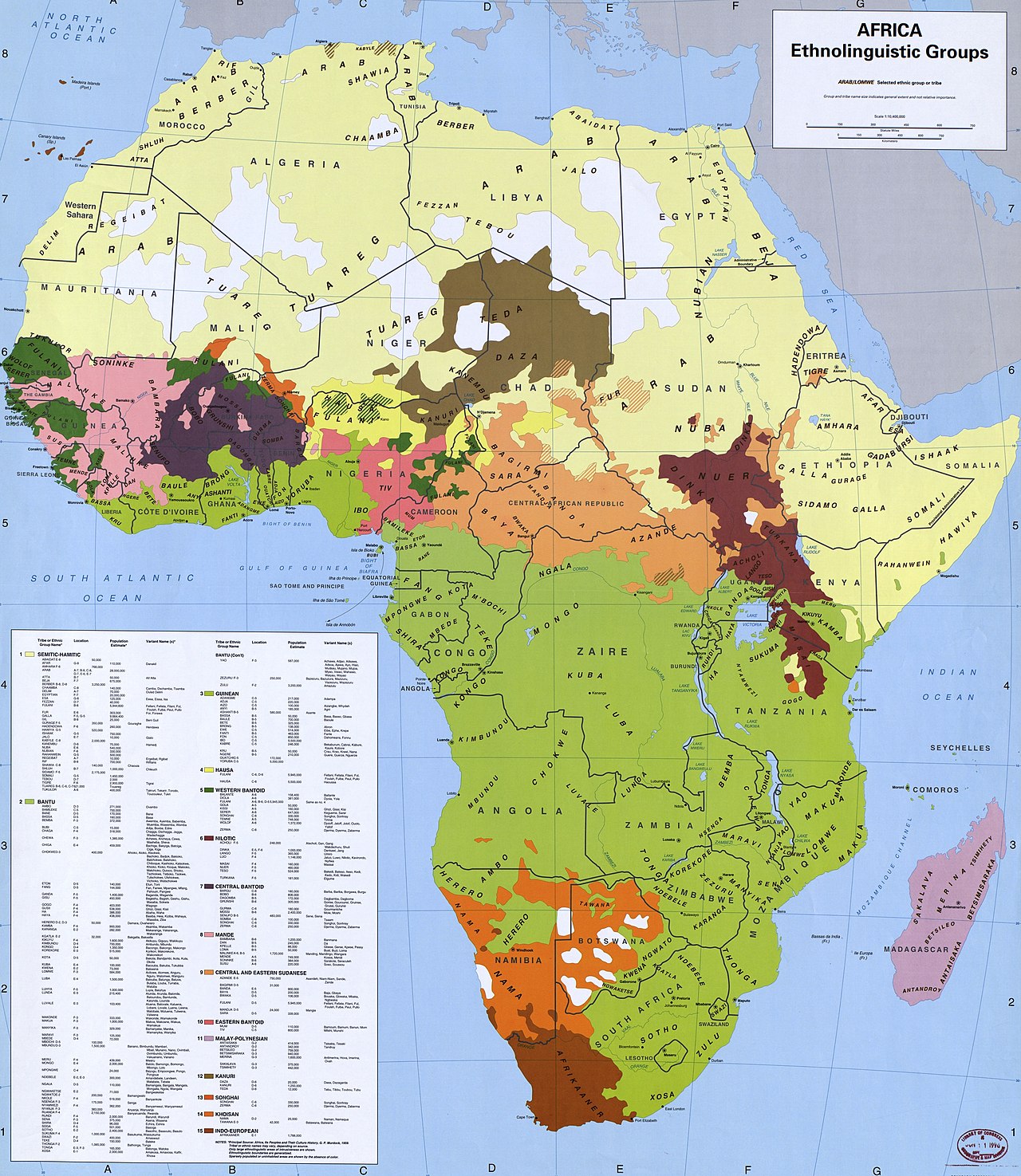
Major families and geographic distribution
Several broad language families account for most of Africa’s languages. The largest by number is the Niger–Congo family, which includes the Bantu subgroup and many languages of West, Central and Southern Africa; see Niger–Congo. Afroasiatic languages are spoken across North Africa, the Horn and parts of the Sahel, represented by Arabic, Berber and Cushitic tongues; see Afroasiatic. Other groups include Nilo‑Saharan and a small set of click languages often grouped under Khoisan. Languages vary widely in grammar, tone, and phonology, and boundaries between "language" and "dialect" are often social as well as linguistic.
Lingua francas, colonial languages and writing systems
Several regional lingua francas facilitate communication across ethnic boundaries. Swahili serves much of East Africa as a trade and medium-of-instruction language — Swahili — while Hausa and Amharic play similar roles in parts of West Africa and Ethiopia. Colonial era languages — especially English, French, Portuguese and Spanish — remain official or widely used in administration and education; these are often grouped as colonial languages. Writing systems include Latin-based alphabets, Arabic script used in Ajami traditions, and the Ge'ez (Ethiopic) script for several languages.
Endangerment, causes and revitalization
Many African languages have contracted or become extinct over time. Causes include language shift toward dominant urban or national tongues, education and media policies, economic pressures, and social upheaval. Conflict and social disruption — including warfare and targeted violence — can accelerate loss by displacing communities and disrupting intergenerational transmission; see conflict and violence. Languages may also be abandoned when speakers assimilate into larger cultural groups or migrate; researchers discuss loss and disappearance in these terms.
Efforts to document, standardize orthographies, introduce mother‑tongue schooling, and use radio and digital tools are part of contemporary revitalization. Understanding Africa’s languages is essential for education policy, cultural heritage, and linguistic science, and it remains a dynamic field of study for linguists, educators and communities alike.
Questions and answers
Q: How many languages are there in Africa?
A: There are more than 3,000 languages in Africa.
Q: What are native languages?
A: Native languages are languages that come from Africa.
Q: What are colonial languages?
A: Colonial languages are languages that were brought to Africa by colonists from Europe.
Q: Does Africa have a high concentration of languages in the world?
A: Yes, Africa has the highest concentration of languages in the world.
Q: What percentage of the world's languages come from Africa?
A: At least 30% of the world's languages come from and are spoken in Africa.
Q: Why have many African languages died out?
A: Many African languages have died out due to wars and genocide by other African tribes, abandonment or disappearance of the speakers.
Q: How do wars and genocide lead to the extinction of languages?
A: Wars and genocide can lead to the extinction of languages by causing the death of its speakers or forcing them to abandon their language and adopt the language of their oppressors.
Related articles
Author
AlegsaOnline.com Languages of Africa: families, use, decline and revival Leandro Alegsa
URL: https://en.alegsaonline.com/art/55914