
Langston Hughes (1901–1967): Poet, Playwright, and Voice of the Harlem Renaissance
Overview of Langston Hughes, his life, major works, style, role in the Harlem Renaissance, and lasting influence on American literature and African-American cultural identity.
Overview
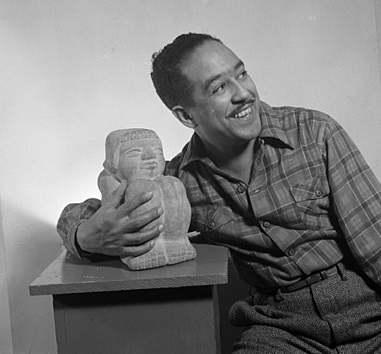
James Mercer Langston Hughes (February 1, 1901 – May 22, 1967) was a prominent American poet, novelist, playwright and short story writer. He emerged as a leading figure during the cultural flourishing of the Harlem Renaissance, and became widely known for work that mixed formal craft with everyday speech, jazz rhythms, and a focus on Black life in the United States.
Image gallery
10 Images



Life and background
Hughes was born in Joplin, Missouri, and experienced a childhood shaped by economic hardship and frequent moves. He identified with his roots as a descendant of people of African origin, a heritage that informed his themes and sense of identity. During his lifetime the word "Negro" was widely used in public discourse; Hughes lived through periods when language and self-designation for Black Americans changed, and he contributed to discussions about dignity, representation, and cultural pride.
Literary style and themes
Hughes's writing is noted for its clarity, musicality, and social realism. He deliberately incorporated forms and cadences derived from Black vernacular speech, blues, and jazz—elements of culture and music that he treated as central to American life. His poems and stories often give voice to working-class characters, travelers, and ordinary people, exploring racism, resilience, and the search for belonging.
Major works and examples
- "The Negro Speaks of Rivers" — an early and widely anthologized poem that connects Black history with deep, elemental images.
- The Weary Blues — a collection that made Hughes's reputation for blending poetic form with musical rhythm.
- Not Without Laughter — a novel that follows family life and coming-of-age themes.
- Montage of a Dream Deferred — a later sequence exploring urban life and deferred hopes.
- Plays, essays, and short stories in which everyday speech and communal experience come to the fore.
Connections, travel, and perspective
Hughes traveled widely and publicly engaged with global Black experiences. He visited places in West Africa and elsewhere to learn more about diasporic ties, and he consistently wrote about the ways African heritage and American life interacted. His work encouraged many readers to think of themselves as part of a broader African-American community with shared history and cultural strengths.
Legacy and importance
Hughes helped shape 20th-century American literature by insisting that the lives of ordinary Black Americans were worthy subjects for poetry, drama, and prose. He mentored younger writers and remained committed to making literature accessible without sacrificing craft. His influence extends to poets, musicians, and playwrights who followed, and his poems continue to be taught as examples of how language, music, and social insight can combine to produce powerful art.
For introductions and further reading, consult general literary surveys or anthologies that place Hughes in the context of the Harlem Renaissance and American letters. Scholarly editions of his collected poems and correspondence are useful for deeper study, while anthologies provide accessible overviews of his most influential work.
poet • novelist • playwright • short story writer • Harlem Renaissance • Missouri • descendant • African • Negro • culture • music • West Africa • African-American
Questions and answers
Q: Who was James Mercer Langston Hughes?
A: James Mercer Langston Hughes was an American poet, novelist, playwright, and short story writer.
Q: What was the Harlem Renaissance?
A: The Harlem Renaissance was a movement that recognized and celebrated the contributions of African-American writers, artists, and musicians in the 1920s and 1930s.
Q: What was Hughes' background?
A: Hughes grew up as a poor boy from Missouri and was the descendant of African people who had been taken to America as slaves.
Q: What term was used for African-Americans at that time?
A: At that time, the term used for African-Americans was "negro", which means a person with black skin.
Q: What was Hughes' contribution to the African-American community?
A: Through his poetry, plays, and stories, Hughes helped other black Americans to see themselves as part of a much bigger group of people, so that now the term "African-American" is used with pride.
Q: Was Hughes a successful writer?
A: Yes, Hughes became a famous writer because of his work.
Q: How did Hughes view his success?
A: Despite his success, Hughes always remembered how he started out, and he helped and encouraged many other struggling writers.
Related articles
Author
AlegsaOnline.com Langston Hughes (1901–1967): Poet, Playwright, and Voice of the Harlem Renaissance Leandro Alegsa
URL: https://en.alegsaonline.com/art/55898