
Lanfranc: Archbishop, Reformer, and Teacher
Lanfranc (c.1005–1089) was an Italian-born jurist and teacher who became abbot of Bec and Archbishop of Canterbury, serving as William the Conqueror's chief ecclesiastical reformer and royal counsellor.
Overview
Lanfranc (born c.1005–1010 at Pavia — died 24 May 1089 at Canterbury) was a leading cleric, teacher and canonist of the eleventh century. He is best known for his role as abbot of Bec in Normandy and later as Archbishop of Canterbury, where he worked to restore clerical discipline and to reorganise the English church after the Norman Conquest.
Image gallery
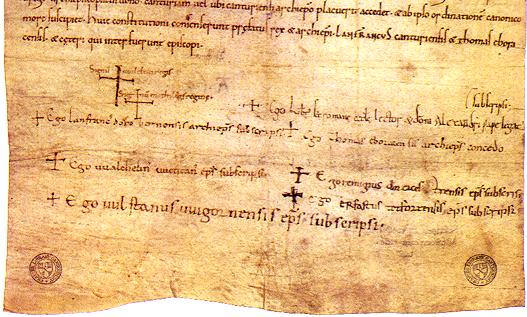
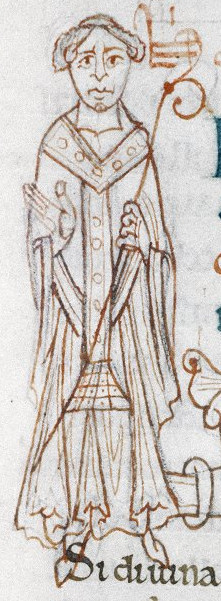
3 Images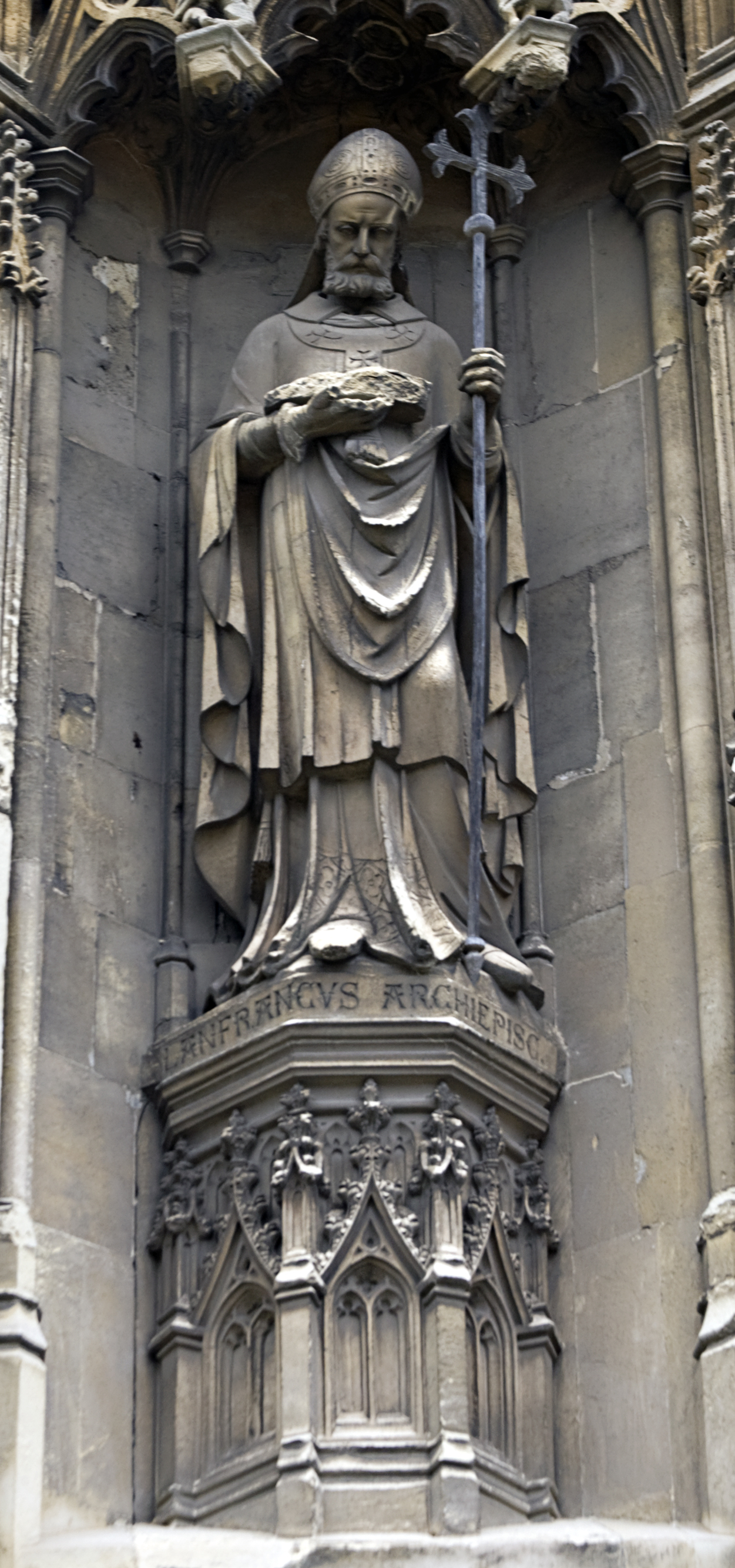
Early life and education
Details of Lanfranc's youth are not precise, but contemporary accounts and later biographies present him as trained in the liberal arts and in canonical learning. He acquired a reputation as a skilled teacher and a practical jurist, instructing students and advising ecclesiastical communities. At some point he abandoned a secular profession, described in sources as when he "gave up his career", to enter religious life.
Bec and monastic leadership
Lanfranc joined the monastery of Bec, where he became prior and then abbot. Bec was an important centre of learning and produced a number of influential churchmen. As abbot he combined strict monastic observance with emphasis on study and instruction, attracting pupils who would later hold high office. His leadership at Bec enhanced the abbey's reputation for scholarship and pastoral training.
Archbishop of Canterbury and reforms
In 1070, at the king's request, William the Conqueror appointed Lanfranc Archbishop of Canterbury. As the king's chief ecclesiastical adviser (William the Conqueror), Lanfranc undertook wide-ranging reforms across England. He worked to regularise episcopal appointments, enforce clerical discipline, improve the education of the clergy and reconcile contested claims of ecclesiastical jurisdiction. His background as a teacher and judge made him an effective administrator and mediator in disputes between bishops and between the church and lay authorities.
Relations with crown and church
Lanfranc maintained a close working relationship with the Norman monarchy while defending the institutional rights of Canterbury. He sought to balance royal interests and canonical norms, supporting reforms that aligned church governance with contemporary canonical practice. His tenure illustrates the close, if sometimes tense, cooperation between secular rulers and senior churchmen in the medieval period.
Writings and intellectual legacy
Although not a prolific author in comparison with some contemporaries, Lanfranc left a body of letters, decisions and theological arguments that circulated among clerical circles. These writings reflect his training in canon law and pastoral concern for clerical moral standards. He is remembered for promoting learning in monastic settings and for mentoring future leaders of the church.
Death and historical significance
Lanfranc died on 24 May 1089 at Canterbury. Historians recognise him as a key figure in the post-Conquest transformation of the English church: a learned administrator who helped to integrate Norman ecclesiastical structures, raise clerical standards and strengthen institutional links between the church and monarchy. His work at Bec and Canterbury contributed to patterns of governance and education that shaped the English church for generations.
- Key roles: monk, abbot of Bec, teacher, judge, Archbishop of Canterbury.
- Main contributions: monastic and clerical reform, episcopal administration, promotion of learning.
- Context: worked closely with William the Conqueror to implement reforms across England.
Lanfranc's career—from his origins in Pavia through his instructional work and abbacy to his primacy at Canterbury—illustrates the mobility of learned clergy in the eleventh century and the impact a single skilled administrator could have on church life and royal policy.
Questions and answers
Q: Who was Lanfranc?
A: Lanfranc was a cleric, teacher, and jurist who became Archbishop of Canterbury under William the Conqueror.
Q: Where was Lanfranc born and when did he die?
A: Lanfranc was born in Pavia and died on May 24, 1089, in Canterbury.
Q: What did Lanfranc do before becoming a monk at Bec in Normandy?
A: Lanfranc was a celebrated Italian jurist before becoming a monk at Bec in Normandy.
Q: When did Lanfranc become the Archbishop of Canterbury?
A: Lanfranc became the Archbishop of Canterbury in 1070.
Q: Who was the ruler of England when Lanfranc became Archbishop of Canterbury?
A: William the Conqueror was the ruler of England when Lanfranc became Archbishop of Canterbury.
Q: How would you describe Lanfranc's life?
A: Lanfranc led an extraordinary life as a jurist, monk, teacher, and Archbishop of Canterbury.
Q: What is Lanfranc known for?
A: Lanfranc is known for becoming the Archbishop of Canterbury under William the Conqueror after giving up his career as a celebrated Italian jurist.
Related articles
Author
AlegsaOnline.com Lanfranc: Archbishop, Reformer, and Teacher Leandro Alegsa
URL: https://en.alegsaonline.com/art/55864
Sources
- commons.wikimedia.org : Lanfranc