
Land of Punt — ancient trading realm known from Egyptian records
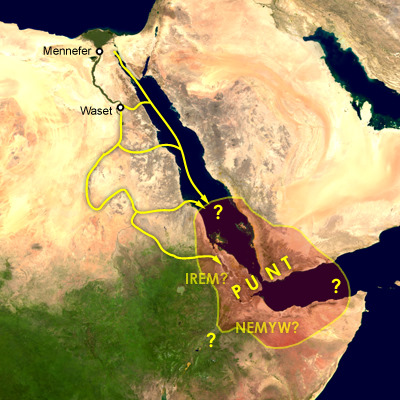
The Land of Punt, recorded by ancient Egyptian sources, was a historic source of incense, gold, ebony and exotic animals. Its precise location is uncertain but most scholars place it in the Horn of Africa or southern Arabia.
Overview
The Land of Punt is the name used in surviving Ancient Egyptian sources for a place that supplied luxury goods, exotic animals and aromatic resins to Egypt. Egyptian inscriptions and reliefs describe journeys to Punt and portray its people and products in detail. The term appears across many surviving texts, and in some Egyptian traditions the region was called Ta netjer, the "Land of the God." Modern discussions often place Punt within the wider Horn of Africa, but the question of its precise boundaries remains open.
Image gallery
10 Images






Evidence and records
Much of what we know about Punt comes from Egyptian expedition accounts and tomb reliefs, the best known of which commemorates the voyage sent by the New Kingdom pharaoh Hatshepsut. These sources describe ships, gifts, trade goods and the appearance of Puntite people. Some modern writers connect the ancient name to the contemporary region called Puntland in eastern Somalia, though this association is partly linguistic and partly geographic rather than proven by direct archaeological links.
Products and economy
Egyptian accounts emphasize a set of prized imports. Among the most frequently mentioned are:
- Gold and other metals, valued for jewelry and ritual use.
- Aromatic resins such as myrrh and frankincense, essential to religious rites.
- Ebony and other dense tropical hardwoods used in fine furniture and inlays.
- Ivory, skins and live cattle or wild animals that were transported for menageries and sacrifice.
These commodities arrived either by sea routes across the Red Sea or by inland trade networks that linked coastal ports to hinterland producers.
Location and scholarly debate
Scholars do not agree on a single pinpoint for Punt. The balance of evidence — ecological descriptions, the nature of exported goods, and the logistics of ancient sailing — leads many researchers to favor areas along the coasts and interior of what are today Somalia, Djibouti, Eritrea and the eastern parts of Ethiopia. Some proposals extend to the Red Sea coast of Sudan or include parts of the southern Arabian Peninsula. It is also possible that Punt was not a single political state but a trading region that spanned coastal East Africa and southern Arabia.
Routes, travel and society
Ancient narratives imply both maritime and overland connections. Caravan reports in Egyptian texts suggest journeys inland from the Nile valley could reach Punt within a matter of days by established routes, and maritime voyages used Red Sea ports to access coastal trading centers. One surviving tradition states that a caravan could reach Punt in about five days; such figures should be read cautiously but they indicate active exchange networks. Descriptions of Puntite communities note varied clothing and hairstyles, stilt or raised dwellings in some coastal areas, and distinct material culture elements recorded in Egyptian art.
Legacy and significance
Punt occupies an important place in studies of ancient international trade and cross-cultural contact. It appears in biblical and classical discussions (sometimes identified with the biblical Put) and continues to attract interest from historians, linguists and archaeologists. Modern place names and regional traditions — including the Somali province Puntland — reflect the persistence of the Punt idea in local memory. Archaeological confirmation of Punt's full geographic extent remains incomplete, and ongoing fieldwork and comparative study of Egyptian sources and local archaeological finds are central to resolving the debate. For readers interested in further summaries and primary inscriptions, see annotated editions of Egyptian expedition texts and recent syntheses accessible through specialized research portals such as caravan studies and maritime archaeology reports.
For comparative context, researchers often consult regional studies of the Horn of Africa and the archaeology of the Arabian Peninsula as well as analyses of southern Red Sea trade routes that tie the material record to the literary accounts.
Questions and answers
Q: What is Puntland?
A: Puntland is a province of Somalia.
Q: What was the Land of Punt known for producing and exporting?
A: The Land of Punt was known for producing and exporting gold, aromatic resins, blackwood, ebony, ivory, and wild animals.
Q: Where is the exact location of the Land of Punt?
A: The exact location of the Land of Punt is not known. Most scholars today believe it was located in the coastal region of what is today Somalia, Djibouti, Eritrea, northeast Ethiopia and the Red Sea coast of Sudan. However, some scholars point instead to other ancient writings which say it was in the Arabian Peninsula. It is also possible that it covered both the Horn of Africa and Southern Arabia.
Q: How long did it take to reach Punt from Egypt by caravan?
A: It took five days to reach Punt from Egypt by caravan.
Q: Who were the inhabitants living in this region?
A: The inhabitants living in this region formed three groups which wore different clothing and hairstyles. They held cattle and lived in stil houses.
Q: Is there any connection between modern-day Somalia's administrative region called 'Puntland' and the ancient 'Land Of Punt'?
A: Yes, there may be a connection between modern-day Somalia's administrative region called 'Puntland' and the ancient 'Land Of Punt'.
Related articles
Author
AlegsaOnline.com Land of Punt — ancient trading realm known from Egyptian records Leandro Alegsa
URL: https://en.alegsaonline.com/art/55789
Sources
- doi.org : 10.2307/40000875
- ifao.egnet.net : "Amenemhat IV au ouadi Gaouasis"