
Lancashire and Yorkshire Railway
A concise overview of the Lancashire and Yorkshire Railway: its network in Northern England, early electrification, ferry services, merger history, operations and lasting significance.
Overview
The Lancashire and Yorkshire Railway (L&YR) was a major British railway company operating across northern England from the mid-19th century until its absorption into larger systems in the early 20th century. Formed in 1847 through the consolidation of several regional lines, it developed a dense network connecting industrial towns and ports. At the time it stood as the third-largest railway system based in Northern England, after the Midland Railway and the North Eastern Railway.
Image gallery
7 Images


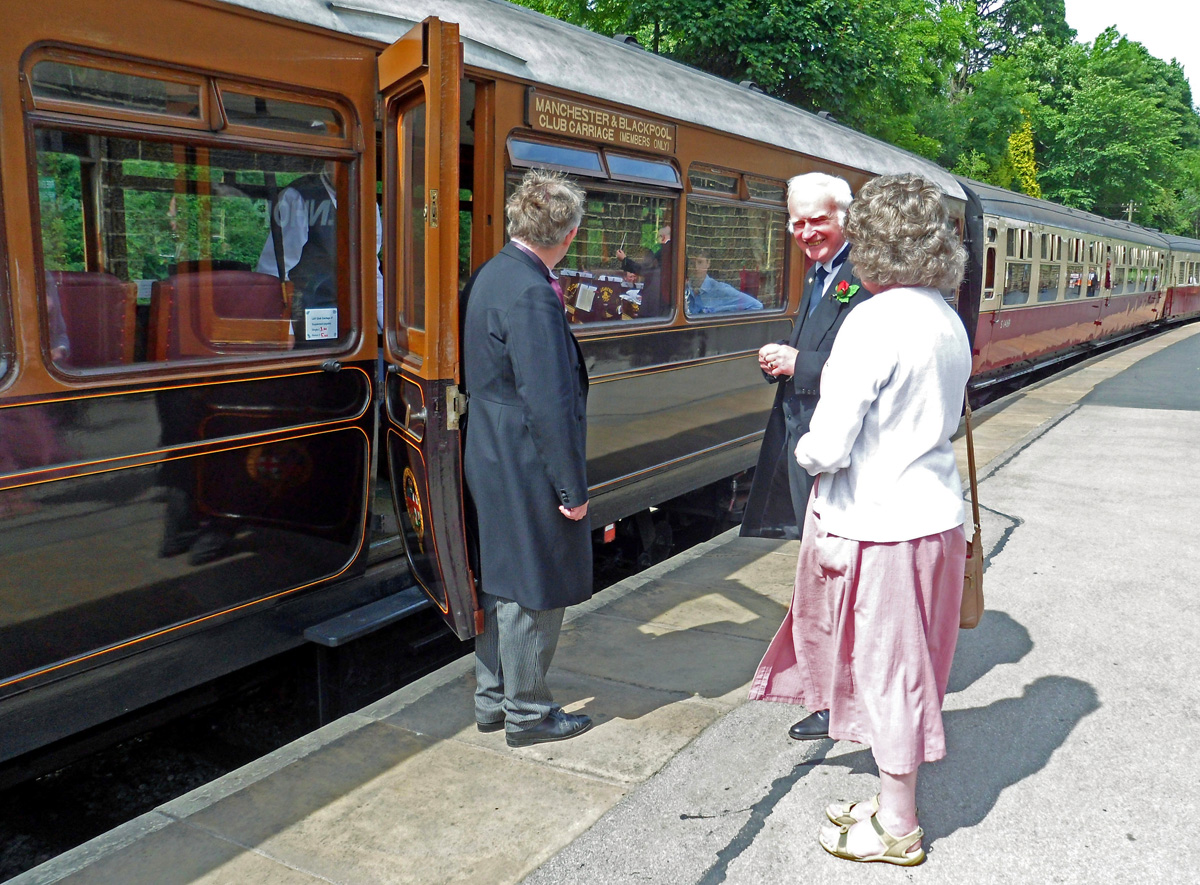

Network, traffic and operations
The L&YR served both heavy freight and substantial suburban passenger markets. Its routes linked textile towns, coalfields, docks and manufacturing centres, supporting the movement of raw materials and finished goods as well as workers. The company operated a mix of mainline and dense urban suburban services, and it was notable for early adoption of new technologies and varied coastal operations.
History and development
The L&YR originated in 1847 from an amalgamation of smaller railway companies. Over the following decades it expanded by building new routes and absorbing other lines, shaping a geographically compact but intensively used system. The company gained a reputation for innovation: it was the first mainline company to introduce electrification on some suburban routes, experimenting with electric traction to improve frequent-stop services and urban connections (electrification).
- 1847: formation by amalgamation of several regional railways.
- Late 19th–early 20th century: steady enlargement of the network and modernization of services.
- Early 20th century: introduction of electric suburban services and expansion of maritime operations.
- 1 January 1922: formal amalgamation with the London and North Western Railway.
- 1923: became a principal constituent of the London, Midland and Scottish Railway under the 1921 Railways Act (LMS grouping).
Maritime services and other distinctive features
Unlike many inland railways, the L&YR developed a significant shipping business. It ran steamboat services and ferry connections to link its railhead ports with destinations across nearby seas. These maritime links included regular crossings of the Irish Sea and services touching the North Sea, and the company at one point was a larger shipowner than any other British railway concern. Its coastal operations complemented rail timetables and offered through journeys for passengers and freight (steamboat services).
Legacy and significance
The L&YR left a durable mark on northern England's transport geography. Its suburban electrification influenced later urban rail practice, and many former L&YR routes continued to carry heavy traffic under successor companies. Architectural and engineering features — stations, viaducts and junctions — still define parts of the regional network. The company's combination of intensive local services, freight focus and maritime links makes it a notable example of a highly integrated transport operator in the age of steam and early electric traction.
Key aspects at a glance
- Formed in 1847 from multiple smaller companies.
- Dense network serving industrial towns and ports in northern England.
- Early adopter of suburban electric traction; pioneer among mainline companies (electrification).
- Operated significant steamboat and ferry services to the Irish Sea and North Sea (maritime operations).
- Amalgamated with the London and North Western Railway in 1922 and became part of the London, Midland and Scottish Railway.
- Ranked among the principal northern systems (third-largest), alongside the Midland Railway and the North Eastern network.
Questions and answers
Q: What was the Lancashire and Yorkshire Railway?
A: The Lancashire and Yorkshire Railway (L&YR) was a major British railway company before the 1923 Grouping. It was created in 1847 from an amalgamation of several existing railways.
Q: Where was it based?
A: It was based in Northern England.
Q: How did it compare to other railway systems in size?
A: It was the third largest railway system in Northern England, with only the Midland Railway and North Eastern Railway being bigger.
Q: What innovation did it introduce?
A: It was the first mainline railway to introduce electrification of some of its lines.
Q: What services did it provide across seas?
A: It ran steamboat services across the Irish Sea and North Sea.
Q: Was it a shipowner?
A: Yes, it was a bigger shipowner than any other British railway company.
Q: When did it merge with another railway company?
A: It merged with the London and North Western Railway on 1 January 1922, and one year later became part of the London, Midland and Scottish Railway under the Railways Act 1921.
Related articles
Author
AlegsaOnline.com Lancashire and Yorkshire Railway Leandro Alegsa
URL: https://en.alegsaonline.com/art/55739