
Lamian: Chinese Hand‑Pulled Noodles
Lamian (拉面) are Chinese hand‑pulled wheat noodles made by repeatedly stretching and folding dough. This article covers technique, dough, regional varieties, history, serving styles and modern adaptations.
Overview
Lamian (拉面) refers to a class of Chinese wheat noodles made by hand stretching and folding an elastic dough until it separates into many long strands. The name literally means "pulled noodles"—la (拉) to pull and mian (面) noodles. Unlike extruded or roll‑cut noodles, lamian are produced by manipulating the dough through tension and motion, a process that both creates individual strands and gives the finished noodle its characteristic chew and spring.
Image gallery
5 Images


Technique and characteristics
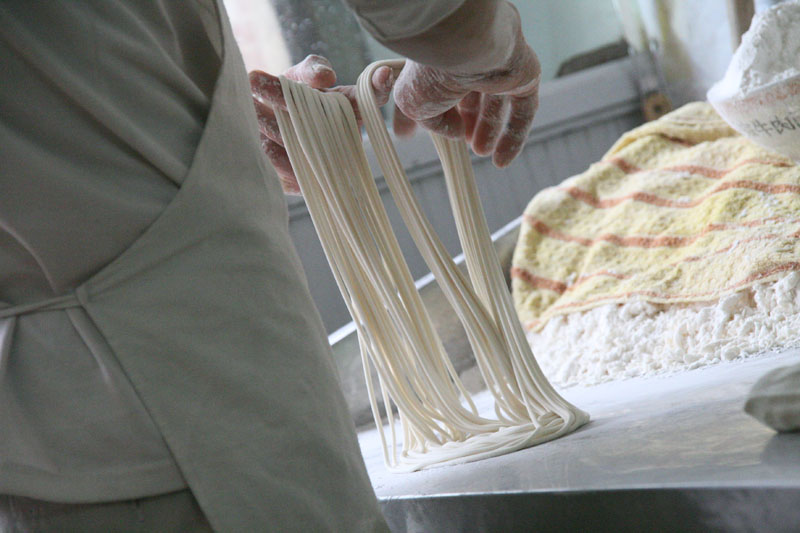
The lamian process depends on gluten development and the dough's elasticity. Basic ingredients are wheat flour and water, with small amounts of salt or oil sometimes added to aid texture and handling. After resting to allow the gluten to relax, a ball of dough is stretched into a rope, then folded and stretched again; each fold typically doubles the number of strands, so makers control thickness by the number of repetitions. The finished strands vary from wide and ribbonlike to extremely thin, and they cook quickly in boiling water or broth.
- Typical texture: resilient and slightly chewy, due to aligned gluten strands.
- Thickness: adjustable by the number of pulls and folds.
- Cooking: rapid boiling or direct cooking in broth preserves springiness.
Dough, ingredients and preparation
While formulas vary, the essential steps are kneading to develop gluten; resting to relax the dough; forming a firm rope; and the repeated action of stretching and folding. Some cooks add oil to reduce stickiness, or salt to tighten the dough. High‑protein flours are often preferred because they provide stronger gluten networks that withstand repeated stretching. Proper hand technique, rhythm and timing of rests are as important as the recipe itself.
Physical principles and hand methods
Pulling lamian combines grip, centrifugal motion and gravity: the dough's weight aids the stretching while controlled flicks and folds distribute the strain so the strands divide evenly. Skilled makers use both two‑handed reciprocal pulls and twisting motions to texture the noodle surface so it better holds broths and sauces. Because the process doubles strand count, a modest‑sized dough can yield many noodles with consistent diameter when performed correctly.
Cooking and serving styles
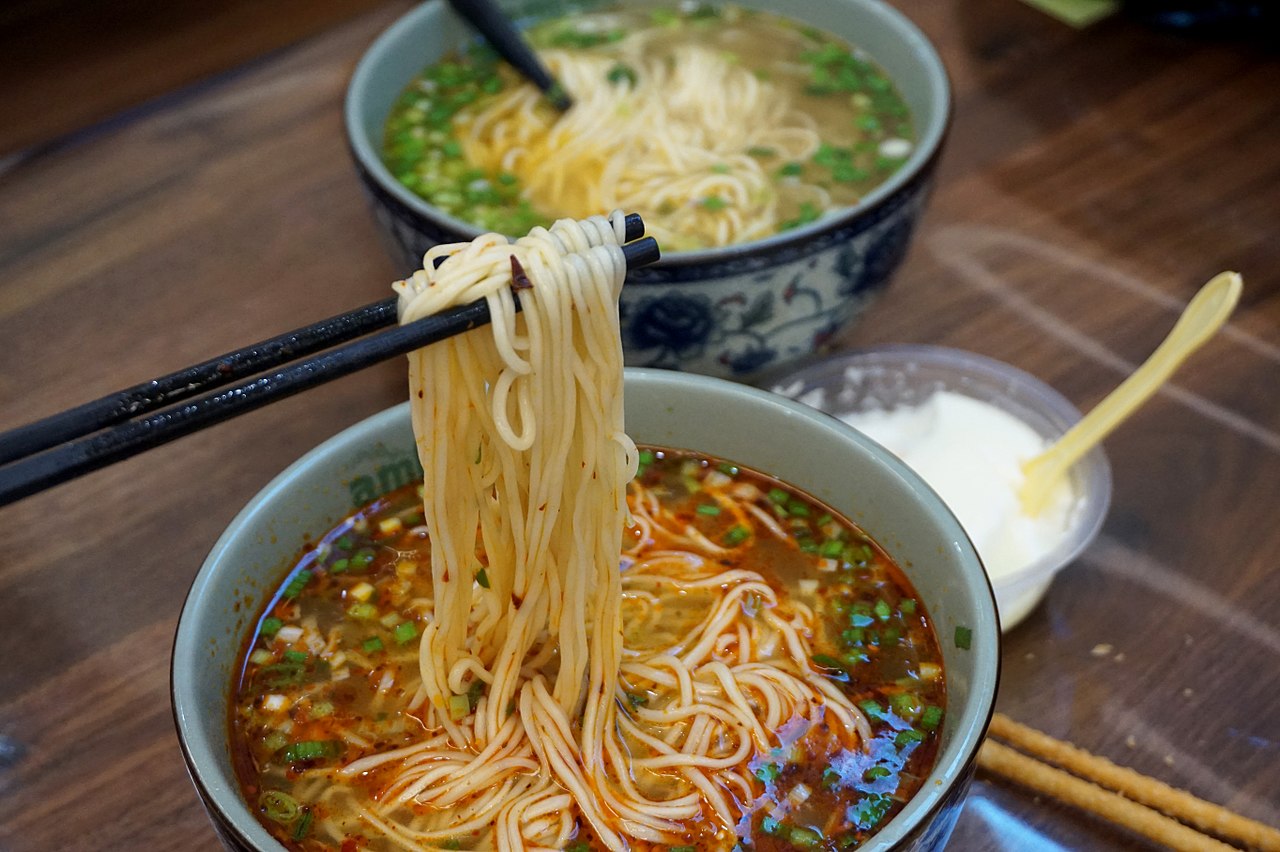
Lamian are commonly served in clear broths, often with beef or mutton, vegetables and aromatic garnishes. The well‑known Lanzhou style pairs plainly seasoned beef broth, thinly sliced beef, radish, chili oil, spring onion and coriander with visibly hand‑pulled noodles. Lamian are also used in stir‑fried dishes (chaomian, 炒面), in dry tossed preparations with sauces and condiments, and as cold noodle salads. Their quick cooking time and texture make them versatile across preparations.
History and regional development
Accounts of pulled noodles appear in historic Chinese culinary sources; one early description is found in the Songshi yangsheng bu (宋氏養生部), compiled around the early 16th century. Lamian became especially associated with northwestern China and the culinary traditions of Muslim Chinese communities, where wheat rather than rice predominates. Cities such as Lanzhou and other regional centres developed signature soups and serving customs that highlight the visual skill of noodle pulling.
Variations and related noodle types
Lamian are part of a broader family of wheat noodles. They differ from knife‑cut noodles (dao xiao mian) and other rolled‑and‑cut varieties by their production method. Some regional schools emphasize very thin, nearly threadlike pulls; others favor broad, chewy ribbons. In addition to traditional hand pulling, modern kitchens sometimes use mechanical machines or semi‑automated methods that imitate the hand motions to increase consistency and output while retaining much of the texture associated with hand‑pulled noodles.
Cultural notes and contemporary practice
Noodle pulling is often performed in view of customers and has become a signifier of authenticity and skill in restaurants. Competitions, demonstrations and street‑stall shows celebrate the dexterity required to make lamian. For broader context on noodles and their production methods consult general entries on noodle culture and noodle‑making, which discuss related techniques and the role of wheat noodles across East Asia.
Modern adaptations and commercial products
Contemporary variations include regional fusion broths, frozen or pre‑packed hand‑pulled style noodles for retail sale, and restaurants that combine lamian techniques with new ingredients. While machine production can reproduce strand shape, many practitioners and diners still value traditional hand pulling for its texture and the cultural performance it represents.
Questions and answers
Q: What is lamian?
A: Lamian is a type of Chinese noodle made by stretching and folding the dough into strands.
Q: How are the strands of lamian made?
A: The strands of lamian are made by the weight of the dough as it is twisted and later stretched, resulting in varying lengths and thicknesses.
Q: Who first described how to make lamian?
A: Song Xu around 1504 gave the earliest description of how to make lamian in the Songshi yangsheng bu.
Q: What does "lamian" mean in English?
A: "Lamian" means "pulled noodles" in English, with "la" meaning to pull and "mian" meaning noodles in Chinese.
Q: What are the typical dishes that lamian is served in?
A: Lamian dishes are usually served in beef or mutton soup.
Q: Can lamian be served in other ways besides in soup?
A: Yes, lamian can also be stir-fried (chaomian) and served with a tomato-like sauce.
Q: Can the thickness and length of the lamian strands vary?
A: Yes, the thickness and length of the lamian strands can vary depending on how many times the dough is stretched and folded.
Related articles
Author
AlegsaOnline.com Lamian: Chinese Hand‑Pulled Noodles Leandro Alegsa
URL: https://en.alegsaonline.com/art/55706
Sources
- bjreview.com : "For the Love of Lamian -- Beijing Review"
- reference.com : reference.com