
Lambeosaurus: the crested duck‑billed dinosaur
Lambeosaurus is a genus of crested hadrosaurid (duck‑billed) dinosaurs from the Late Cretaceous of North America, known for its large hollow cranial crest and adaptations for herbivory and complex head display.
Overview
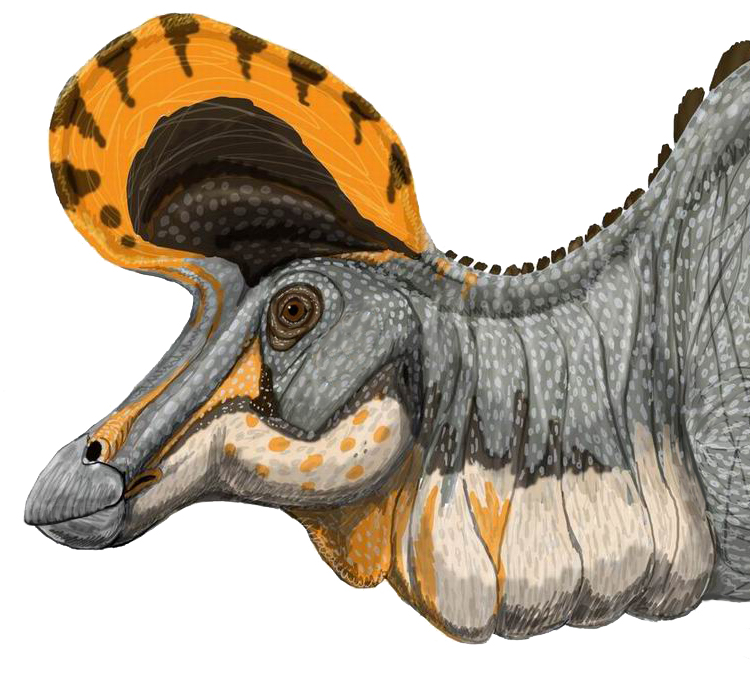
Lambeosaurus is a genus of hadrosaurid, commonly called a crested "duck‑billed" dinosaur. Members of the group are notable for a striking hollow bony crest on the top of the head. The crest sat above and in front of the rest of the skull and contained expanded nasal passages; in life it could be nearly as large as the remainder of the skull. Lambeosaurus lived in the later part of the Cretaceous Period, around 76 to 75 million years ago, and its fossils have been recovered from sites such as Alberta, Montana and even as far south as Baja California. The genus ranged across much of North America and into Mexico.
Image gallery
10 Images


Anatomy and crest structure
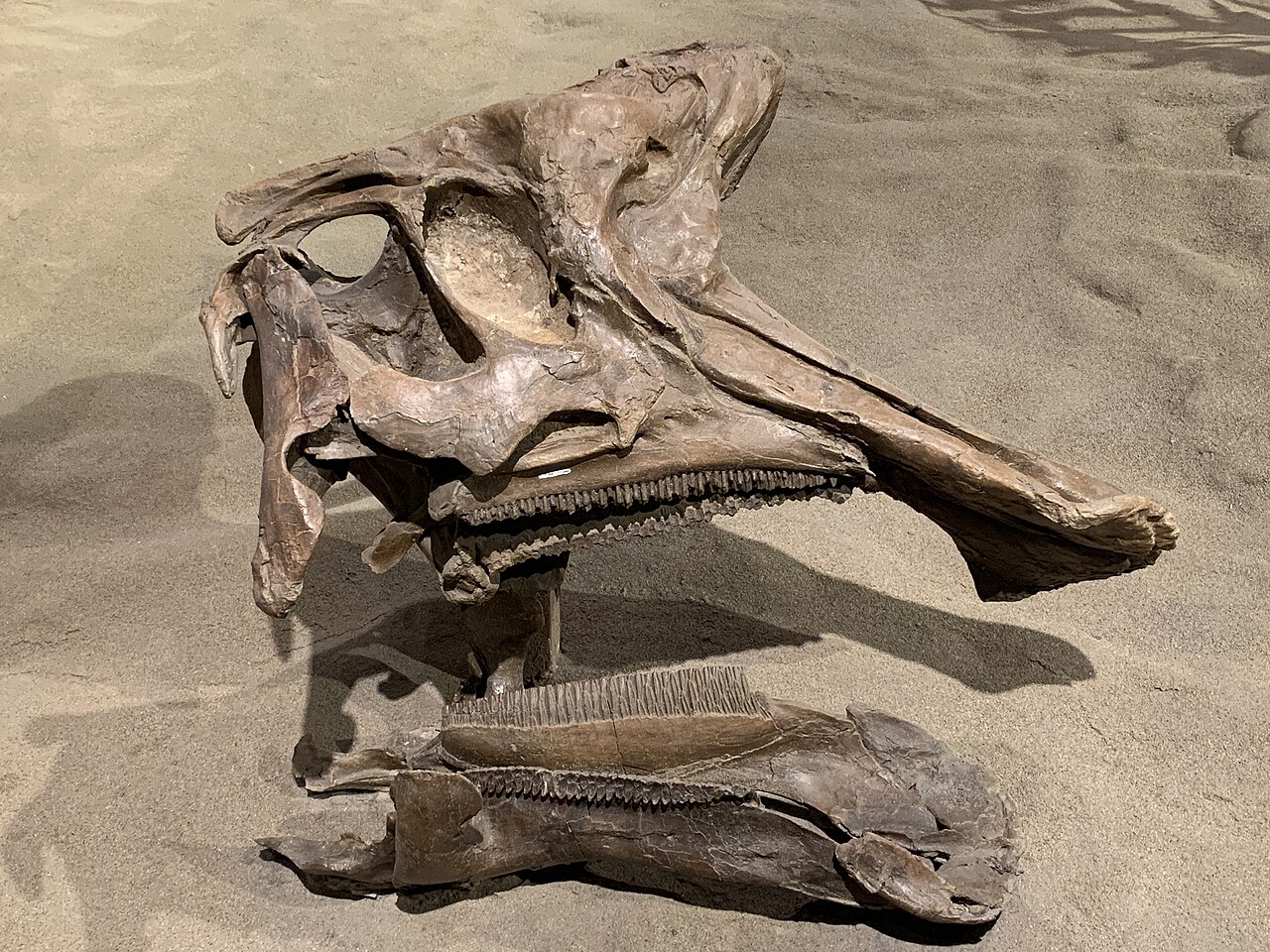
Like other hadrosaurs, Lambeosaurus was a herbivore with a broad, flattened beak and dental batteries—rows of tightly packed teeth suited to grinding plant material. Its skull shows the typical "duck‑billed" shape of hadrosaurids; for a simple reference see the term duck‑billed. The characteristic crest is a hollow, bony extension of the skull that incorporated parts of the nasal passages and made the head silhouette highly distinctive. The crest is visible on the preserved skull and is a key feature used to identify Lambeosaurus specimens.
- Feeding adaptations: dental batteries for chewing fibrous plants.
- Locomotion: capable of walking on four legs or running on two.
- Cranial crest: hollow, variable in shape between individuals and species.
Function of the crest
The purpose of the crest has been debated. Leading hypotheses include visual display for species or sexual recognition, acoustic resonance producing distinctive calls, and a role in olfaction or airflow. Because the crest encloses modified nasal passages, researchers have proposed it acted as a resonating chamber to create low‑frequency sounds, but display and species recognition remain plausible explanations. Evidence suggests crest shape changed with age, so some differences between specimens likely reflect growth stages rather than separate species.
Discovery and classification
The genus was named in the early 20th century in recognition of earlier field work by pioneers such as Lawrence Lambe, and formally described by William A. Parks in 1923. Although fossil material has been found across several regions, detailed descriptions have been concentrated on Canadian species. Lambeosaurus is part of the subfamily of crested hadrosaurids and is distinguished from other genera by the unique shape and internal anatomy of its crest. Paleontologists continue to revise the relationships among crested hadrosaurs as new specimens and imaging techniques reveal more about internal crest anatomy and growth patterns.
Paleoecology and significance
Lambeosaurus lived in coastal floodplains and riverine environments populated by diverse plant life and a rich vertebrate fauna. As a relatively large herbivore—reaching lengths commonly estimated at several metres—its role in Late Cretaceous ecosystems would have included influencing vegetation structure and serving as prey for large theropods. The crest provides one of the clearest examples of elaborate cranial ornamentation in dinosaurs and has been important in studies of behavior, communication, and growth in extinct animals.
Notable facts and research directions
Because the crest varies through ontogeny and between taxa, Lambeosaurus fossils are often used to study development and species recognition in hadrosaurs. Ongoing work employs CT scanning and biomechanical modelling to test hypotheses about sound production and airflow in the crest. For further background on crested hadrosaurs and general dinosaur anatomy see specialist publications and museum resources; for quick context about the Cretaceous era consult materials on the Cretaceous and continental distributions of dinosaur faunas such as those summarized for the genus in regional studies.
Discoveries in places like Alberta and Montana continue to refine our picture of Lambeosaurus, and occasional finds farther south, including Baja California, suggest the group had a wider geographic reach across North America into Mexico. Each new specimen adds detail to the life history of this distinctive crested hadrosaur.
Questions and answers
Q: What was Lambeosaurus?
A: Lambeosaurus was a crested, duck-billed dinosaur.
Q: What was the size of its hollow bony crest?
A: Its large hollow, bony crest was as big as the rest of its skull.
Q: When did Lambeosaurus live?
A: Lambeosaurus lived during the later Cretaceous period, about 76 to 75 million years ago (mya).
Q: Where have fossils of Lambeosaurus been found?
A: Fossils of it have been found in Alberta (Canada), Montana (USA), and Baja California (Mexico), but only the two Canadian species have been described in detail.
Q: Who described Lambeosaurus?
A: Lambeosaurus was described by Dr. William A. Parks in 1923, 20 years after Lawrence Lambe (an early Canadian fossil hunter) had studied it.
Q: Where did the genus Lambeosaurus range over?
A: The genus Lambeosaurus ranged over much of North America, and into Mexico.
Q: What is the function of Lambeosaurus' bony crest?
A: The function of Lambeosaurus' bony crest has been much discussed but it remains unclear.
Related articles
Author
AlegsaOnline.com Lambeosaurus: the crested duck‑billed dinosaur Leandro Alegsa
URL: https://en.alegsaonline.com/art/55671