
Lake Mungo — dry lake, archaeological site and World Heritage landscape
Lake Mungo is a dry lake in south‑western New South Wales, Australia, notable for ancient Aboriginal remains, Pleistocene landscapes, and scientific discoveries in archaeology and geomagnetism.
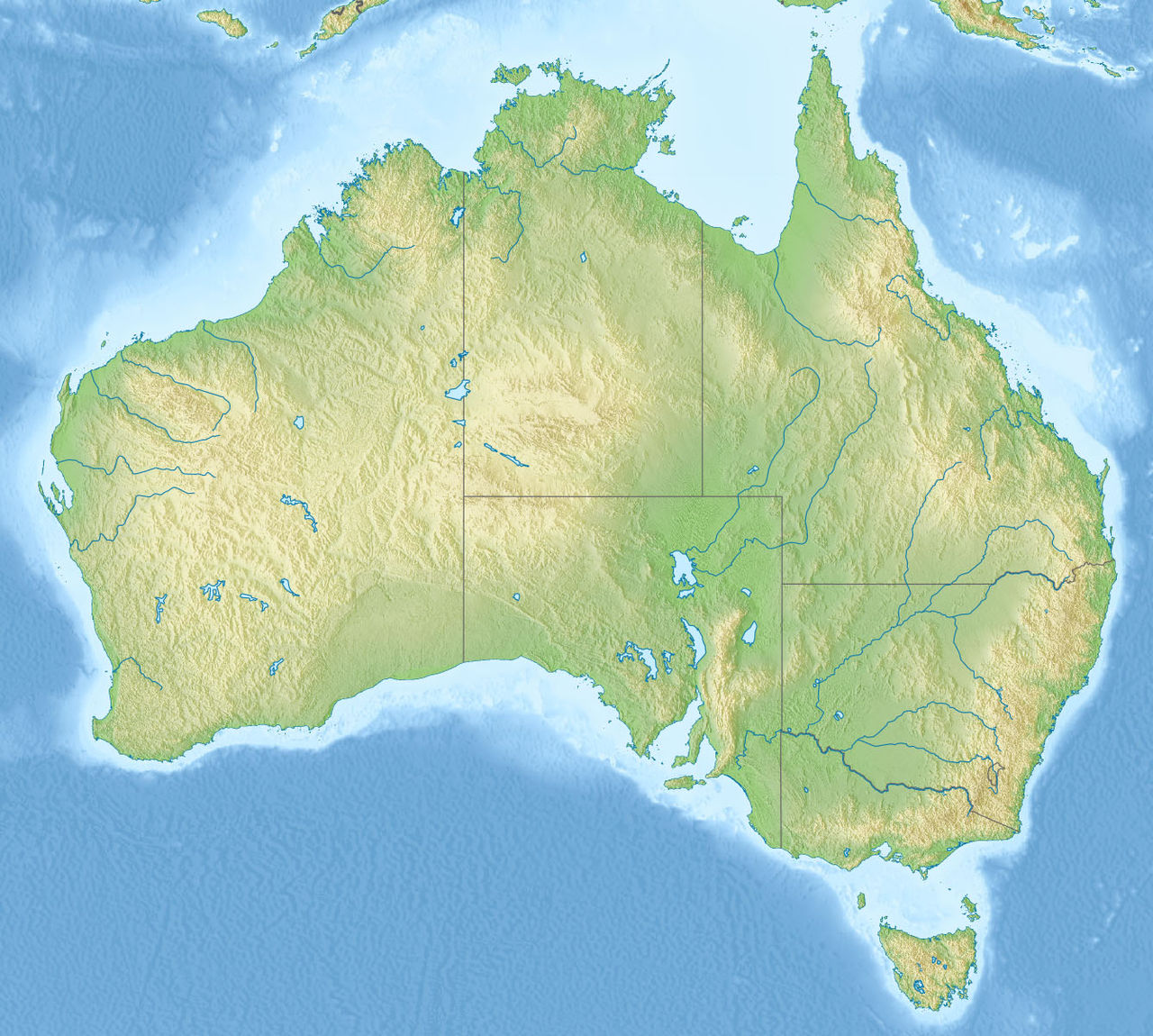
Lake Mungo is a broad, now‑dry lake bed in the south‑west of New South Wales, Australia. It lies within Mungo National Park and is one of the defining features of the Willandra Lakes Region World Heritage area. The site combines striking landforms with exceptionally rich archaeological and palaeoclimatic records that document environmental change and long human presence in the Australian interior. For maps and basic access information see location details.
Image gallery
6 Images


Landscape and geology
The lake itself is a flat playa that once held water during wetter phases of the Pleistocene. Wind‑blown sand has built one of the most prominent lunettes in the region: an arc‑shaped crescent of layered silts and sands that records alternating episodes of sedimentation. These layers preserve ancient shorelines, dune deposits and organic material that researchers use to reconstruct past climates and lake histories. The lake and surrounding features form part of the larger Willandra Lakes system, a sequence of former lakes and channels recognized for their geological and cultural value (Willandra Lakes Region) and described in broader state resources (New South Wales information).
Archaeology and human history
Lake Mungo is world‑renowned for archaeological discoveries that reveal deep time occupation by Aboriginal peoples. Excavations have uncovered hearths, stone tools and human remains within the lunettes and associated deposits. Two of the most publicized finds are “Mungo Man” and “Mungo Lady,” burials that were recovered from the lakeshore sediments and have been central to debates about the timing and nature of early human settlement in Australia. Radiometric dating places these burials tens of thousands of years in the past, making them among the earliest clear human remains from the continent. Researchers and Indigenous custodians continue to study and interpret the material with respect for cultural protocols; general background on archaeological work is available at archaeology resources.
Scientific significance
Beyond archaeology, Lake Mungo has contributed to geoscience in unexpected ways. Studies of magnetic minerals in hearths and sediments at the site provided early, persuasive evidence for a geomagnetic excursion recorded in terrestrial materials. This so‑called Lake Mungo geomagnetic excursion helped demonstrate that short‑lived changes in the Earth's magnetic field are real geomagnetic events rather than artefacts produced by local sediment processes, a topic discussed in geomagnetism literature (geomagnetism overview) and contrasted with sedimentological interpretations (sedimentology debates).
Conservation, access and cultural significance
Mungo National Park is managed to balance conservation, research and visitor access. The area is of profound spiritual and historical importance to Aboriginal peoples whose ancestors occupied the region for millennia; contemporary Indigenous groups are active in site management and interpretation. Visitors can experience the lunette landscapes, guided walks and interpretive centres that explain both natural history and human stories. Practical visitor resources and park guidance are provided through regional authorities (regional information) and national park services (World Heritage listing).
Notable facts and ongoing research
- Lake Mungo is part of a UNESCO World Heritage landscape valued for both natural and cultural heritage (World Heritage).
- Archaeological and environmental records from the lake are used to study past climates, human adaptation and continental hydrology.
- Scientific work at the site continues to refine chronologies and to explore connections between regional climate change and human activity; additional context and updates are available from research summaries (research on cremation and burial practices) and park education pages (visitor links).
Lake Mungo remains a focal point for interdisciplinary study—archaeology, geology, palaeoecology and geomagnetism—while also serving as a living cultural landscape for Australia’s Indigenous communities and as a destination for visitors seeking to understand deep human and environmental histories (archaeology resources, geomagnetism overview). For broader reading and authoritative references consult park publications and specialist reviews (Willandra Lakes Region, sedimentology debates, state information).
Questions and answers
Q: Where is Lake Mungo located?
A: Lake Mungo is located in the south-western part of New South Wales, Australia.
Q: How far is Lake Mungo from Sydney?
A: Lake Mungo is about 760 km due west of Sydney.
Q: What is the main feature of Mungo National Park?
A: The main feature of Mungo National Park is Lake Mungo.
Q: How many lakes are there in the Willandra Lakes Region?
A: There are 17 lakes in the World Heritage listed Willandra Lakes Region.
Q: What important archaeological discoveries have been made at Lake Mungo?
A: Many important archaeological discoveries have been made at Lake Mungo, including Mungo Man, the oldest human remains found in Australia, and Mungo Lady, the oldest human remains in the world to be ritually cremated.
Q: What is the Lake Mungo geomagnetic excursion?
A: The Lake Mungo geomagnetic excursion is the first convincing evidence that Geomagnetic excursions are a geomagnetic phenomenon rather than sedimentological.
Q: What is the distance between Mildura and Lake Mungo?
A: Lake Mungo is about 90 km north-east of Mildura.
Related articles
Author
AlegsaOnline.com Lake Mungo — dry lake, archaeological site and World Heritage landscape Leandro Alegsa
URL: https://en.alegsaonline.com/art/55533
Sources
- ga.gov.au : "Distance calculator Sydney to Lake Mungo"
- uninews.unimelb.edu.au : New age for Mungo Man, new human history : Media Releases : News : The University of Melbourne
- tools.wmflabs.org : 33°45′S 143°05′E / 33.750°S 143.083°E / -33.750; 143.083