
Lady Godiva (Godgifu) — Anglo‑Saxon noblewoman and legend
Anglo‑Saxon noblewoman Godgifu (c.980–1067), noted for generous church benefactions and the later medieval legend that she rode naked through Coventry to obtain tax relief; a lasting cultural figure.
Overview
Lady Godiva (Old English: Godgifu; about 980–1067) was an Anglo‑Saxon noblewoman remembered for her marriage to Earl Leofric of Mercia and for recorded acts of religious patronage. Contemporary evidence is limited to documentary references and land donations, while the vivid tale of a public, unclothed ride through the streets of Coventry to obtain tax relief grew in later medieval tradition and popular imagination.
Image gallery
10 Images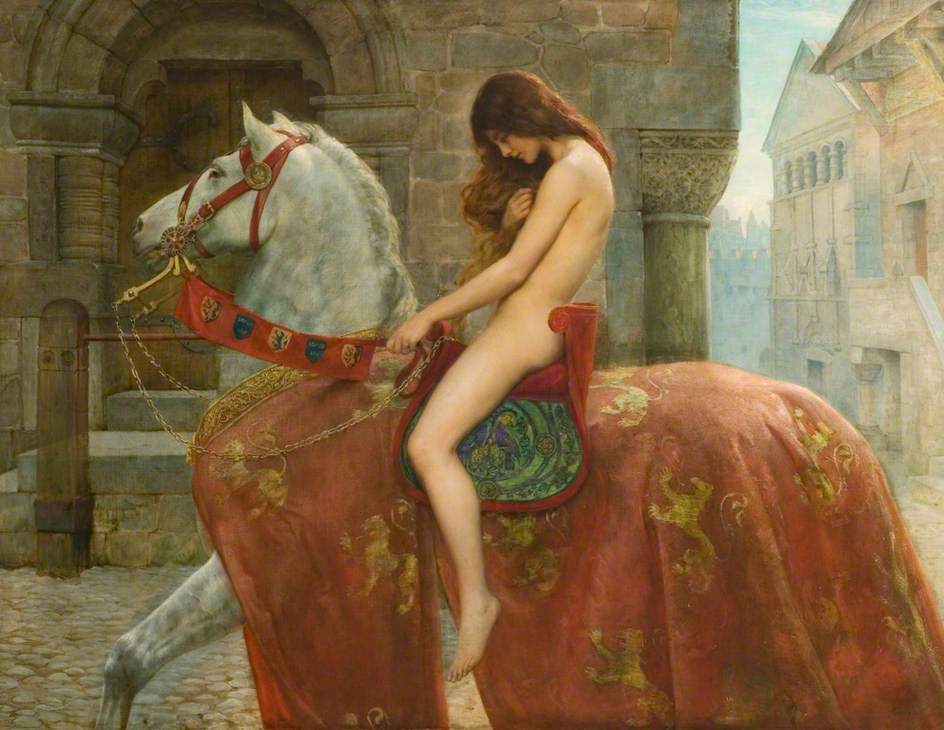


Historical record and character
Surviving charters and later chronicles associate Godgifu with foundations, gifts of land, and benefactions to churches and monastic houses. These donations underlie her historical reputation for piety and charity. As the wife of a leading noble, she occupied a prominent social position in Anglo‑Saxon England; her known acts of patronage are consistent with the responsibilities of aristocratic women who frequently managed estates and supported religious institutions.
Sources and dating
Evidence for Godgifu’s life comes from a small number of written records compiled before and after the Norman Conquest, including lists of benefactors and copies of charters. Many of the narrative elements ascribed to her, especially the story of the ride, are not found in contemporary documents but appear in later medieval sources. For cautious summaries of the documentary basis see treatments of Anglo‑Saxon England and overviews of early medieval benefaction networks.
The legend of the naked ride
The most famous episode associated with Godiva — that she rode naked through Coventry to persuade her husband to reduce a burden of taxation — is first attested in sources written centuries after her lifetime. Because of this late attestation, most historians classify the tale as a legend rather than a reliable historical report. Over time the narrative acquired additional figures and details, such as a voyeur commonly known as "Peeping Tom," which feature in folklore and later retellings rather than in the earliest accounts.
Interpretations and themes
Scholars and commentators have used the Godiva story to explore themes including female agency within elite families, the interplay of public duty and private influence, the moral authority of pious benefaction, and the transformation of historical memory into legend. Interpretations range from treating the tale as symbolic protest to seeing it as a moralizing story that reflects later social attitudes toward gender and power.
Cultural legacy and memorials
Godiva’s legend has inspired visual art, poetry, theatre and civic commemoration. The city of Coventry retains a strong association with her in public statuary, street names and cultural events. Her image appears across periods—from medieval manuscript cycles to Victorian paintings and modern popular culture—where she is alternately commemorated as a charitable noblewoman and used as a dramatic or symbolic figure.
Further reading and context
- Name: Old English Godgifu (modernized as Godiva).
- Role: Wife of Earl Leofric of Mercia; recorded donor to churches and monastic communities.
- Legend: The unclothed ride is a later medieval motif; see collections of legend and folklore for its development (legends and folklore).
- Sources: Limited contemporary documentary evidence; most narrative details appear in much later accounts (accounts of the ride).
- Legacy: Civic memorials, artistic depictions, and continuing literary and popular interest in narratives of protest and piety (England studies).
Because knowledge of her life depends on fragmentary records and later storytelling, summaries of Godgifu’s life balance documented acts of patronage with recognition of how and when legend shaped her public image. Readers interested in primary documents and scholarly summaries should consult editions of Anglo‑Saxon charters and works on medieval hagiography and folklore for fuller discussion.
Questions and answers
Q: Who was Lady Godiva?
A: Lady Godiva was an Anglo-Saxon noblewoman who lived from about 980 to 1067.
Q: Who was Lady Godiva married to?
A: Lady Godiva was married to Earl Leofric.
Q: Was Lady Godiva known for her religious beliefs?
A: Yes, Lady Godiva was highly religious and frequently donated to the church.
Q: What is the legend about Lady Godiva?
A: The legend about Lady Godiva is that she rode naked through the streets of Coventry in England.
Q: Why did Lady Godiva ride naked through Coventry?
A: According to legend, Lady Godiva rode naked through Coventry to protest her husband's taxation of the city's people.
Q: Did Lady Godiva's ride actually happen?
A: The historicity of Lady Godiva's ride is uncertain, and it is possible that it is a myth or legend.
Q: What is Lady Godiva's Old English name?
A: Lady Godiva's Old English name was "Godgifu."
Related articles
Author
AlegsaOnline.com Lady Godiva (Godgifu) — Anglo‑Saxon noblewoman and legend Leandro Alegsa
URL: https://en.alegsaonline.com/art/55319
Sources
- octavia.net : "The Historical Godiva"