
Ladino (Judeo-Spanish)
Ladino, or Judeo‑Spanish, is a Romance language rooted in medieval Spanish with Hebrew and regional influences; historically used by Sephardic Jews and today preserved in literature, music, and revitalization efforts.
Ladino, often called Judeo‑Spanish, is a Jewish Romance language that developed from medieval Iberian Spanish and was carried by Sephardic Jews after their expulsion from Spain in 1492. It preserves many features of Old Spanish while incorporating loanwords and calques from other languages encountered by Sephardic communities.
Image gallery
7 Images



Characteristics
At its core Ladino is closely related to modern Spanish but differs in pronunciation, vocabulary, and some grammatical forms. Distinctive features include:
- Archaic Spanish vocabulary and conservative phonology retained from medieval varieties.
- Extensive lexical influence from Hebrew, as well as Turkish, Greek, Arabic, and Balkan languages, reflecting diaspora contacts.
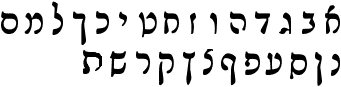
- Varied orthographies: historically written in Hebrew script for religious and communal texts and later printed in Latin script in newspapers and books.
History and development
After 1492 Sephardic Jews resettled across the Ottoman Empire, North Africa, and parts of Europe and the Americas. In these new settings Ladino evolved differently in Granada, Salonica, Istanbul, and other centers, producing regional varieties. Through centuries it served both everyday and liturgical needs and developed a rich oral and written literature.
Distribution, status, and cultural role
Today Ladino is spoken by a shrinking number of elderly community members, with efforts to document and revive the language through academic study, radio, music, and community programs. It remains important culturally: Ladino songs, proverbs, legal documents, and religious translations preserve Sephardic heritage.
Notable distinctions
Terminology can vary: some use Ladino to mean the classical, literal translation style used in religious texts and Djudezmo (or Judeo‑Spanish) for everyday speech. Revival projects and bilingual publications aim to keep both registers accessible to new generations.
Questions and answers
Q: What is Ladino?
A: Ladino is a Jewish Romance language that is very close to the Spanish language.
Q: How does it differ from Spanish?
A: Ladino has many old Spanish words and Hebrew words, which makes it distinct from the modern Spanish language.
Q: Where is Ladino spoken?
A: Ladino is primarily spoken in parts of Europe, North Africa, and the Middle East.
Q: Who speaks Ladino?
A: Primarily Jews who have been historically connected to Spain or Sephardic Jews speak Ladino.
Q: Is there any written form of Ladino?
A: Yes, there are various forms of written Ladino including Rashi script and Latin script.
Q: Are there any other languages related to Ladino?
A: Yes, Judeo-Arabic and Judeo-Italian are two other languages related to Ladino.
Q: What are some common features between Spanish and Ladino?
A: Both languages share similar grammar rules as well as many vocabulary words.
Author
AlegsaOnline.com Ladino (Judeo-Spanish) Leandro Alegsa
URL: https://en.alegsaonline.com/art/55299
Sources
- orbilat.com : "Judeo-Spanish Language - General Overview"