
Argument from design (teleological argument)
Philosophical claim that order and apparent purpose in nature indicate a designer; includes historical forms, key features, criticisms, and modern variants such as the fine‑tuning argument.
Overview
The argument from design, also called the teleological argument, claims that striking order, complexity or purposive appearance in the natural world is best explained by the existence of a designer or creator. Proponents infer that features which resemble human design—regular laws, complex biological structures, or apparently fine‑tuned physical constants—make the hypothesis of an intelligent cause more plausible than chance or unguided processes. For a general introduction see related summary.
Image gallery
4 Images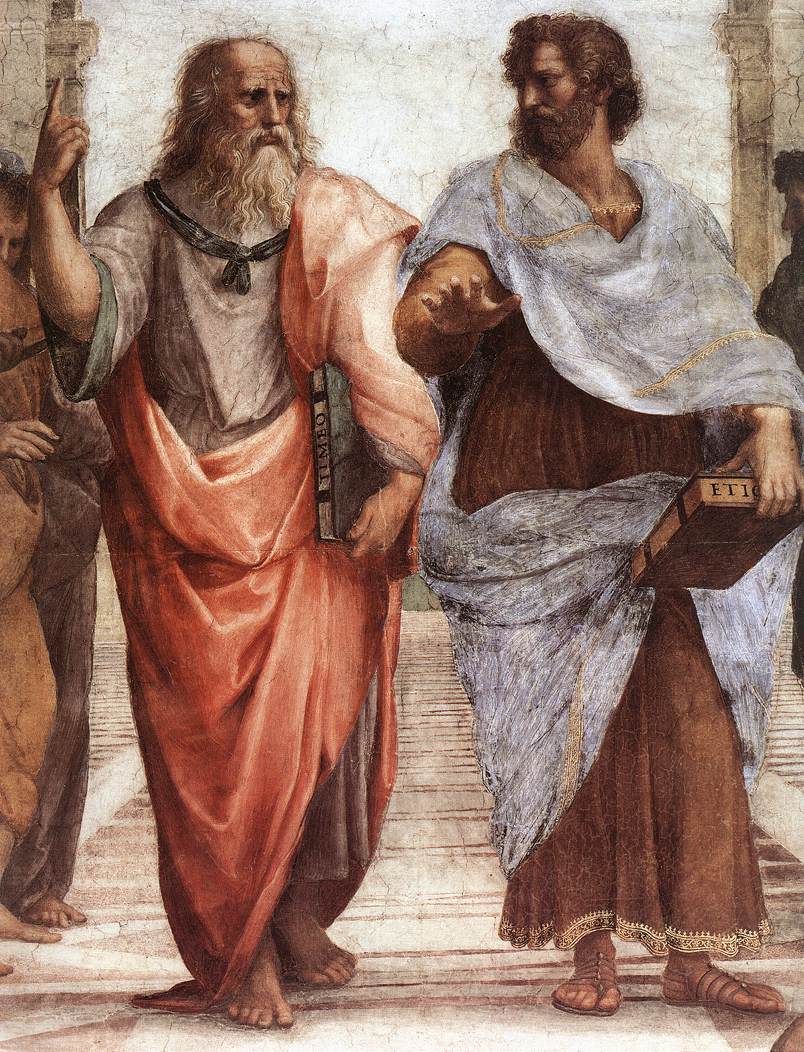



Key characteristics
- Teleology: the argument appeals to ends, purposes or functions seen in nature; the term derives from the Greek telos, meaning "end" or "purpose".
- Analogical or explanatory move: classic versions use analogy (nature is like artifacts), while modern forms use inference to the best explanation or probabilistic reasoning.
- Range of scope: arguments may point to organisms, ecosystems, or cosmic features such as physical constants commonly discussed in debates about the existence of God or a creator (see topic).
- Philosophical label: Immanuel Kant and later writers referred to this sort of reasoning as the physico–theological proof (Kant reference).
Historical development
Ideas resembling the design argument appear in ancient and medieval thought, such as teleological readings in Aristotle and Stoic natural philosophy and in Christian natural theology of the Middle Ages. The most famous popular formulation is William Paley's watchmaker analogy (if one finds a watch, one infers a watchmaker), which framed the argument in the 18th century as an intuitive case for design. Supporters often pointed to patterns and apparent purpose in nature (natural order), while critics raised methodological and evidential objections.
Responses and critiques
From the 19th century, Charles Darwin's theory of natural selection provided a powerful naturalistic mechanism for the emergence of complex, adapted structures without intentional design, challenging the direct inference from complexity to a designer. Philosophers also questioned the strength of the analogy between artifacts and organisms (notably Hume), raised the problem of evil as an evidential difficulty for a benevolent designer, and argued that probabilistic or explanatory considerations do not compel a designer hypothesis. Discussions of teleology and purposiveness in nature continue to appear in contemporary debates (teleology debates).
Contemporary variants and significance
- Fine‑tuning arguments point to apparently narrow ranges of cosmological constants and argue that these facts are more probable under a design hypothesis than under chance.
- The intelligent design movement advances scientific‑style critiques of naturalistic explanations, while many philosophers frame teleological reasoning as an abductive or probabilistic inference rather than a deductive proof.
- Whether persuasive or not, the argument from design remains a central piece of the broader discussion about religion, science, and explanation, and it continues to be treated as a live topic in philosophy of religion and theology (see Kant and later discussion).
In sum, the argument from design is a family of arguments that appeal to order, complexity or purpose in the world as evidence for a designer. Its forms, assumptions and force have evolved across history, and it survives today in multiple philosophical, scientific and theological contexts where questions about explanation and ultimate causes are addressed.
Further reading and resources: introductory overview, theological context, natural examples, philosophical critiques, historical treatments.
Questions and answers
Q: What does the argument from design argue for?
A: The argument from design argues for the existence of God or a creator.
Q: What evidence does the argument from design use to support the existence of God?
A: According to the argument, the appearance of design in nature is evidence for the existence of God.
Q: What is the teleological argument?
A: The teleological argument assumes a purpose and argues that this purpose is evidence for the existence of God.
Q: Where does the word "teleological" come from?
A: The word "teleological" comes from the Ancient Greek telos, which means "end" or "purpose".
Q: What does teleology assume about the works and processes of nature?
A: Teleology assumes there is purpose or direction in the works and processes of nature.
Q: What did Immanuel Kant call the argument from design?
A: Immanuel Kant called this argument the physico–theological proof.
Q: What is the overall conclusion of the argument from design?
A: The argument from design concludes that the appearance of design in nature is evidence for the existence of God or a creator.
Related articles
Author
AlegsaOnline.com Argument from design (teleological argument) Leandro Alegsa
URL: https://en.alegsaonline.com/art/5502
Sources
- books.google.com : The Works of Voltaire: The Henriade: Letters and miscellanies
- onphilosophy.co.uk : www.onphilosophy.co.uk
- doesgodexist.org : www.doesgodexist.org
- books.google.com : Victorian Popularizers of Science: Designing Nature for New Audiences
- infidels.org : www.infidels.org