
La Dolce Vita — Federico Fellini’s 1960 episodic film
La Dolce Vita (1960) by Federico Fellini follows gossip columnist Marcello Rubini through seven days and nights in Rome. An episodic, black‑and‑white study of fame, pleasure and emptiness that influenced modern cinema.
Overview
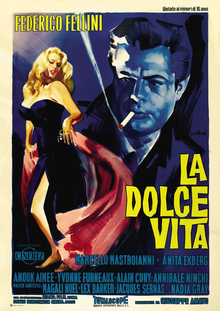
La Dolce Vita is a landmark 1960 Italian film directed by Federico Fellini and starring Marcello Mastroianni as Marcello Rubini, a popular gossip columnist. Told in a series of loosely connected episodes spanning seven days and nights in Rome, the movie blends comedy and drama to examine the rituals of celebrity, nightlife and the search for meaning in a changing society. Its episodic form and moral ambiguity set it apart from conventional narratives of the era. For more on Fellini, see director information.
Image gallery
3 Images

Structure and principal characters
The story unfolds as a sequence of set pieces rather than a single linear plot. Key figures include Marcello, the restless protagonist; Sylvia, a glamorous Swedish actress who appears in a famous nighttime scene; Paparazzo, a small‑time photographer whose name inspired a now‑common word for intrusive celebrity photographers; and other figures from Rome’s elite and bohemian circles. The film alternates ornate parties, late‑night wanderings and quieter, reflective moments.
Notable scenes and style
Shot in black and white, the film is known for striking visual contrasts, flowing camera movements and memorable tableaux. Among its best‑known images is the scene at the Trevi Fountain, which has become an enduring symbol of cinematic fantasy and excess. The soundtrack and lighting work together to create a tone that is at once glamorous and melancholic. Clips and analyses are widely available; one reference is film excerpts and analysis.
Themes and critical reception
La Dolce Vita explores themes of fame, moral disorientation, sexual freedom, and the vacuity that can accompany a life devoted to spectacle. At release it provoked controversy from conservative groups and sparked debate about modern mores, while critics praised its inventiveness and emotional nuance. The film won major international recognition at festivals and quickly became central to discussions of postwar European cinema; for background on its Roman setting, see Rome and the film.
Legacy and influence
Over decades the film has been reappraised as a classic that reshaped cinematic portrayals of celebrity culture and urban modernity. It influenced directors, critics and photographers, and its characters and phrases entered popular culture. The role played by Marcello Mastroianni remains one of his most celebrated performances and is often cited in studies of star persona; biographical material is available at actor resources.
Episodes and viewing guidance
- The episodic format invites viewers to focus on mood and character rather than plot resolution.
- Viewers often notice the contrast between night life’s glamour and private disillusion.
- Because of its historical importance, the film is commonly included in film studies curricula and retrospective screenings.
Taken together, La Dolce Vita functions both as a vivid portrait of Rome at mid‑century and as an open‑ended meditation on modern desire. Its images, performances and formal daring continue to reward repeated viewings and scholarly attention.
Questions and answers
Q: What is La Dolce Vita?
A: La Dolce Vita is a 1960 Italian comedy-drama movie.
Q: What is the plot of the movie?
A: The movie follows Marcello Rubini, a gossip columnist, across seven days and nights in Rome.
Q: Who plays the role of gossip columnist Marcello Rubini?
A: Marcello Mastroianni played the role of gossip columnist Marcello Rubini.
Q: How was the reception of the movie?
A: The movie received very good critical reviews.
Q: Did the movie become a classic?
A: Yes, the movie became a classic in later years.
Q: Is the movie divided into sections?
A: Yes, the movie is divided into many sections.
Q: In which city is the movie set?
A: The movie is set in Rome.
Related articles
Author
AlegsaOnline.com La Dolce Vita — Federico Fellini’s 1960 episodic film Leandro Alegsa
URL: https://en.alegsaonline.com/art/54943