
Kvass: traditional fermented rye‑bread beverage of Eastern Europe
Kvass is a low‑alcohol, fermented drink traditionally made from rye or other bread. Popular across Eastern and Central Europe and parts of Asia, it is consumed as a refreshment and used in cold soups and cooking.
Overview
Kvass is a lightly fermented beverage traditionally produced by fermenting rye bread or other dark breads with water and a fermentable sugar source. By convention in several countries it is classified as non‑alcoholic because its ethanol concentration usually remains low; typical commercial and household products measure roughly 0.05–1.0% alcohol by volume, a threshold that in some jurisdictions is treated differently from beers and wines (alcohol). Kvass has a mild sourness and a bready, malty aroma. It is frequently sweetened or flavoured with fruit, berries or herbs, for example with strawberries or fresh mint, and serves as the liquid base for the cold summer soup okroshka.
Image gallery
10 Images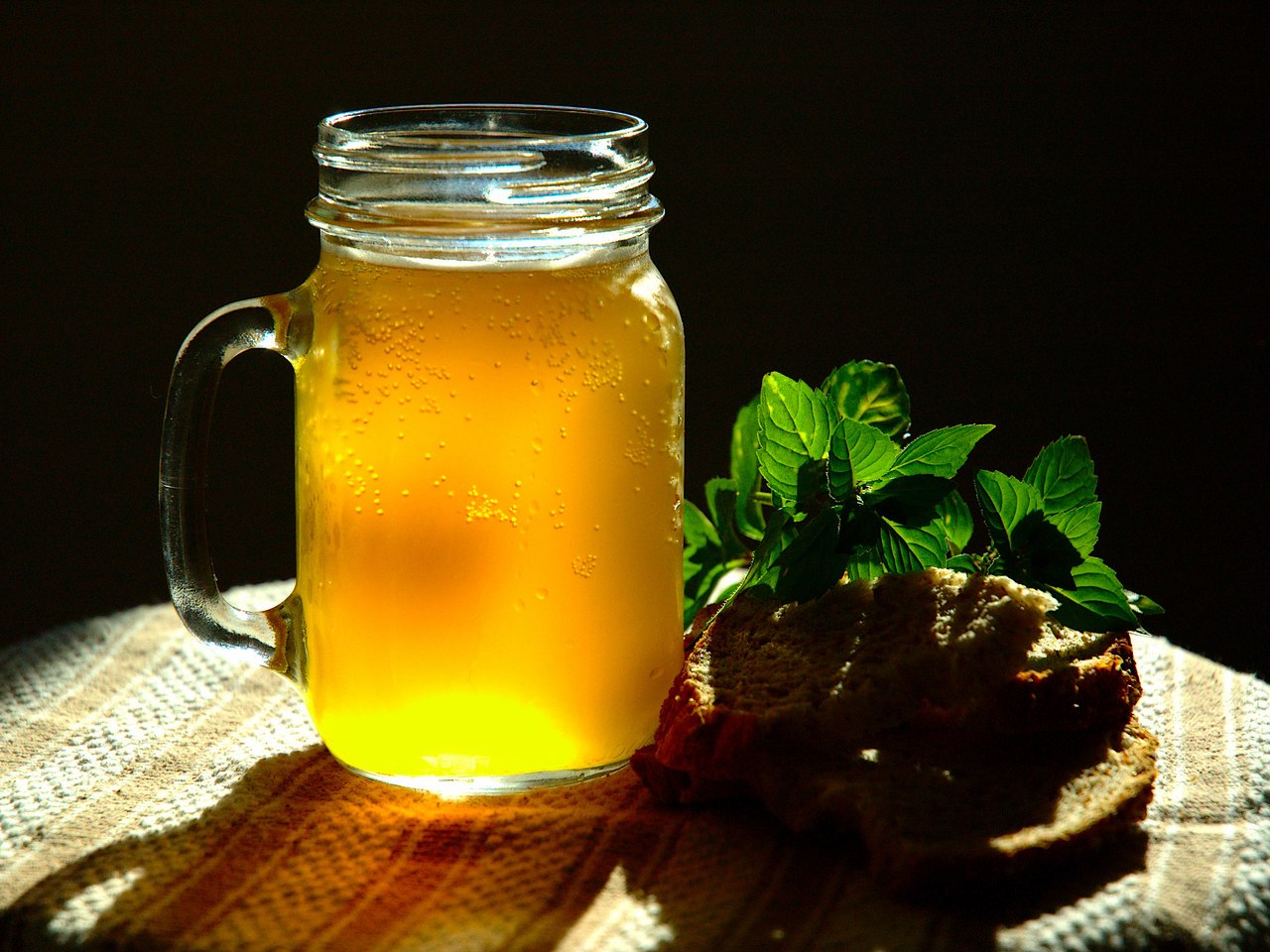


Ingredients and production
Basic kvass begins with stale or toasted rye bread which is steeped in hot water to extract colour, sugars and flavour. The bread extract is cooled and fermented briefly with baker's yeast, a sourdough starter or wild yeasts; additional sugar, malt, or fruit may be added to encourage fermentation and carbonation. Fermentation is usually short — from a day to several days — producing carbon dioxide and small amounts of ethanol. Some recipes substitute or complement bread with beets or fruit juices to yield beet kvass and other vegetable or fruit variants. Commercially produced kvass is often filtered and pasteurised to extend shelf life and ensure consistent flavour.
Varieties and flavours
- Traditional bread kvass: made from dark rye bread, lightly sour, often sweetened with sugar or honey.
- Fruit and berry kvass: fermented with or infused by berries and fruit concentrates for added aroma and colour.
- Vegetable kvass: for example, beet kvass made from fermented beetroot juice, used both as a drink and a tonic in some folk traditions.
- Commercial bottled kvass: clear or carbonated mass‑market products that are filtered and sometimes artificially carbonated.
Fermentation, alcohol and safety
The short fermentation time keeps ethanol levels low, which is why many people regard kvass as a soft drink. Unpasteurised kvass can contain live cultures and small amounts of yeast and bacteria that contribute to flavour and mild probiotic properties; however, because sugar content and live organisms vary, pregnant people, young children, or immunocompromised individuals are sometimes advised to avoid unpasteurised versions. Proper sanitation, refrigeration and adherence to simple home‑brewing practices reduce risks and prolong freshness.
Regional traditions and spread
Kvass has long roots in Slavic and Baltic food cultures and appears in historical records from medieval times onward. It is a traditional refreshment throughout Russia, Belarus and Ukraine, and is common in the Baltic states such as Lithuania and Latvia, as well as in Poland and Estonia. More broadly associated with Eastern and Central European cuisines, kvass travelled with migration and trade and saw expanded consumption across the territories of the former Soviet states. It remains well known in Central Asian republics such as Kazakhstan and Uzbekistan, where street vendors traditionally sold fresh kvass from barrels, and in cities with historical Russian communities such as Harbin and parts of Xinjiang within China, where local traditions preserve kvass making.
Culinary uses and cultural importance
Beyond being served as a chilled beverage, kvass is used in several culinary contexts: as the base for okroshka, a cold soup combining kvass with chopped vegetables and meat; as an ingredient for marinades and sauces; and occasionally as a cooking liquid to add tang to porridges or stews. Kvass is associated with summer refreshment and everyday life in many regions and appears in literature, seasonal markets and folk custom. In modern food scenes, artisanal producers and craft‑drink makers have renewed interest in traditional recipes and novel flavour combinations.
Home preparation and commercial availability
Home preparation is straightforward and adaptable: soak bread in hot water, strain the extract, sweeten as desired, add a fermenting agent and allow controlled fermentation to develop carbonation, then chill and bottle. Commercial kvass is widely available in convenience stores and supermarkets across Eastern Europe and in ethnic food shops elsewhere. Producers balance traditional character with food‑safety requirements, offering both pasteurised shelf‑stable bottles and fresh refrigerated variants sold by local vendors.
Nutrition and modern considerations
Kvass is a low‑alcohol, carbohydrate‑containing beverage; sugar content varies by recipe and brand. While unpasteurised kvass may contain beneficial microbes, its probiotic value is modest compared with cultured dairy products. Consumers often choose kvass as a traditional, lower‑alcohol alternative to sodas and sweetened soft drinks. As with any fermented product, storage conditions, ingredient quality and production methods determine shelf life and safety.
Further reading and resources
Readers seeking recipes, regional guides or historical background can look to culinary histories of Russia and neighbouring countries, folk cookbooks from Ukraine and the Baltic states, and food‑culture surveys from Poland and Estonia. Contemporary articles on fermentation and craft beverage revival discuss kvass alongside other traditional fermented drinks popular in Eastern and Central European cuisines, and regional vendors in former Soviet areas such as Kazakhstan and Uzbekistan illustrate its continued social role. For commercial producers and exporters, markets in cities with historic Russian influence like Harbin and regions of Xinjiang show how kvass adapts to local tastes in China.
Questions and answers
Q: What is Kvass?
A: Kvass is a fermented beverage made from black or regular rye bread, often flavoured with fruits or herbs such as strawberries, raisins, or mint, and used for preparing a cold summertime soup called okroshka.
Q: What is the alcohol content of Kvass?
A: Kvass is a non-alcoholic drink by Russian standards. This is because the alcohol content from fermentation is less than 1.2%. Overall, the alcohol content is low (0.05% - 1.0%).
Q: What type of bread is used to make Kvass?
A: Kvass is made from black or regular rye bread, and the colour of the bread used helps to make the colour of the drink.
Q: Where is Kvass popular?
A: Kvass is popular in Russia, Belarus, Ukraine, Lithuania, Latvia, Poland, Estonia, and other Eastern and Central European countries, as well as in countries that used to be a part of the USSR, such as Kazakhstan and Uzbekistan. It is also popular in Harbin and Xinjiang, areas within China that are influenced by Russian culture.
Q: What is Kvass used for?
A: Kvass is often used for preparing a cold summertime soup called okroshka.
Q: Is Kvass an alcoholic drink?
A: Kvass is a non-alcoholic drink by Russian standards, although it does contain a low amount of alcohol due to fermentation.
Q: What other flavours can Kvass be made with?
A: Kvass can be flavoured with fruits or herbs such as strawberries, raisins, or mint.
Author
AlegsaOnline.com Kvass: traditional fermented rye‑bread beverage of Eastern Europe Leandro Alegsa
URL: https://en.alegsaonline.com/art/54723
Sources
- enjoyyourcooking.com : Kvass (Russian Fermented Rye Bread Drink) Recipe
- ostapbenderx.narod.ru : ГОСТ Р 52409-2005. Продукция безалкогольного и слабоалкогольного производства
- books.google.com : page 8
- beerhunter.com : Michael Jackson's Beer Hunter - Porter and kvass in St. Petersburg
- meal.dbw.cn : 哈尔滨特色饮料“格瓦斯”竞相亮相哈洽会