
Kurt Gödel — Logician, Mathematician, and Philosopher
Overview of Kurt Gödel: life, principal results in logic and mathematics, key ideas (completeness, incompleteness, constructible universe), and his lasting influence on foundations and philosophy.
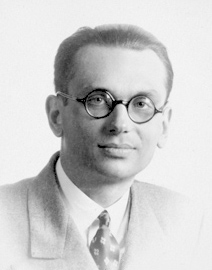
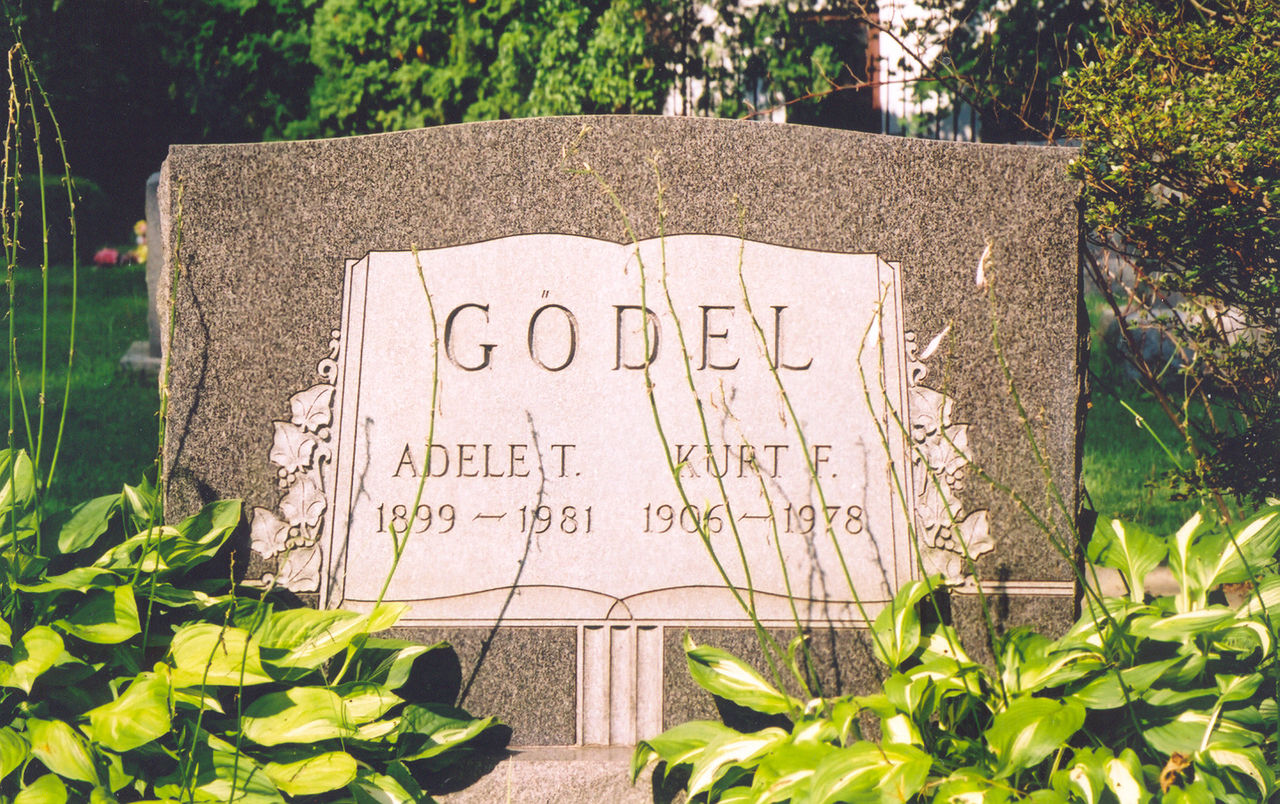
Kurt Gödel (born 28 April 1906 in Brno, then Austria-Hungary, now the Czech Republic; died 14 January 1978 in Princeton) was a leading 20th‑century logician, mathematician and philosopher. His work reshaped the study of formal systems, demonstrating intrinsic limits to what can be proved within sufficiently powerful axiomatic theories and clarifying what first‑order logic can and cannot accomplish.
Image gallery
6 Images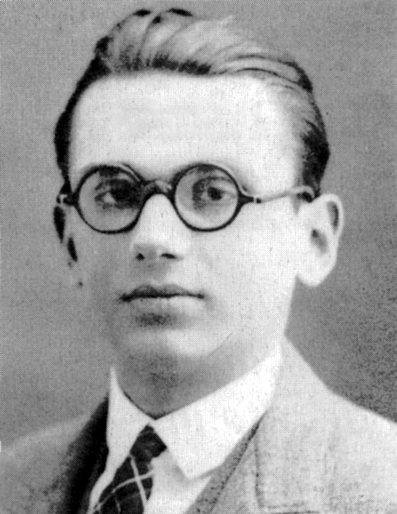


Major contributions
- Completeness theorem: Gödel proved that every logically valid formula of first‑order logic has a formal proof; this established a precise match between semantic truth and syntactic provability in that system.
- Incompleteness theorems: He showed that any consistent, effectively axiomatizable theory capable of encoding basic arithmetic contains true statements that it cannot prove, and that such a theory cannot prove its own consistency (under natural formalizations).
- Set theory and constructible universe: Gödel developed the constructible universe (often denoted L) to demonstrate that certain propositions, notably the axiom of choice and the generalized continuum hypothesis, are consistent with the standard axioms of set theory if those axioms themselves are consistent.
- Relativity and logic: In work on general relativity he produced a solution to Einstein’s field equations (the Gödel metric) that admits closed timelike curves, provoking philosophical discussion about time and causality.
- Foundational techniques: He introduced methods such as Gödel numbering to encode syntax as arithmetic, tools that later influenced computability theory and theoretical computer science.
Gödel was part of the vibrant intellectual scene in Vienna in the 1920s and 1930s and later emigrated to the United States, where he spent much of his career at the Institute for Advanced Study in Princeton. He interacted with many leading thinkers of his era and is often remembered for his close friendship with Albert Einstein.
His results have deep philosophical implications. By revealing rigid limits on formalization, they challenged optimistic programs that sought a complete and final axiomatization of mathematics. Philosophers and mathematicians have debated the interpretation and scope of his theorems, and the work continues to inform debates about mathematical truth, realism, and the nature of computation.
Notable aspects of Gödel’s legacy include widespread influence across logic, set theory, computer science, and philosophy, as well as a public intrigue surrounding his life and personality. He died in Princeton after a long period of ill health; his theorems remain central to the study of mathematical foundations and continue to inspire research into provability, computability, and the structure of formal theories.
Questions and answers
Q: Who was Kurt Gödel?
A: Kurt Gödel was a logician, mathematician, and philosopher.
Q: When and where was Kurt Gödel born?
A: Kurt Gödel was born on April 28, 1906, in Brno, then Austria-Hungary, now Czech Republic.
Q: Where did Kurt Gödel live before his death?
A: Kurt Gödel lived in Princeton, New Jersey before his death.
Q: What was Kurt Gödel's profession?
A: Kurt Gödel was a logician, mathematician, and philosopher by profession.
Q: What was the nationality of Kurt Gödel before his death?
A: Kurt Gödel was an Austrian-Hungarian (now Czech) by nationality before his death.
Q: What was the field of expertise of Kurt Gödel?
A: The field of expertise of Kurt Gödel was logic, mathematics, and philosophy.
Q: When did Kurt Gödel pass away?
A: Kurt Gödel passed away on January 14, 1978.
Related articles
Author
AlegsaOnline.com Kurt Gödel — Logician, Mathematician, and Philosopher Leandro Alegsa
URL: https://en.alegsaonline.com/art/54675