
Kuki, Saitama
Kuki is a city in northern Saitama Prefecture on Honshu, Japan. It is a regional transport and commercial center with a mix of agriculture, light industry and commuter residential areas serving Greater Tokyo.
Overview
Kuki (久喜市, Kuki-shi) is a city in Saitama Prefecture on the island of Honshu. Located north of central Tokyo, it forms part of the Greater Tokyo area and functions both as a local administrative center and a commuter town. Official figures have recorded an estimated population of about 153,392 (as of 1 June 2012) and a population density near 1,900 people per km²; these figures are subject to change and more recent statistics should be consulted from municipal sources.
Image gallery
4 Images

Geography and transport
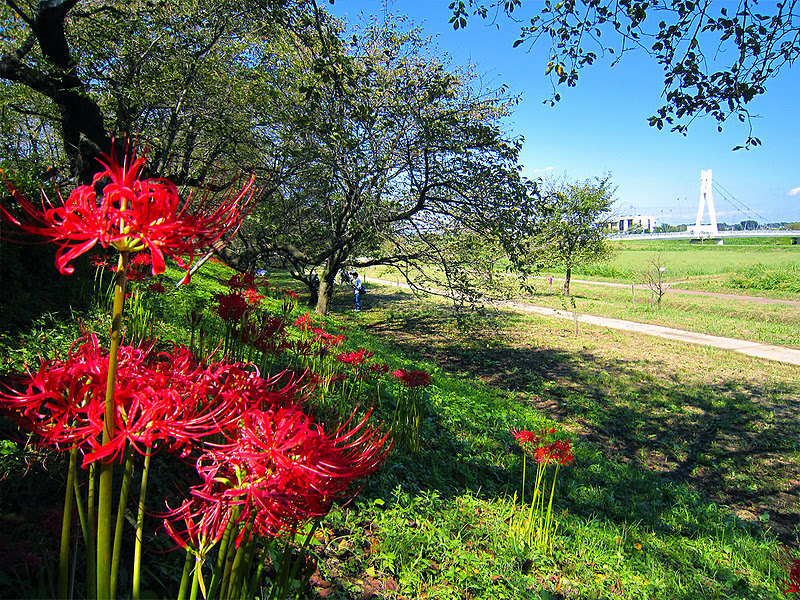
Kuki occupies largely flat terrain and combines urban districts with surrounding agricultural land. The city's position makes it a transport node for northern Saitama: it is connected to Tokyo and neighboring cities by a network of railways and major roads, and supports both daily commuting and regional freight movement. Public transport includes services operated by national and private railway companies, and road links facilitate bus and highway travel.
History and administration
The modern city developed through municipal mergers and administrative reorganization typical of 20th- and 21st-century Japan. Over time, nearby towns and villages were incorporated into the municipal framework, shaping current ward boundaries and public services. For authoritative and up-to-date municipal information, consult the official city sources.
Economy and society
Kuki's economy blends agriculture, light manufacturing, retail and services. Surrounding farmland supports rice, vegetables and horticulture while small- and medium-sized enterprises produce components, foodstuffs and consumer items. Residential growth has followed commuter demand, and many residents travel to larger employment centers for work. Local schools, hospitals and commercial facilities serve the surrounding district.
Culture and attractions
The city retains traditional community life alongside suburban development. Local shrines, seasonal festivals and parks provide cultural focal points, and events often reflect agricultural cycles and regional history. Kuki also acts as a regional hub for shopping, education and public services within northern Saitama.
Notable facts
- Serves as a suburban and regional center in northern Saitama with links to Tokyo.
- Combines agricultural land use with light industry and expanding residential areas.
- Offers local cultural sites, festivals and community amenities representative of the region.
Readers seeking detailed demographic data, maps or municipal services should consult prefectural statistics or the city government's publications for the latest information.
Questions and answers
Q: Where is Kuki located?
A: Kuki is a city in Saitama Prefecture on the island of Honshu in Japan.
Q: What is the population of Kuki?
A: As of 1 June 2012, the estimated population of Kuki is 153,392.
Q: What is the density of Kuki?
A: The density of Kuki is 1,900 people per km².
Q: Is Kuki a small city?
A: It is not specified whether Kuki is small or large, but it has a relatively high population density.
Q: What is the significance of Saitama Prefecture?
A: Saitama Prefecture is a prefecture of Japan located in the Kanto region of Honshu.
Q: Is Kuki located in a rural or urban area?
A: It is not specified whether Kuki is located in a rural or urban area, but the high population density suggests it is urban.
Q: What is the importance of Honshu?
A: Honshu is the largest and most populous island of Japan, where a majority of the country's main cities and industries are located.
Related articles
Author
AlegsaOnline.com Kuki, Saitama Leandro Alegsa
URL: https://en.alegsaonline.com/art/54563