
Kronosaurus (large Cretaceous pliosaur)
Kronosaurus was a powerful, short-necked marine reptile from the Lower Cretaceous, known from Australian fossils. Famous for a massive skull and debated size estimates, once reconstructed at ~13 m, later revised to ~9–11 m.
Overview: Kronosaurus was a genus of large marine reptiles classified among the short-necked plesiosaurs known as pliosaurs. Its name refers to the Titan Kronos and alludes to its imposing size and predatory role. Fossils attributed to this genus come primarily from Lower Cretaceous marine deposits, and it is best known from material found in Australia. Early descriptions emphasized a huge skull and robust body suited to active predation in coastal seas. Pliosaur is the broader group to which it belongs, while the name origin links to the mythological Kronos via its etymology. Its age is generally placed in the Lower Cretaceous.
Image gallery
10 Images


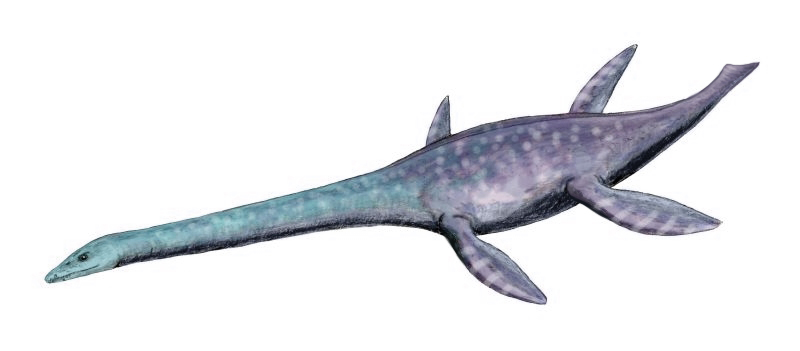


Description
As a pliosaur, Kronosaurus combined a relatively short, muscular neck with a deep, wide skull and large, conical teeth. These features indicate a bite adapted for seizing large, struggling prey such as fish and other marine reptiles. Paddle-like limbs (flippers) powered efficient swimming. Estimates of body proportions come from partial skeletons and mounted reconstructions rather than complete skeletons, so proportions and total length remain subjects of study.
Size and anatomy
Kronosaurus attracted attention for its estimated body length. A mid-20th-century reconstruction displayed in a major museum suggested a total length near 12.8 meters, largely driven by an expansive interpretation of vertebral counts and mount spacing. Subsequent reexaminations of the original fossils and comparisons with related pliosaurs have produced shorter estimates, commonly in the range of about 9 to 11 meters. The skull alone was proportionally large, reflecting its energy-intensive predatory lifestyle.
Discovery and research history
Specimens referred to Kronosaurus were collected from Cretaceous marine rocks and have featured in museum displays and scientific descriptions for over a century. Over time researchers have revised anatomical interpretations, taxonomy, and size estimates as new material and comparative studies emerged. Debates continue over how many specimens truly belong to the same species and how best to reconstruct incomplete skeletons for life-size mounts.
Significance and notable points
- Ecological role: an apex marine predator of its time, occupying coastal and shallow seas.
- Taxonomic interest: used in comparative studies of pliosaur anatomy and evolution.
- Public profile: museum reconstructions and popular accounts made Kronosaurus one of the best-known large marine reptiles.
Controversies surrounding Kronosaurus mostly concern size estimates and the completeness of type material. Large museum mounts based on incomplete skeletons can overstate length when individual vertebrae are duplicated or when missing elements are restored conservatively. Modern paleontological practice emphasizes comparing fragmentary remains with better-known relatives to refine reconstructions and avoid overestimates. Kronosaurus remains an important taxon for understanding Cretaceous marine ecosystems and the diversity of pliosaur body plans.
Questions and answers
Q: What was Kronosaurus?
A: Kronosaurus was a large pliosaur, one of the largest.
Q: What is Kronosaurus named after?
A: Kronosaurus is named after the leader of the Greek Titans, Kronos.
Q: When did Kronosaurus live?
A: Kronosaurus lived in the Lower Cretaceous.
Q: What was the body-length estimate for Kronosaurus based on the 1959 Harvard reconstruction?
A: The body-length estimate for Kronosaurus based on the 1959 Harvard reconstruction was 12.8 meters (42 feet).
Q: Why was the body-length estimate for Kronosaurus revised?
A: The body-length estimate for Kronosaurus was revised after a recent study compared fossil specimens of Kronosaurus to other pliosaurs, and it was found that the Harvard reconstruction may have included too many vertebrae, exaggerating its length.
Q: What is the true length of Kronosaurus?
A: The true length of Kronosaurus was probably only 9–10.9 meters (30–36 feet).
Q: How does Kronosaurus compare to other pliosaurs in terms of size?
A: Kronosaurus was one of the largest pliosaurs.
Related articles
Author
AlegsaOnline.com Kronosaurus (large Cretaceous pliosaur) Leandro Alegsa
URL: https://en.alegsaonline.com/art/54495
Sources
- nova.newcastle.edu.au : nova.newcastle.edu.au