
Krazy Kat: George Herriman’s Surreal Newspaper Comic (1913–1944)
Krazy Kat is a pioneering American newspaper comic by George Herriman (1913–1944), noted for its surreal landscapes, playful language, and the brick-throwing love triangle between Krazy, Ignatz, and Offissa Pupp.
Krazy Kat is a landmark American comic strip created by cartoonist George Herriman and published in newspapers from 1913 until 1944. At once playful and formally adventurous, the strip developed a devoted critical following despite only modest contemporary mass-market success. Its small cast of characters, shifting desert panoramas, and idiosyncratic language made it unlike most comic strips of its era and helped establish comics as a medium capable of poetic and visual experimentation.
Image gallery
9 Images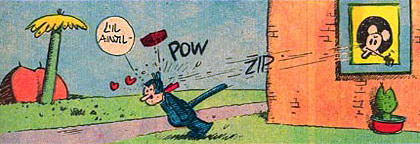





Overview and origins
The central figure, Krazy Kat, first appeared in a different Herriman feature before receiving a dedicated strip. The series found a long-term home in the papers owned by William Randolph Hearst, whose patronage ensured the strip's wide syndication. Herriman set his stories in an imaginary version of Coconino County, Arizona, using the region's mesas, colors, and horizons as recurring visual motifs. Over three decades of daily and Sunday strips, Herriman explored variations on a few basic dramatic relationships rather than conventional plot arcs.
Characters and recurring premise
- Krazy Kat – an affectionate, often whimsical cat whose gender and temperament are fluid in the narrative; Krazy reads a thrown brick as a sign of love.
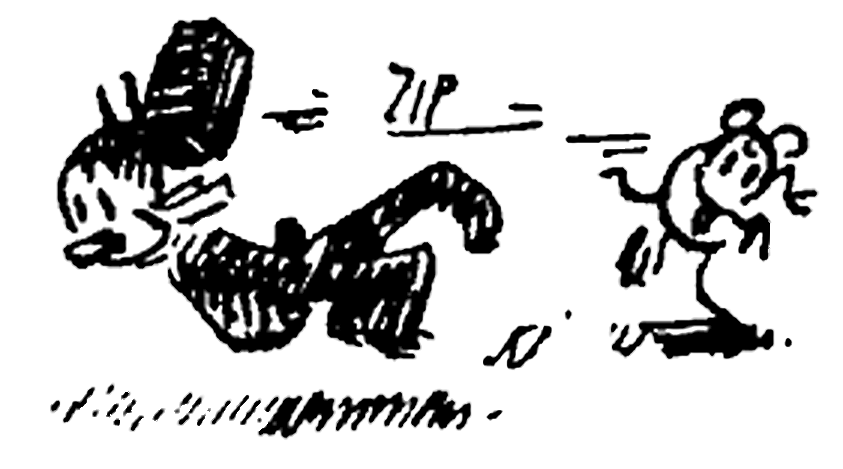
- Ignatz Mouse – a small, witty mouse who despises Krazy and repeatedly throws bricks at the cat’s head, a gesture Krazy interprets as a declaration of affection.
- Offissa Bull Pupp – a dog who serves as law and order in Coconino County; he repeatedly arrests Ignatz to stop the brick-throwing, motivated by both civic duty and concern for Krazy.
The central motif — Ignatz’s bricks, Krazy’s misreading of them as love, and Offissa Pupp’s attempts at enforcement — becomes the strip’s dramatic engine. Herriman delighted in repeating and varying this scenario, letting tone, composition, and language shift from panel to panel.
Visual style and language
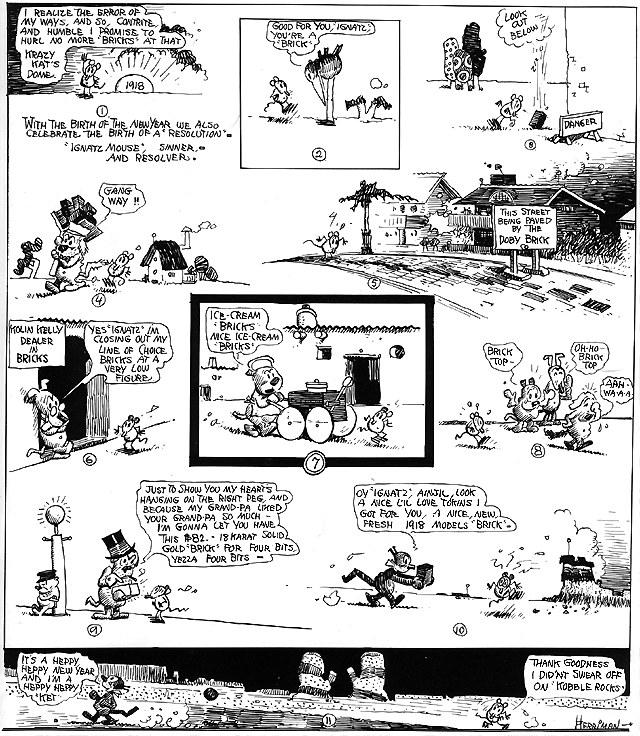
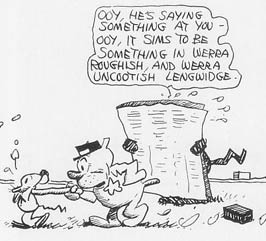
Herriman experimented with panel layout, perspective, and background design in ways that were highly unusual for newspaper cartoons. Landscapes frequently tilt, dissolve, or change color from one strip to the next; type and lettering are used playfully; and dialogue mixes dialect, neologisms, and poetic phrasing. This blend of surreal visuals and idiosyncratic speech gives the strip an ambiguous, dreamlike quality that has been praised by critics and artists alike.
Publication history and critical reception
Although Krazy Kat never became a mass-circulation sensation, it received unusually serious attention from contemporary intellectuals and later historians. Critics such as Gilbert Seldes highlighted the strip’s achievement, and writers like E. E. Cummings publicly admired Herriman’s work. The strip ended in 1944 with the death of its creator, and subsequent decades have seen many reprints, anthologies, and scholarly studies that have helped cement its reputation in the history of comics.
Legacy, influence, and adaptations
Krazy Kat influenced generations of cartoonists who cite its invention of mood, visual play, and comic timing as formative. The strip has been reissued in book collections and adapted in various forms, including early animated shorts. Museums and scholars often point to Herriman’s work as evidence that comics can achieve artistic depth and literary resonance.
Further reading and resources
- General overview and publishing history
- Biography of George Herriman
- Analysis of Krazy Kat’s visual art
- Contemporary newspaper archive references
- Early appearances and development
- End of the run and legacy
- William Randolph Hearst’s role in syndication
- Coconino County and the Arizona setting
- Surrealism and literary influences
- Critical essays, including Gilbert Seldes
- Introductions and endorsements by contemporary writers
For readers discovering Krazy Kat for the first time, the strip rewards close reading: repeated images are rarely identical, language shifts in tone and register, and the apparent simplicity of a slapstick premise masks a persistent inquiry into affection, misunderstanding, and the elasticity of cartoon time. Herriman’s work remains widely studied for its originality and for expanding what a comic strip could express.
Questions and answers
Q: Who created the comic strip Krazy Kat?
A: The comic strip Krazy Kat was created by cartoonist George Herriman.
Q: When was Krazy Kat first published?
A: Krazy Kat was first published daily in newspapers between 1913 and 1944. It first appeared in the New York Evening Journal.
Q: What phrase originated from another Herriman strip?
A: The phrase "Krazy Kat" originated from another Herriman strip called The Dingbat Family. It was the mouse's way of describing the cat.
Q: Where is the setting for Krazy Kat?
A: The setting for Krazy Kat is Herriman's vacation home of Coconino County, Arizona.
Q: What is the relationship between Ignatz Mouse, Offissa Bull Pupp, and Krazy Cat?
A: Ignatz Mouse despises Krazy Cat and throws bricks at its head which it interprets as a sign of affection. Offissa Bull Pupp is Coconino County's administrator of law and order who tries to interfere with Ignatz's brick-tossing plans by locking him up in jail.
Q: How did intellectuals respond to this comic strip?
A: Intellectuals praised this comic strip for its detailed characterization and visual and verbal creativity, treating it as "serious" art. Critic Gilbert Seldes wrote at length about it in 1924, calling it "the most amusing and fantastic and satisfactory work of art produced in America today." Poet E. E Cummings admired Herriman so much he wrote an introduction to its first collection in book form.
Q: How successful was this comic during its initial run?
A; Although praised by intellectuals, Krazy Kat only had modest success during its initial run but has gained more recognition over time with many modern cartoonists citing it as a major influence on their own work
Related articles
Author
AlegsaOnline.com Krazy Kat: George Herriman’s Surreal Newspaper Comic (1913–1944) Leandro Alegsa
URL: https://en.alegsaonline.com/art/54427
Sources
- xroads.virginia.edu : The Krazy Kat That Walks By Himself