
Kota Kinabalu
Kota Kinabalu (K.K.), capital of Sabah, Malaysia, is a coastal city on Borneo serving as a gateway to Mount Kinabalu and nearby marine parks; a regional tourist, commercial and transport hub.
Overview
Kota Kinabalu, commonly abbreviated to K.K., is the capital city of the state of Sabah in Malaysia. Located on the northwest coast of the island of Borneo, the city faces the South China Sea and serves as the administrative, commercial and cultural centre for the surrounding region. Kota Kinabalu proper has been reported with a population in the several hundreds of thousands, while its wider urban area approaches metropolitan size, making it the largest urban centre in Sabah and one of Malaysia's important regional cities.
Image gallery
10 Images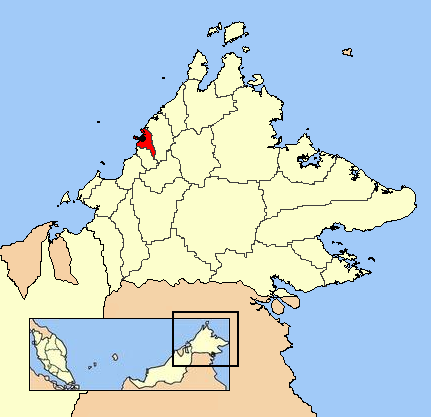


Geography and environment
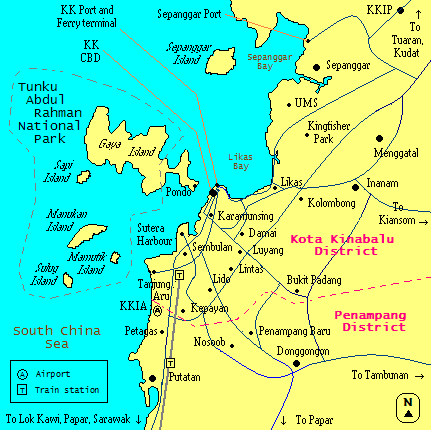
The city sits on a coastal plain with views toward a string of small islands and the higher interior mountains. The nearby Tunku Abdul Rahman National Park comprises several islands offering beaches, coral reefs and marine recreation a short boat ride from the waterfront. Inland rises Mount Kinabalu, the highest peak on Borneo and a dominant natural landmark that gives the city its name. The local environment includes coastal mangroves, urban green spaces and montane forest at higher elevation; the climate is tropical with a wetter season and little variation in temperature year round.
History
The settlement developed around a trading harbour during the colonial era and was formerly known as Jesselton. It suffered extensive damage in the Second World War and was rebuilt in the postwar period, evolving into a regional administrative and commercial hub. In recent decades the growth of tourism, finance, services and light industry has accelerated urban expansion and infrastructure investment, while also raising questions about planning and conservation.
Demographics and society
Kota Kinabalu is a multiethnic city that reflects the wider diversity of Sabah, with indigenous groups, Malay, Chinese and other communities contributing to its cultural life. Languages, customs and religious practices vary across groups; festivals, markets and community events provide visible expressions of this diversity. The urban population includes long-term residents and migrants drawn by employment in government, tourism, commerce and service industries.
Economy and administration
The local economy combines public administration with tourism, retail, shipping and light manufacturing. As a gateway for travellers to Sabah and Borneo, the city supports hotels, tour operators and specialist services for outdoor activities. Kota Kinabalu is also a commercial centre for the West Coast Division and plays a role in the economy of East Malaysia, connecting agricultural and marine production from the hinterland with regional markets.
Transport and access
The city is served by an international airport which provides air links to domestic and regional destinations, and by a coastal ferry and boat services that connect the mainland with island parks and nearby ports. Road networks link Kota Kinabalu to surrounding towns and the interior. Local transport within the urban area includes buses, taxis and privately operated vans; many visitors access islands from designated ferry terminals or jetties on the waterfront.
Tourism and recreation
Tourism is central to Kota Kinabalu's identity. Visitors commonly use the city as a base for climbing Mount Kinabalu, exploring lowland and montane forests, and for diving, snorkeling or relaxing on the islands of the nearby national park. Within the urban area, attractions include waterfront promenades, local markets, seafood restaurants and cultural sites. Activities such as island hopping, wildlife watching, guided nature treks and cultural tours are widely available through licensed operators.
Culture, markets and cuisine
The city's cultural life combines traditional arts, contemporary music and public festivals. Local markets and street food reflect Sabah's gastronomic variety, with a focus on seafood and regional specialties. Weekend markets and craft stalls are popular with both residents and visitors, and the city hosts events that celebrate heritage, music and community traditions.
Conservation and challenges
Rapid urban growth and expanding tourism present challenges for environmental management and heritage protection. Conservation efforts focus on coral reef protection, mangrove rehabilitation and maintaining corridors for wildlife in upland areas. Planning authorities and non-governmental organisations work alongside local communities to promote sustainable tourism, responsible resource use and measures to reduce pressure on sensitive ecosystems.
Practical information
- Best access: by air to the city's international airport or by sea links to island jetties.
- Popular activities: mountain trekking, snorkelling and diving, island visits, cultural tours and food markets.
- Visitor tips: plan for tropical weather, book permits or guided climbs for highland treks, and respect local conservation rules when visiting reefs and parks.
Further reading and resources
For broader context about the state and region consult resources on Sabah and on Borneo, and for maritime and regional geography see materials on the South China Sea. Information on Mount Kinabalu and its protected areas is available through official park guides and visitor centres linked to Mount Kinabalu. Regional economic and development topics are discussed in references about East Malaysia.
Questions and answers
Q: What is Kota Kinabalu?
A: Kota Kinabalu is the capital of Sabah state in Malaysia and is on the northwest coast of Borneo facing the South China Sea.
Q: What is the population of Kota Kinabalu?
A: Kota Kinabalu proper has a population of 579,304, while the larger urban area has an estimated population of 700,000.
Q: What is the Tunku Abdul Rahman National Park?
A: The Tunku Abdul Rahman National Park is a national park located on one side of Kota Kinabalu.
Q: What is the significance of Mount Kinabalu to Kota Kinabalu?
A: Mount Kinabalu gave Kota Kinabalu its name.
Q: What is the popular nickname for Kota Kinabalu?
A: The popular nickname for Kota Kinabalu is K.K. within Malaysia and internationally.
Q: What are the tourist attractions in Kota Kinabalu?
A: There are many tourist attractions in and around Kota Kinabalu, such as Kinabalu National Park located about 90 kilometres from the city.
Q: What makes Kota Kinabalu one of the fastest growing cities in Malaysia?
A: Kota Kinabalu is one of the major industrial and commercial centres of East Malaysia, which combine to make it one of the fastest growing cities in Malaysia.
Related articles
Author
AlegsaOnline.com Kota Kinabalu Leandro Alegsa
URL: https://en.alegsaonline.com/art/54342
Sources
- world-gazetteer.com : "Malaysia: metropolitan areas"
- biz.thestar.com.my : "Tourism hub set to lift Sabah real estate" · archive.is
- world-gazetteer.com : "Mat Salleh Fort"
- sejarahmalaysia.pnm.my : sejarahmalaysia.pnm.my
- aasianst.org : "The 1943 Kinabalu Uprising in Sabah"
- sabah.org.my : "Sabah's Heritage: A Brief Introduction to Sabah's History"
- kdca.org.my : "KINABALU: Kina Balu, Aki Nabalu, or Ki Nabalu?"
- blackdrago.com : "Dragons of Fame: China"
- polenth.com : "Kinabalu Dragon"