
Korean Demilitarized Zone (DMZ): buffer strip between North and South Korea
A 250 km long, roughly 4 km wide buffer established after the 1953 armistice. The DMZ separates North and South Korea, hosts the Joint Security Area, and is a de facto wildlife refuge.
The Korean Demilitarized Zone (commonly called the DMZ) is a stretch of land that bisects the Korean Peninsula and serves as a buffer between North Korea and South Korea. In Korean it is often referred to as 한반도 비무장지대. Created by the armistice that paused active hostilities in 1953, the DMZ runs roughly along the 38th parallel and is about 250 kilometres long and around 4 kilometres wide. It is widely described as one of the most heavily fortified borders in the world.
Image gallery
10 Images


Physical layout and notable locations
The DMZ forms a linear zone across the peninsula rather than a single straight line; its western and eastern ends do not lie exactly on the 38th parallel. Key sites within or adjacent to the DMZ include the Joint Security Area (JSA) at Panmunjom, where delegates from both sides meet, and several villages and observation posts on either side. The maritime boundary off the west coast is marked by the Northern Limit Line, which is also strongly enforced by both militaries.
History and legal status
The DMZ was established by the Korean Armistice Agreement of 1953 as a military control measure to separate opposing forces after the Korean War. The armistice ceased large-scale combat but did not produce a peace treaty, so the peninsula remains technically at war. Negotiations and periodic diplomatic contacts have occurred at locations inside the DMZ, but sovereignty and final border settlement are unresolved political issues.
Security features and incidents
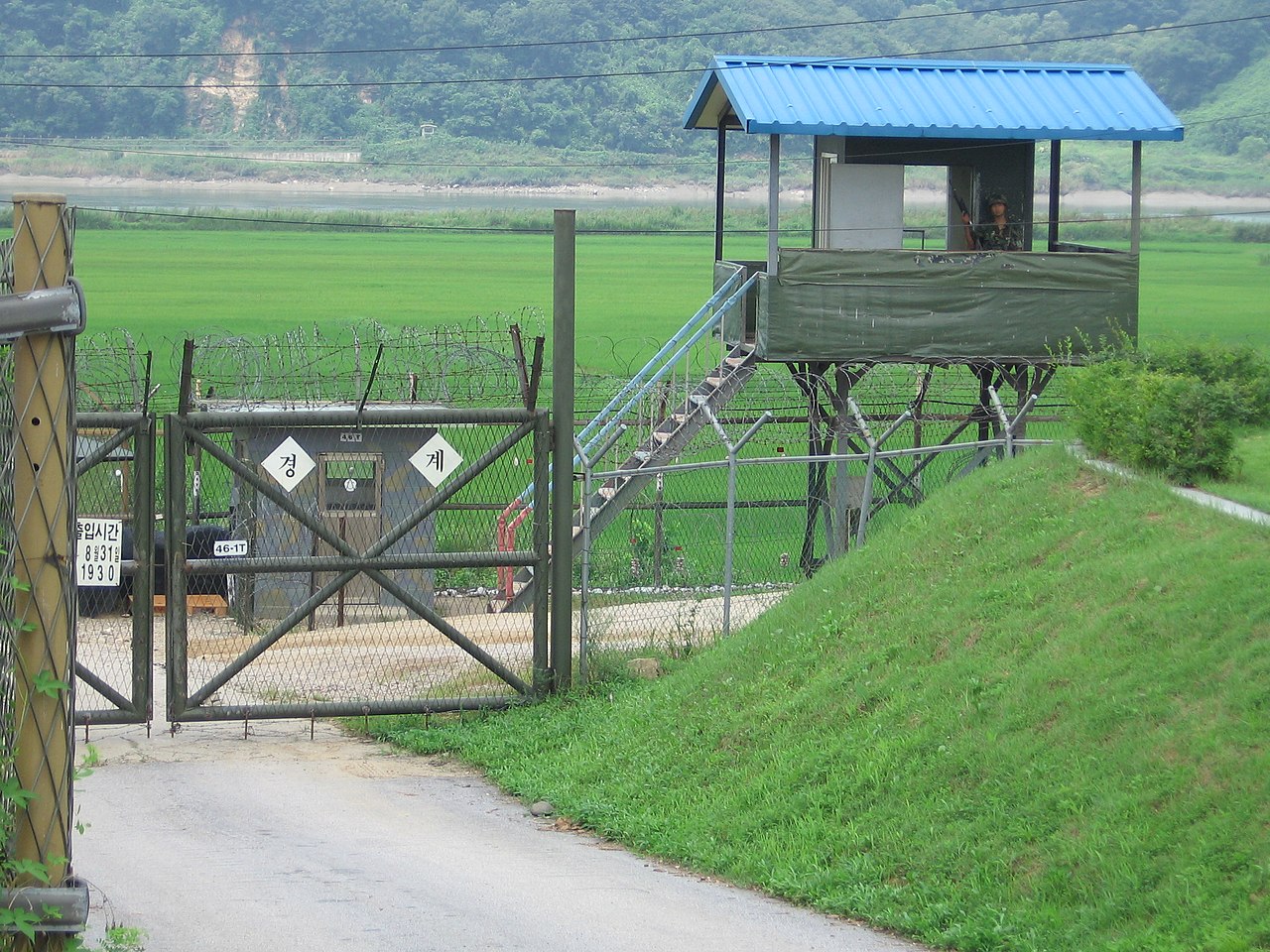
Although called a "demilitarized" zone, the DMZ is heavily guarded by troops, fortifications, minefields and observation posts on both sides. Several infiltration tunnels dug under the barrier by the North have been discovered since the 1970s. The Joint Security Area contains blue conference buildings and is the site of monitored face-to-face talks; visitors can sometimes observe the layout under strict supervision.
Ecology and conservation
Because public access has been restricted for decades, large parts of the DMZ have reverted to natural habitat and represent one of the Korean Peninsula's largest contiguous ecosystems. The strip supports diverse wildlife, including migratory birds and rare mammals that have become scarce elsewhere on the peninsula. Conservationists regard the DMZ as an unintended refuge, and proposals have been made to protect it formally if a peace settlement ever allows such planning.
Access, tourism and significance
Access to the DMZ is tightly controlled. South Korea operates guided tours to certain observation areas, the JSA, and nearby museums; North Korea similarly presents selected sites on rare occasions. The zone is important for military strategy, diplomacy and symbolic reconciliation efforts. It is also a frequent reference point in international discussions about security in Northeast Asia and about the unresolved status arising from the Korean War.
- Established: 1953 armistice
- Length: about 250 km
- Width: approximately 4 km
- Key site: Joint Security Area (Panmunjom)
- Maritime boundary: Northern Limit Line (sea boundary)
For further contextual background and language references see general resources on the Korean Peninsula, the histories of both Koreas, and diplomatic archives relating to the armistice. Additional curated information is available through official visitor programs and authorized educational materials that explain the DMZ's complex military, ecological and symbolic roles in modern East Asian history. Official tour and security details are published periodically by authorities and international organizations that monitor the area; some materials are also summarized for public audiences at museums and cultural centers (visitor information).
Questions and answers
Q: What is the Korean Demilitarized Zone?
A: The Korean Demilitarized Zone (Korean: 한반도 비무장지대) is a piece of land running across the Korean Peninsula that serves as a buffer zone between North and South Korea.
Q: Where does the DMZ cross?
A: The DMZ cuts the Korean Peninsula almost in half, crossing the 38th parallel. The west end of the DMZ is south of the parallel and the east end is to the north of it.
Q: How long and wide is it?
A: It is 250 kilometres (160 miles) long, and about 4 km (2.5 mi) wide.
Q: Is it heavily guarded?
A: Yes, it is considered to be one of most highly militarized borders in the world. Both sides of its Northern Limit Line are also heavily guarded.
Q: What does "Northern Limit Line" refer to?
A: The Northern Limit Line refers to border between both Koreas in the Yellow Sea and its coastline.
Q: Is there any other name for this line? A: No, "Northern Limit Line" is its official name.
Related articles
Author
AlegsaOnline.com Korean Demilitarized Zone (DMZ): buffer strip between North and South Korea Leandro Alegsa
URL: https://en.alegsaonline.com/art/54280