
Komitas Vardapet (Soghomon Soghomonyan) — Armenian priest, composer and ethnomusicologist
Komitas Vardapet (1869–1935) was an Armenian priest, composer and pioneering ethnomusicologist who collected thousands of folk songs and shaped modern Armenian choral and liturgical music.
Overview
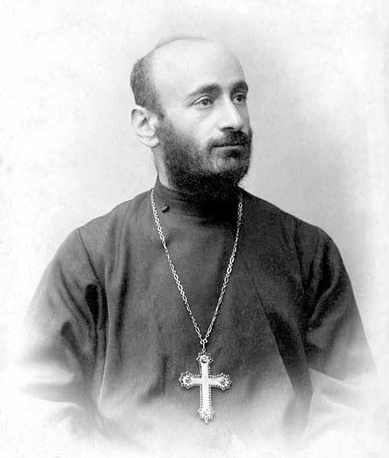
Soghomon Gevorki Soghomonyan, known as Komitas Vardapet (1869–1935), is widely credited with founding the modern Armenian classical and choral tradition. Born in Kütahya in the Ottoman Empire, he combined clerical training with rigorous musical study to collect, transcribe and arrange the vernacular music of Armenian communities. He served as a Vardapet (an ordained priest and church scholar) and later pursued advanced musical education in Berlin. Komitas's work influenced liturgical practice, concert repertoire and the formation of a national musical identity.
Image gallery
10 Images


Early life and education
Komitas was born into a family where music was part of daily life; in childhood his household environment reflected the multilingual Ottoman context, including speakers of Turkish. Orphaned young, he received ecclesiastical and musical instruction at the cathedral of Echmiadzin, directing the monastery choir and becoming known for his skill as a singer and a teacher. In the 1890s he traveled to study in Europe, taking lessons at private conservatories and at the university level, and by 1899 had acquired advanced credentials in musicology that informed his later scholarship. Records of his education note studies in Berlin and contacts with European musicologists and institutions, including membership in international scholarly groups such as the International Music Society.
Fieldwork and method
After returning to Armenia, Komitas undertook extensive fieldwork. He traveled from village to village, attending weddings, religious services and communal gatherings to listen, learn and transcribe melodies directly from singers and instrumentalists. Using Western staff notation while remaining attentive to modal features and ornamentation, he collected and systematized a large corpus of material—often cited at roughly three thousand tunes—preserving many forms of folk song, dance tunes and sacred melodies. His approach combined careful transcription with sensitive arrangements for choir and small ensembles so that oral traditions could be transmitted in written and performable form.
Compositions and arrangements
Komitas produced a range of arrangements and original works that drew on modal and rhythmic features of Armenian folk music. His setting of the Armenian Divine Liturgy, commonly known as the Badarak, remains one of the principal musical versions used in Armenian churches. He published collections of songs and harmonized choral works that introduced vernacular repertoire into concert and ecclesiastical contexts. Through teaching and publishing, Komitas trained singers and choirs and influenced subsequent generations of Armenian composers and conductors; institutions and ensembles continue to perform his arrangements.
Arrest, illness and later life
Komitas's life was profoundly affected by the events of 1915. He was arrested on April 24, 1915 and deported with other Armenian intellectuals to Çankırı. Owing to the intercession of friends and public figures—including the Turkish poet Emin Yurdakul, the writer Halide Edip, and diplomatic interventions—he was returned to Constantinople. The trauma of detention and the wider violence experienced by his community are widely considered to have precipitated a long decline in his mental health. He was moved to medical care and eventually relocated to France, living near Villejuif and in Paris, where he died in 1935. His remains were later transported to Yerevan, where he is honored in the national Pantheon.
Recognition and legacy
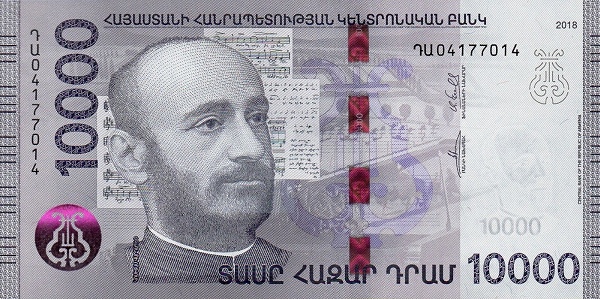
Komitas's reputation as a scholar, composer and preserver of folk music has been central to modern Armenian cultural memory. He is commemorated in educational institutions such as the conservatory that bears his name and in performing ensembles, including the internationally known string quartet named for him. His manuscript collections and published editions are important resources for performers and researchers; modern recordings and scholarly editions continue to explore his transcriptions and arrangements. Komitas is also noted for having been among the first non-European members associated with international musicological networks, reflecting the transnational dimension of his career.
Further reading and resources
- Biographical studies and critical editions document his field notebooks, harmonizations and liturgical settings; many are available at academic libraries and cultural institutions that preserve Armenian musical heritage (doctoral records, recordings).
- Musicological analyses examine his method of transcription and the relationship between oral performance practice and written arrangement (compositional studies, ethnomusicological research).
- Museums, conservatories and ensembles maintain archives, commissions and programs in his name, including initiatives in France and Armenia that promote performance and research.
Komitas remains a pivotal figure for scholars of folklore, liturgy and national music formation. His combination of clerical training, fieldwork, compositional skill and international contacts allowed him to document and transform a vast repertory of songs and to leave a durable legacy in church music, choral repertoire and the study of Armenian musical traditions. For primary sources and institutional collections consult catalogs and institutional pages that preserve his manuscripts and recordings (archival contacts, clerical records, monastic choir histories).
Questions and answers
Q: Who was Komitas Vardapet?
A: Komitas Vardapet (also Gomidas Vartabed) was an Armenian priest, composer, choir leader, singer, music ethnologist, music teacher and musicologist. He is known as the founder of modern Armenian classical music.
Q: Where and when was he born?
A: He was born on September 26 1869 in Kütahya, Ottoman Empire.
Q: What did he do to become a priest?
A: In 1895 he became a priest and obtained the title Vardapet (or Vartabed), meaning a priest or a church scholar.
Q: What did he study in Berlin?
A: In Berlin he studied music at the private conservatory of Prof. Richard Schmidt.
Q: What major work did Komitas create?
A: His major work is Badarak (Divine Liturgy), still used today as one of the two most popular musical settings of the Armenian Church liturgy.
Q: How many folk songs did Komitas collect and publish?
A: He collected and published some 3000 songs, many of them adapted to choir singing.
Q: What happened to him on April 24th 1915?
A: On April 24th 1915, said to be the day when Armenian Genocide officially began, he was arrested by Turkish forces.
Related articles
Author
AlegsaOnline.com Komitas Vardapet (Soghomon Soghomonyan) — Armenian priest, composer and ethnomusicologist Leandro Alegsa
URL: https://en.alegsaonline.com/art/54185
Sources
- komitas.am : "Biography of Komitas"