
Kola Superdeep Borehole
A Soviet scientific drilling project on Russia's Kola Peninsula that produced the deepest artificial point on Earth and yielded important data about continental crust structure and deep geology.
Overview
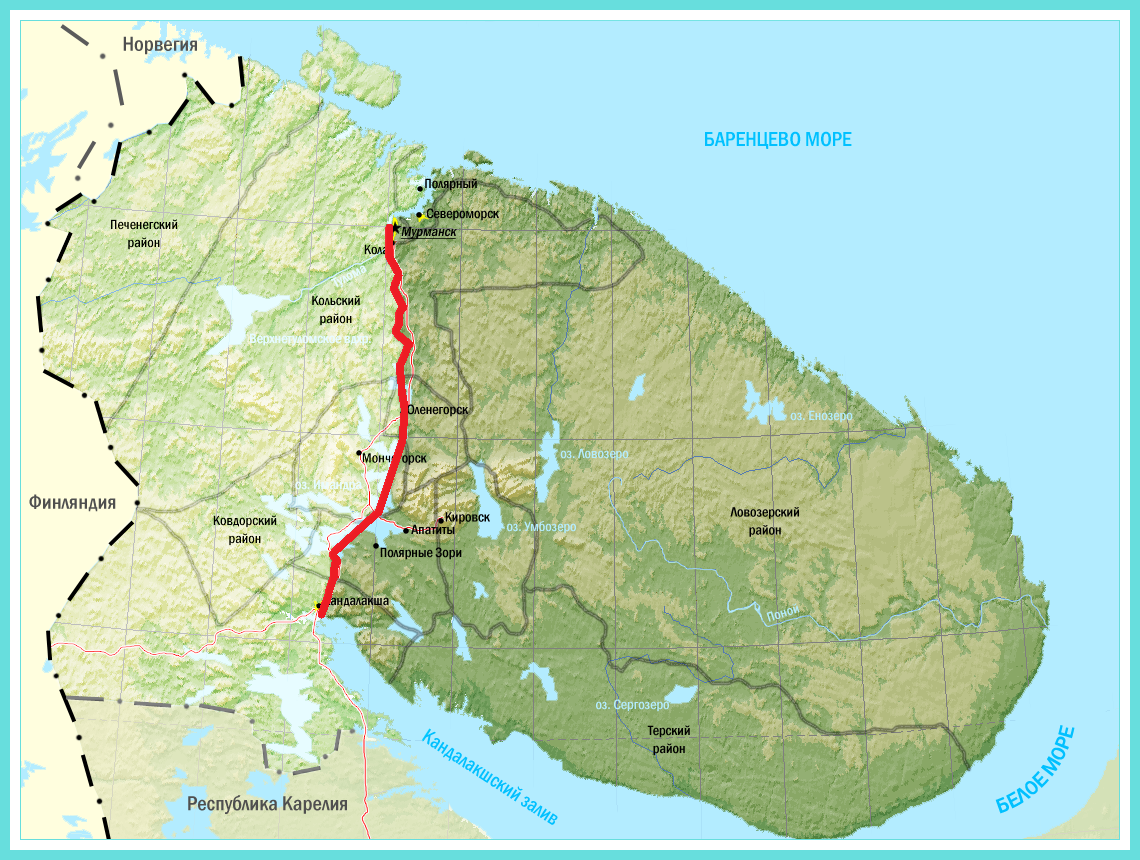
The Kola Superdeep Borehole was a Soviet scientific drilling project begun on 24 May 1970 on the Kola Peninsula in northwest Russia. The site lies at 69°23′46.39″N 30°36′31.20″E. Its deepest shaft, known as SG-3, reached a vertical depth of 12,261 metres, making it the deepest borehole and deepest man-made point on Earth by true vertical depth. The project was driven by basic research goals: to sample deep continental crust directly and to improve understanding of the composition, structure and thermal state of the Earth beneath thick crustal regions.
Image gallery
5 Images



Drilling programme and technical features
Drilling proceeded under a programme run by Soviet scientific institutions and continued into the early 1990s. Work on extension of the main hole slowed and ultimately stopped around 1992, with some reports of activity into 1994; the site and its support facilities remained in various states of maintenance into the 2000s and were decommissioned by the late 2000s. Engineers used progressively larger and then smaller casing strings and specially designed drill bits to recover core and log formation properties. The project produced long continuous core sections and extensive downhole records that allowed direct study of deep crustal rocks.
Scientific findings and significance
Results from the Kola cores changed several expectations about deep crustal geology. Rocks of the deep crust showed complex metamorphic histories and fracturing; fluids and hydrogen were detected at depth; and acoustic and seismic properties measured in situ helped to interpret seismic-reflection and seismic-refraction observations. Temperatures increased faster with depth than many models had predicted, with bottom-hole temperatures high enough to limit further straightforward drilling. Microscopic traces of ancient microscopic life and chemical alteration products were reported in some recovered material, indicating that biological remnants and fluid-rock interaction can persist deep within continental crust. The core archive and data continue to be used as a reference for studies of continental lithosphere and for comparisons with active hydrocarbon and geothermal drilling elsewhere.
Key facts
- Location: Kola Peninsula, Russian Arctic (coordinates).
- Project start: 24 May 1970; major drilling through the 1970s–1980s.
- Maximum recorded vertical depth: 12,261 m (SG-3).
- Primary goals: study of deep crustal composition, seismic discontinuities and thermal regime (Earth's interior research).
Closure, legacy and notable comparisons
Although drilling at Kola ceased decades ago, the site became a symbol of scientific ambition because it reached where no prior project had gone. Kola remains the deepest vertical borehole by measured depth. Other modern wells drilled for oil and gas have exceeded Kola in total measured depth along deviated or extended-reach wellbores; examples include the Al Shaheen BD-04A well reported in Qatar (Al Shaheen BD-04A) and the Odoptu OP-11 well off Sakhalin (Odoptu OP-11), which extended further along the well trajectory though not deeper in true vertical terms.
Why it matters
The Kola Superdeep Borehole remains an important milestone in Earth science and engineering. By providing the only long continuous deep cores from continental crust, it helped refine models of heat flow, crustal composition and seismic interpretation. Lessons from Kola—about drilling challenges at elevated temperatures, about deep fluid systems, and about the complexity of deep rock histories—continue to inform scientific drilling programmes and industrial deep-drilling operations worldwide.
Questions and answers
Q: What are the coordinates of the Kola Superdeep Borehole?
A: 69°23′46.39″N 30°36′31.20″E / 69.3962194°N 30.6086667°E / 69.3962194; 30.6086667
Q: When did digging for the Kola Superdeep Borehole start?
A: Digging started on May 24, 1970.
Q: How deep was SG-3, the deepest part of the hole?
A: SG-3 reached 12,261 meters or 7.6 miles below the surface in 1989.
Q: Is it still the deepest man-made point on Earth?
A: Yes, it is still the deepest man-made point on Earth.
Q: For how long was SG-3 also the longest hole by distance from its opening?
A: For a long time, SG-3 was also the longest hole by distance from its opening.
Q: In which year did Al Shaheen BD-04A oil well in Qatar reach farther than SG-3?
A: In 2008, Al Shaheen BD-04A oil well in Qatar reached +27 meters or 89 feet farther than SG-3 .
Q: In which year did Odoptu OP-11 oil well off Sakhalin get farther than SG-3? A:In 2011, Odoptu OP-11 oil well off Sakhalin got +83 m or 272 ft farther than SG - 3 .
Related articles
Author
AlegsaOnline.com Kola Superdeep Borehole Leandro Alegsa
URL: https://en.alegsaonline.com/art/54163