
Kola nut: African stimulant fruit used in tradition and beverages
The kola nut is the caffeine-containing seed of Cola trees from African rainforests. It has cultural, culinary and commercial uses, and gave its name to early 'cola' drinks.
Overview
The kola nut is the seed-bearing fruit of trees in the genus Cola. Commonly grown in West and Central Africa, the nut contains stimulant alkaloids and has long been used as a flavoring and social offering. The edible part is often called a "nut" but botanically it is a seed within a fibrous fruit. Historically it lent its name to carbonated cola soft drinks and to some of their early formulations.
Image gallery
7 Images




Characteristics
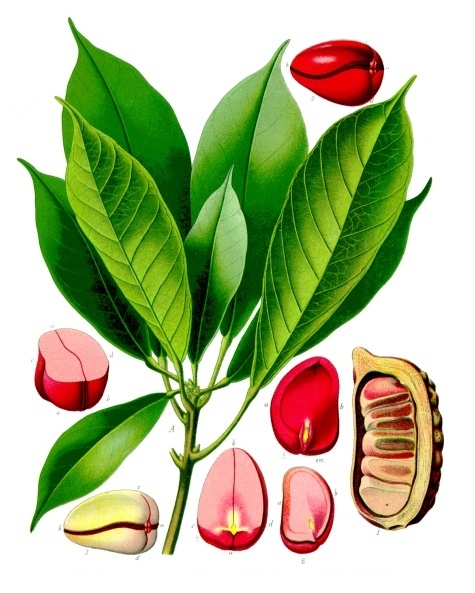
Kola trees produce pods that hold multiple seeds; these seeds are the kola nuts. Varieties such as Cola nitida and Cola acuminata are the most commonly cultivated. The fresh nuts are bitter, astringent and somewhat caffeinated; they contain stimulants including caffeine and related alkaloids that produce mild alertness when chewed or brewed. Kola nuts can be eaten raw, roasted, dried or ground into extracts.
History and cultural uses
Indigenous peoples of tropical African rainforests have used kola nuts for centuries in ceremonies, hospitality and traditional medicine. Offering a kola nut remains an important social gesture in many West African communities. They are also employed in rites of passage, marriage negotiations and as a token of welcome or reconciliation.
Modern uses and commerce
Kola nuts were a key ingredient and stimulant source in some of the earliest commercially produced soft drinks; the term cola reflects that connection. Today, many commercial beverages use synthesized flavors and alternative caffeine sources, although natural kola extracts remain a specialty ingredient. Kola nuts are cultivated and traded regionally, sold in markets as whole nuts, powders or extracts for both local consumption and export.
Preparation and examples
- Traditional: chewed fresh or after light drying to release flavor and stimulant effects.
- Culinary: roasted or ground and added to beverages or flavorings.
- Commercial: processed into extracts for flavor and as a historical caffeine source in soft drinks.
Notable distinctions
Though often associated with soda, kola nuts are primarily a cultural and botanical product rather than a mass-market ingredient today. They are different from cocoa or coffee plants even though they share stimulant compounds, and they belong to the botanical genus Cola rather than the cocoa or coffee genera. For basic botanical information see the descriptive entries on the fruit and the trees themselves (trees).
For introductory reading and sources about cultivation, chemistry and cultural roles consult general botanical and ethnographic references or regional guides to African crops and foods.
Questions and answers
Q: What is the kola nut?
A: The kola nut is the fruit of the kola tree, which is native to the tropical rainforests of Africa.
Q: What genus do kola trees belong to?
A: Kola trees belong to the Cola genus.
Q: Where is the kola tree native to?
A: The kola tree is native to the tropical rainforests of Africa.
Q: What is the main use of the kola nut?
A: The kola nut is a flavoring ingredient in drinks.
Q: What is the word often used to describe drinks that contain kola nut?
A: The word "cola" is often used to describe drinks that contain kola nut.
Q: Does the kola nut contain caffeine?
A: Yes, the kola nut contains caffeine.
Q: Is the kola nut commonly used in beverages?
A: Yes, the kola nut is commonly used as a flavoring ingredient in beverages.
Related articles
Author
AlegsaOnline.com Kola nut: African stimulant fruit used in tradition and beverages Leandro Alegsa
URL: https://en.alegsaonline.com/art/54162